


Basic Knowledge Of Negative Electrode Materials - Graphite Materials
Jun 20, 2025
Leave a message
Basic knowledge of negative electrode materials - graphite materials
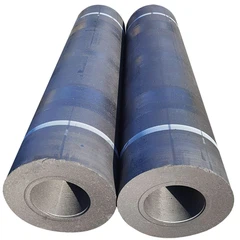
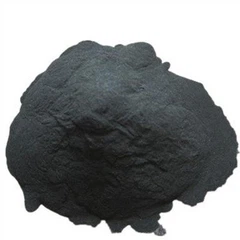
Graphite is one of the earliest carbon negative electrode materials used in lithium-ion batteries. It has good conductivity, high crystallinity, and a good layered structure. It is very suitable for the insertion/extraction of lithium ions to form lithium-graphite interlayer compounds. The charge-discharge specific capacity can reach more than 300mA-h/g, the charge-discharge efficiency is more than 90%, and the irreversible capacity is less than 50mA • h/g. The lithium extraction reaction in graphite occurs at about 0~0.25V (vs. Li+/Li). It has a good charge-discharge potential platform and can match many positive electrode materials including LiMn2O4. The average output voltage of the battery is high. It is currently the most widely used negative electrode material for lithium-ion batteries. Graphite belongs to the hexagonal crystal system. Its crystals are composed of hexagonal mesh planes composed of carbon atoms and are regularly stacked. It has a layered structure.
In each layer, carbon atoms are arranged in a hexagon, and each carbon atom is covalently bonded to three adjacent carbon atoms with an sp2 hybrid orbital, and the electrons on the remaining p orbital form delocalized bonds. Currently, the graphite-based carbon materials on the market mainly include the following categories: highly graphitized mesophase carbon microbeads (MCMB), graphitized fibers, artificial graphite, and natural graphite.
MCMB has a spherical overall shape, a high stacking density, a highly ordered layer stacking structure, and a relatively large lithium embedding capacity per unit volume. It was first developed and produced by Osaka Gas Company of Japan and is used as a negative electrode material for lithium-ion batteries. MCMB has a smooth surface and a small specific surface area, which can reduce the occurrence of electrode boundary reactions during charging and discharging, thereby reducing the capacity loss during the first charging process; in addition, the small ball has a lamellar structure, which is conducive to the embedding and de-embedding of lithium ions from all directions of the ball, reducing the swelling and collapse of graphite sheets caused by excessive anisotropy of graphite materials, and thus has a certain fast and high current charging and discharging capability. Highly graphitized MCMB is obtained by subjecting coal tar pitch organic matter to thermal polycondensation to obtain mesophase carbon balls, which are then purified by solvent extraction and other methods and then heat treated. As a negative electrode material for lithium-ion batteries, MCMB has a great influence on its lithium insertion performance due to heat treatment temperature and time. MCMB is one of the main negative electrode materials currently used in long-life small lithium-ion batteries and power batteries, but its main problems are low specific capacity and high price.
In addition to MCMB, there are other forms of artificial graphite made from graphitizable carbon. Vapor-deposited graphite fiber is a graphitized fiber material with a tubular hollow structure. As a negative electrode material for lithium-ion batteries, it has a discharge specific capacity of more than 320mA-h/g and an initial charge and discharge efficiency of 93%. Compared with other carbon or graphite negative electrode materials, lithium-ion batteries using vapor-deposited graphite fiber as negative electrode have more excellent large current discharge performance and low temperature discharge performance, and longer cycle life. However, due to the complex preparation process of gas-phase deposited graphite fiber materials and high material cost, its large-scale application in lithium-ion batteries is subject to certain restrictions. Artificial graphite prepared by doping, structural adjustment or surface modification of easily graphitized carbon such as petroleum coke and high-temperature graphitization treatment has good cycle performance and a price lower than MCMB. Currently, Japan and other countries have begun actual production and use. There are also many disadvantages of graphite as a negative electrode, such as: SEI film is formed during the charge and discharge cycle, causing matrix expansion and capacity loss, while causing the graphite layer to peel off and reduce life; graphite material has poor compatibility with PC solvent; Li* can only be embedded and extracted from the flake boundary, and due to the small embedding/extraction reaction area and long diffusion path, it is not suitable for large current charging and discharging; the graphite heat treatment temperature usually needs to be above 2000C, which increases the production cost; when the potential reaches 0V or lower, metallic lithium may be deposited on the graphite electrode. Due to the above disadvantages of unmodified graphite, modified graphite is widely used in practice. Among them, surface coating, chemical modification and spheroidization are the main treatment methods at present. Surface coating includes organic coating and inorganic coating, and chemical modification mainly includes oxidation, reduction and surface chemical modification.
Send Inquiry