

What are the factors affecting the quality of UHP Graphite Powder?
Dec 18, 2025
Leave a message
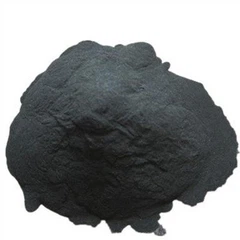
Ultra-high power (UHP) graphite powder is a crucial material widely used in various industries, including metallurgy, electronics, and chemical engineering, due to its excellent electrical conductivity, high thermal stability, and chemical inertness. As a supplier of UHP graphite powder, I have witnessed the importance of maintaining high-quality products to meet the diverse needs of our customers. In this blog post, I will discuss the key factors that affect the quality of UHP graphite powder, which can help both producers and users better understand and control the quality of this valuable material.
1. Raw Material Quality
The quality of the raw materials used to produce UHP graphite powder is the foundation of its final quality. High-quality natural graphite or synthetic graphite precursors are essential for obtaining UHP graphite powder with superior properties.
Natural graphite, especially flake graphite, is a popular choice for UHP graphite powder production due to its high carbon content and well-ordered crystal structure. The purity and crystallinity of natural graphite directly affect the electrical conductivity and thermal stability of the final product. For example, graphite with a high carbon content (above 99%) and large flake size can provide better electrical conductivity and mechanical strength after processing.
Synthetic graphite precursors, such as petroleum coke and coal tar pitch, can also be used to produce UHP graphite powder. The quality of these precursors, including their carbon content, volatile matter content, and reactivity, plays a significant role in determining the properties of the resulting graphite powder. For instance, low sulfur and ash content in petroleum coke is desirable to reduce impurities in the final product.
2. Production Process
The production process of UHP graphite powder involves several key steps, including purification, grinding, and graphitization. Each step can significantly impact the quality of the final product.
Purification
Purification is a critical step in removing impurities from the raw materials to achieve the high purity required for UHP graphite powder. Common purification methods include acid washing, alkali fusion, and high-temperature purification. Acid washing can effectively remove metal impurities, while high-temperature purification can further reduce the content of non-carbon elements through sublimation. The efficiency of the purification process directly affects the purity and electrical conductivity of the graphite powder.
Grinding
Grinding is used to reduce the particle size of the graphite to the desired range. The particle size distribution of UHP graphite powder is an important factor affecting its performance. A narrow particle size distribution can ensure better dispersion in applications, such as in battery electrodes or lubricants. The grinding process should be carefully controlled to avoid over-grinding, which can damage the graphite crystal structure and reduce its quality.
Graphitization
Graphitization is the process of converting the carbonaceous material into a highly crystalline graphite structure at high temperatures (usually above 2500°C). The graphitization degree of UHP graphite powder determines its electrical conductivity, thermal conductivity, and chemical stability. Factors such as graphitization temperature, time, and atmosphere can significantly affect the graphitization degree. For example, a higher graphitization temperature can promote the formation of a more ordered graphite structure, resulting in better electrical and thermal properties.
3. Particle Size and Shape
The particle size and shape of UHP graphite powder are important factors that affect its performance in different applications.


Particle Size
The particle size of UHP graphite powder can range from a few micrometers to several hundred micrometers, depending on the specific application requirements. In general, smaller particle sizes provide a larger surface area, which can improve the reactivity and dispersion of the graphite powder. For example, in lithium-ion battery anodes, ultra-fine graphite powder with a particle size of a few micrometers can increase the charge-discharge rate and capacity. On the other hand, larger particle sizes may be preferred in some applications where high mechanical strength or low friction is required. You can find more information about Superfine Graphite Powder on our website.
Particle Shape
The particle shape of UHP graphite powder can also affect its performance. Spherical or near-spherical particles generally have better flowability and packing density, which can improve the processing efficiency and performance of the final product. In contrast, irregularly shaped particles may have a higher surface area but may also cause problems in dispersion and processing.
4. Impurity Content
The impurity content in UHP graphite powder is a crucial factor affecting its quality and performance. Even trace amounts of impurities can have a significant impact on the electrical conductivity, thermal stability, and chemical reactivity of the graphite.
Common impurities in UHP graphite powder include metals (such as iron, aluminum, and silicon), non-metals (such as sulfur and phosphorus), and gaseous elements (such as oxygen and nitrogen). These impurities can be introduced during the production process or from the raw materials. For example, iron impurities can catalyze the oxidation of graphite at high temperatures, reducing its thermal stability. Therefore, strict quality control measures should be implemented to minimize the impurity content in the production process.
5. Surface Properties
The surface properties of UHP graphite powder, such as surface area, surface energy, and surface functional groups, can also affect its performance in various applications.
A larger surface area can provide more active sites for chemical reactions or adsorption, which can be beneficial in applications such as catalysis and adsorption. Surface energy affects the wettability and dispersion of the graphite powder in different media. For example, a lower surface energy can improve the dispersion of graphite powder in non-polar solvents. Surface functional groups, such as hydroxyl, carboxyl, and carbonyl groups, can also affect the chemical reactivity and compatibility of the graphite powder with other materials. You can learn more about the surface properties of graphite materials by exploring Graphite Oxide Powder, which has unique surface characteristics.
6. Storage and Handling
Proper storage and handling are important to maintain the quality of UHP graphite powder. Graphite powder is hygroscopic and can absorb moisture from the air, which can affect its electrical conductivity and mechanical properties. Therefore, it should be stored in a dry and cool environment, preferably in airtight containers.
During handling, care should be taken to prevent contamination and damage to the graphite powder. For example, using clean equipment and avoiding contact with foreign materials can help maintain the purity and quality of the product.
Conclusion
In conclusion, the quality of UHP graphite powder is affected by multiple factors, including raw material quality, production process, particle size and shape, impurity content, surface properties, and storage and handling. As a supplier of UHP graphite powder, we are committed to controlling these factors to ensure that our products meet the highest quality standards. By understanding these factors, our customers can make more informed decisions when selecting UHP graphite powder for their specific applications.
If you are interested in our UHP graphite powder or have any questions about its quality and performance, please feel free to contact us for further discussion and negotiation. We look forward to establishing a long-term cooperative relationship with you and providing you with high-quality products and services.
References
- Mulder, G. H. (1988). Graphite: Carbon and graphite handbook. Elsevier.
- O'Reilly, S. (2016). The science and technology of graphene. Royal Society of Chemistry.
- Zhang, L., & Zhao, X. S. (2009). Carbon materials for the electrochemical storage of energy in capacitors. Chemical Society Reviews, 38(6), 2520-2531.
Send Inquiry