

How does high purity graphite powder react with alkalis?
Jan 21, 2026
Leave a message
Hey there! As a supplier of high purity graphite powder, I often get asked about how this stuff reacts with alkalis. It's a pretty interesting topic, so I thought I'd share what I know in this blog post.
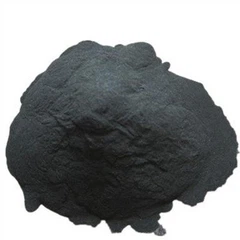
First off, let's talk a bit about high purity graphite powder. It's a super useful material with a whole bunch of applications. You can find it in industries like electronics, metallurgy, and even in some high - tech batteries. Its high purity means it has fewer impurities, which gives it better performance in all these applications.
Now, onto the main question: How does high purity graphite powder react with alkalis? Well, generally speaking, graphite is quite stable under normal conditions. It does not readily react with alkalis at room temperature. This stability comes from its unique structure. Graphite consists of layers of carbon atoms arranged in a hexagonal lattice. The bonds within these layers are strong covalent bonds, while the forces between the layers are relatively weak van der Waals forces.
However, when you start heating things up and increasing the reaction conditions, things can change. At high temperatures (usually above 500 - 600 °C), high purity graphite powder can react with strong alkalis like sodium hydroxide (NaOH) or potassium hydroxide (KOH). The reaction involves the oxidation of carbon in the graphite by the alkali.


The chemical reaction is not as straightforward as you might think. It's a complex process that results in the formation of various carbonates and other compounds. For example, when graphite reacts with sodium hydroxide at high temperatures, it can form sodium carbonate (Na₂CO₃) and hydrogen gas (H₂). The overall reaction can be represented by the following simplified equations:
[ C + 2NaOH \xrightarrow{\text{high temperature}} Na₂CO₃+ H₂ ]
The exact reaction products and the reaction rate depend on several factors. One of the key factors is the purity of the graphite powder. As a high purity graphite powder supplier, I can tell you that higher purity graphite tends to react more predictably. Impurities in the graphite can act as catalysts or inhibitors, which can either speed up or slow down the reaction.
Another important factor is the concentration of the alkali. A more concentrated alkali solution will usually lead to a faster reaction. Also, the reaction time and temperature play crucial roles. Higher temperatures increase the kinetic energy of the molecules, making it more likely for the reaction to occur.
Now, you might be wondering why this reaction is important. Well, in some industrial processes, this reaction can be used to modify the surface properties of graphite. For example, in the production of certain types of carbon fibers, the reaction with alkalis can help in creating a more reactive surface, which can then be further processed.
On the other hand, in applications where you want to use graphite in an alkaline environment, you need to be aware of this potential reaction. For instance, in some battery applications where graphite is used as an electrode material and the electrolyte might be alkaline, the reaction with alkalis could potentially degrade the performance of the battery over time.
If you're in the market for high purity graphite powder, you might also be interested in some related products. We offer Spherical Calcined Petroleum Coke, which has its own unique set of properties and applications. It's a great alternative or additive in some cases. Also, our Calcined Petroleum Coke With High Hardness is perfect for applications where you need a more durable carbon material. And if you're looking for a finer option, our Superfine Graphite Powder might be just what you need.
If you're interested in learning more about high purity graphite powder or any of our other products, or if you want to discuss a potential purchase, feel free to reach out. We're always happy to have a chat and help you find the right product for your needs. Whether you're a researcher working on a new project or an industry professional looking for a reliable supplier, we've got you covered.
In summary, high purity graphite powder is generally stable against alkalis at room temperature but can react at high temperatures. The reaction is complex and depends on factors like purity, alkali concentration, temperature, and reaction time. Understanding this reaction is crucial for both using graphite in alkaline environments and for some industrial processes that rely on it.
References
- "Carbon Materials: Chemistry and Physics" by M. S. Dresselhaus, G. Dresselhaus, and A. Jorio.
- "Handbook of Graphite and Carbon Materials" edited by P. A. Thrower.
Send Inquiry