

How does the processing method affect the quality of Natural Flake Graphite Powder?
Dec 17, 2025
Leave a message
As a supplier of Natural Flake Graphite Powder, I've witnessed firsthand how the processing method can significantly impact the quality of this valuable material. Natural flake graphite powder is a versatile substance used in various industries, including batteries, lubricants, and refractories. Its unique properties, such as high thermal conductivity, electrical conductivity, and chemical stability, make it a sought-after material. However, the quality of the powder can vary greatly depending on how it is processed.
Mining and Initial Extraction
The journey of natural flake graphite powder begins with mining. Graphite is typically found in metamorphic rocks, and the mining process involves extracting the ore from the ground. The quality of the ore at this stage is crucial, as it sets the foundation for the final product. High-quality ore contains a higher percentage of graphite flakes, which are the key component of the powder.
Once the ore is extracted, it undergoes a series of initial processing steps. These steps often include crushing and grinding to reduce the size of the ore particles. The goal is to liberate the graphite flakes from the surrounding rock matrix. The efficiency of this process can vary depending on the equipment used and the expertise of the operators. For example, using advanced crushing and grinding equipment can ensure a more uniform particle size distribution, which is beneficial for the subsequent processing steps.
Beneficiation
Beneficiation is a critical step in the processing of natural flake graphite powder. The main objective of beneficiation is to increase the purity of the graphite by removing impurities such as quartz, feldspar, and mica. There are several methods of beneficiation, including froth flotation, gravity separation, and magnetic separation.
Froth flotation is one of the most commonly used methods for graphite beneficiation. In this process, the crushed ore is mixed with water and a collector chemical. The collector attaches to the graphite particles, making them hydrophobic. Air bubbles are then introduced into the mixture, and the hydrophobic graphite particles attach to the bubbles and rise to the surface, forming a froth. The froth is skimmed off, and the concentrated graphite is further processed. The effectiveness of froth flotation depends on several factors, such as the type and dosage of the collector, the pH of the solution, and the agitation speed. A well-optimized froth flotation process can result in a high-purity graphite concentrate with a low impurity content.
Gravity separation is another method used for graphite beneficiation. This method relies on the difference in density between graphite and other minerals. The crushed ore is passed through a series of gravity separators, such as shaking tables or centrifugal concentrators. The heavier minerals settle to the bottom, while the lighter graphite particles are carried away by the water flow. Gravity separation is particularly effective for removing heavy minerals such as iron oxides.
Magnetic separation is used to remove magnetic impurities from the graphite concentrate. This method involves passing the concentrate through a magnetic field, which attracts and removes the magnetic particles. Magnetic separation can be used in combination with other beneficiation methods to achieve a higher level of purity.
Purification
After beneficiation, the graphite concentrate may still contain some residual impurities. Purification is the next step in the processing of natural flake graphite powder. There are several purification methods available, including acid leaching, high-temperature treatment, and chemical oxidation.
Acid leaching is a common method for purifying graphite. In this process, the graphite concentrate is treated with a strong acid, such as hydrochloric acid or sulfuric acid. The acid reacts with the impurities, dissolving them and leaving behind the pure graphite. The choice of acid and the leaching conditions, such as temperature and time, depend on the type and amount of impurities present. Acid leaching can be an effective method for removing metallic impurities, but it can also be environmentally hazardous if not properly managed.
High-temperature treatment is another method for purifying graphite. In this process, the graphite concentrate is heated to a high temperature, typically above 2000°C, in an inert atmosphere. The high temperature causes the impurities to vaporize or decompose, leaving behind the pure graphite. High-temperature treatment can achieve a very high level of purity, but it requires specialized equipment and is energy-intensive.
Chemical oxidation is a relatively new method for purifying graphite. In this process, the graphite concentrate is treated with an oxidizing agent, such as hydrogen peroxide or potassium permanganate. The oxidizing agent reacts with the impurities, converting them into soluble compounds that can be easily removed. Chemical oxidation is a more environmentally friendly method compared to acid leaching, but it may not be as effective for removing certain types of impurities.
Grinding and Classification
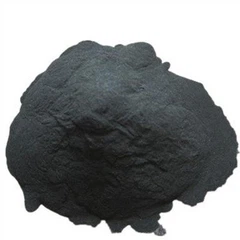
Once the graphite has been purified, it is ground to a fine powder. The grinding process can have a significant impact on the quality of the final product. The particle size distribution of the powder affects its properties, such as its surface area, reactivity, and dispersibility. There are several types of grinding equipment available, including ball mills, jet mills, and attrition mills.
Ball mills are the most commonly used type of grinding equipment for graphite powder. In a ball mill, the graphite is placed in a rotating drum along with a number of grinding balls. The balls collide with the graphite particles, breaking them down into smaller particles. The grinding time and the size of the grinding balls can be adjusted to control the particle size distribution of the powder.
Jet mills are another type of grinding equipment used for graphite powder. In a jet mill, the graphite is accelerated by a high-velocity jet of gas, such as air or steam. The high-velocity particles collide with each other, breaking them down into smaller particles. Jet mills can produce a very fine powder with a narrow particle size distribution.
Attrition mills are a type of grinding equipment that uses a high-speed rotating impeller to grind the graphite particles. Attrition mills can produce a very fine powder with a high surface area.


After grinding, the graphite powder is classified to separate the particles into different size fractions. Classification is important because different applications require different particle size distributions. There are several types of classification equipment available, including sieves, cyclones, and air classifiers.
Impact on Quality
The processing method can have a significant impact on the quality of natural flake graphite powder. Here are some of the key quality parameters that are affected by the processing method:
- Purity: The purification method used can determine the level of purity of the graphite powder. A high-purity powder is essential for applications such as batteries and electronics, where impurities can affect the performance of the final product.
- Particle Size Distribution: The grinding and classification methods used can control the particle size distribution of the powder. A narrow particle size distribution is desirable for applications such as lubricants and coatings, where a uniform particle size can improve the performance of the product.
- Crystallinity: The processing method can also affect the crystallinity of the graphite powder. A high degree of crystallinity is desirable for applications such as thermal management, where high thermal conductivity is required.
- Surface Area: The grinding method can affect the surface area of the graphite powder. A high surface area is desirable for applications such as catalysis and adsorption, where a large surface area can increase the reactivity of the powder.
Conclusion
In conclusion, the processing method plays a crucial role in determining the quality of natural flake graphite powder. From mining and initial extraction to grinding and classification, each step in the processing chain can have a significant impact on the final product. As a supplier of natural flake graphite powder, we understand the importance of using the right processing methods to ensure the highest quality product for our customers.
If you are interested in purchasing natural flake graphite powder, we invite you to contact us for more information and to discuss your specific requirements. We offer a wide range of graphite products, including Graphite Oxide Powder, Carbon Graphite Powder, and Synthetic Graphite Powder. Our team of experts is ready to assist you in finding the right product for your application.
References
- Gupta, C. K., & Krishnamurthy, N. (2016). Extractive Metallurgy of Graphite. CRC Press.
- Li, Y., & Zhang, L. (2018). Graphite: Properties, Processing, and Applications. Elsevier.
- Singh, R. K., & Ghosh, S. K. (2019). Beneficiation and Purification of Graphite. Springer.
Send Inquiry