

How to scale up the production of Graphite Oxide Powder?
Dec 18, 2025
Leave a message
Scaling up the production of Graphite Oxide Powder is a crucial step for suppliers aiming to meet the increasing market demands. As a leading supplier in this field, I've encountered numerous challenges and discovered effective strategies to enhance production capacity while maintaining product quality. In this blog post, I'll share some insights and practical approaches on how to scale up the production of Graphite Oxide Powder.
Understanding Graphite Oxide Powder and Its Raw Materials
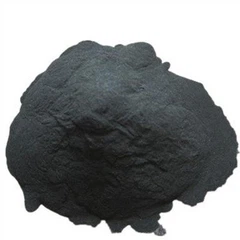
Graphite Oxide Powder is a highly oxidized form of graphite, with oxygen-containing functional groups attached to the graphite layers. It has unique properties such as high surface area, hydrophilicity, and tunable electrical conductivity, making it suitable for various applications, including energy storage, composites, and water purification.
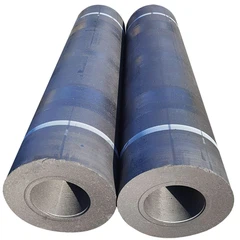
The production of Graphite Oxide Powder starts with high - quality graphite raw materials. There are different types of graphite powders available in the market, each with its own characteristics. For instance, Natural Flake Graphite Powder is known for its high carbon content and excellent flake structure, which can contribute to the formation of well - oxidized graphite oxide. UHP Graphite Powder offers ultra - high purity, reducing impurities in the final product. On the other hand, Artificial Graphite Powder can be engineered to have specific properties, making it a suitable choice for some specialized production processes.
Optimizing the Production Process
1. Reaction Conditions
The oxidation process of graphite to graphite oxide is typically carried out using strong oxidizing agents such as potassium permanganate, sulfuric acid, and nitric acid. To scale up production, it's essential to optimize the reaction conditions. This includes carefully controlling the temperature, reaction time, and the ratio of reactants. For example, a slightly higher temperature can accelerate the reaction rate, but it may also increase the risk of over - oxidation or decomposition. By conducting a series of experiments, we can determine the optimal temperature range for large - scale production.
Moreover, the reaction time needs to be fine - tuned. In batch production, longer reaction times may lead to more complete oxidation, but it also reduces the production efficiency. Continuous production systems, on the other hand, require a balance between the reaction time and the flow rate of reactants.
2. Equipment Selection and Upgrades
As the production scale increases, the choice of equipment becomes critical. Batch reactors are commonly used in small - scale production, but for large - scale operations, continuous flow reactors offer several advantages, including higher production rates, better control of reaction conditions, and reduced labor costs.
Upgrading the mixing equipment is also essential. Efficient mixing ensures uniform distribution of reactants, which is crucial for achieving consistent product quality. High - shear mixers or homogenizers can be used to improve the dispersion of graphite in the reaction mixture, enhancing the oxidation efficiency.
3. Quality Control
Maintaining product quality is of utmost importance when scaling up production. Implementing a comprehensive quality control system from raw material inspection to the final product testing is necessary. For example, analyzing the carbon content, oxygen content, and particle size distribution of the graphite oxide powder at different production stages can help identify any potential issues.
In addition, using advanced analytical techniques such as X - ray diffraction (XRD), Fourier - transform infrared spectroscopy (FTIR), and scanning electron microscopy (SEM) can provide detailed information about the structure and properties of the product. By closely monitoring these parameters, we can adjust the production process in a timely manner to ensure the quality stability of the large - scale production.
Supply Chain Management
1. Raw Material Sourcing
With the increase in production volume, a stable and reliable supply of raw materials is crucial. Establishing long - term partnerships with high - quality graphite suppliers can ensure a continuous supply of raw materials at a reasonable price. Regularly evaluating the performance of suppliers in terms of quality, delivery time, and price can help us make informed decisions.
Moreover, it's important to have a certain inventory of raw materials to deal with potential supply disruptions. This can be achieved by developing a demand - forecasting model based on historical sales data and market trends.
2. Logistics and Distribution
Efficient logistics and distribution are essential for getting the finished products to customers in a timely manner. Choosing reliable logistics partners with experience in handling chemical products can ensure the safe and timely delivery of Graphite Oxide Powder.
In addition, optimizing the packaging of the product can reduce the risk of damage during transportation. Using appropriate containers and protective materials can help maintain the quality of the product during transit.
Workforce Training and Safety
1. Workforce Training
As production scales up, the workforce needs to be well - trained to operate the new equipment and follow the optimized production processes. Providing comprehensive training programs on equipment operation, safety procedures, and quality control can improve the efficiency and quality of the production.
Regular refresher courses can also be organized to keep the workers updated with the latest production techniques and safety regulations.
2. Safety Measures
The production of Graphite Oxide Powder involves the use of hazardous chemicals such as strong acids and oxidizing agents. Therefore, strict safety measures must be implemented. This includes providing personal protective equipment (PPE) to workers, installing safety devices in the production area, and conducting regular safety inspections.
Developing an emergency response plan in case of chemical spills or other accidents is also necessary. All workers should be trained on how to respond to emergencies to minimize the potential risks.
Conclusion
Scaling up the production of Graphite Oxide Powder requires a comprehensive approach that includes optimizing the production process, managing the supply chain, training the workforce, and ensuring safety. By carefully considering these aspects, suppliers can increase their production capacity while maintaining high - quality products.
If you are interested in purchasing Graphite Oxide Powder or have any questions about our production capabilities, please feel free to contact us for further discussion. We are committed to providing high - quality products and excellent service to meet your needs.


References
- Niyogi, S., Bekyarova, E., Itkis, M. E., McWilliams, J. L., Hamon, M. A., & Haddon, R. C. (2006). Solution properties of graphite and graphene oxide. Journal of the American Chemical Society, 128(26), 8398 - 8407.
- Stankovich, S., Dikin, D. A., Dommett, G. H. B., Kohlhaas, K. M., Zimney, E. J., Stach, E. A., ... & Ruoff, R. S. (2006). Graphene - based composite materials. Nature, 442(7100), 282 - 286.
- Marcano, D. C., Kosynkin, D. V., Berlin, J. M., Sinitskii, A., Sun, Z., Slesarev, A., ... & Tour, J. M. (2010). Improved synthesis of graphene oxide. ACS nano, 4(8), 4806 - 4814.
Send Inquiry