

What are the applications of Irregular Graphite Blocks in magnetic materials?
Oct 31, 2025
Leave a message
In the realm of advanced materials, irregular graphite blocks have emerged as a fascinating and versatile component, especially in the field of magnetic materials. As a leading supplier of irregular graphite blocks, I am excited to delve into the various applications of these unique materials in magnetic contexts. This exploration will not only shed light on the scientific principles at play but also highlight the practical benefits that our products bring to the table.
1. Understanding Irregular Graphite Blocks
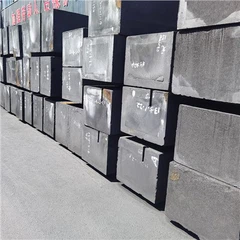
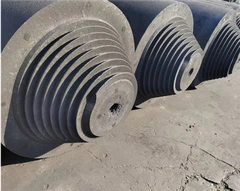
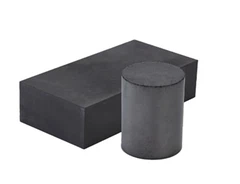
Before we dive into their applications in magnetic materials, it's essential to understand what irregular graphite blocks are. Graphite is a crystalline form of carbon, known for its excellent electrical conductivity, thermal stability, and lubricating properties. Irregular graphite blocks, as the name suggests, do not conform to standard shapes and sizes. They are often the result of natural graphite deposits or specific manufacturing processes that yield non - uniform pieces.
These blocks possess a unique microstructure that combines layers of carbon atoms arranged in a hexagonal lattice. This structure gives graphite its characteristic properties, such as high thermal conductivity due to the ability of electrons to move freely within the layers. In the context of magnetic materials, these properties can be harnessed in several ways.
2. Applications in Magnetic Shielding
One of the primary applications of irregular graphite blocks in magnetic materials is in magnetic shielding. Magnetic shielding is crucial in various industries, including electronics, aerospace, and medical devices, where unwanted magnetic fields can interfere with the proper functioning of sensitive equipment.
Graphite's electrical conductivity plays a key role in magnetic shielding. When a magnetic field encounters a conductive material like graphite, it induces eddy currents within the material. These eddy currents generate their own magnetic fields that oppose the original magnetic field, effectively reducing its strength within the shielded area.
Irregular graphite blocks can be used to create custom - shaped magnetic shields. Their non - uniform nature allows for more flexible and efficient shielding solutions, especially in complex geometries. For example, in electronic devices with irregularly shaped components, irregular graphite blocks can be cut and shaped to fit precisely around the sensitive parts, providing targeted magnetic shielding.


Moreover, graphite's thermal stability is an added advantage in magnetic shielding applications. In high - power electronic devices, heat is often generated, which can degrade the performance of traditional magnetic shielding materials. Graphite's ability to withstand high temperatures without significant loss of its shielding properties makes it an ideal choice for such applications.
3. Role in Magnetic Nanocomposites
Irregular graphite blocks can also be incorporated into magnetic nanocomposites. Nanocomposites are materials composed of a matrix material and nanoscale fillers, which combine the properties of both components to achieve enhanced performance.
In the case of magnetic nanocomposites, graphite can serve as a matrix or a filler. When used as a matrix, graphite provides a stable and conductive environment for the magnetic nanoparticles. The high electrical conductivity of graphite can improve the overall electrical properties of the nanocomposite, which is beneficial in applications such as electromagnetic interference (EMI) shielding and magnetic sensors.
As a filler, irregular graphite blocks can enhance the mechanical and thermal properties of the magnetic nanocomposite. The unique shape and structure of the graphite blocks can improve the dispersion of the magnetic nanoparticles within the matrix, leading to better magnetic performance. For instance, in magnetic recording media, the addition of graphite can improve the coercivity and remanence of the magnetic nanoparticles, resulting in higher - density data storage.
4. Applications in Magnetic Levitation Systems
Magnetic levitation (maglev) systems are used in high - speed trains, transportation systems, and some advanced manufacturing processes. These systems rely on the interaction between magnetic fields to suspend and propel objects without physical contact.
Irregular graphite blocks can be used in maglev systems in several ways. Firstly, their electrical conductivity can be utilized to create eddy - current - based levitation mechanisms. When a graphite block is placed in a changing magnetic field, the induced eddy currents generate a repulsive force that can be used to levitate an object.
Secondly, graphite's low friction and high wear resistance make it suitable for use in the guideways of maglev systems. The irregular shape of the graphite blocks can be tailored to fit the specific requirements of the guideway design, providing smooth and stable movement of the levitated object.
5. Use in Magnetic Resonance Imaging (MRI)
Magnetic Resonance Imaging (MRI) is a widely used medical imaging technique that relies on strong magnetic fields and radio waves to create detailed images of the body's internal structures. Irregular graphite blocks can find applications in MRI systems in multiple ways.
In MRI machines, the magnetic field needs to be highly uniform and stable. Graphite's electrical conductivity can be used to create passive shimming devices. Shimming is the process of adjusting the magnetic field to improve its uniformity. By strategically placing irregular graphite blocks around the MRI scanner, the eddy currents induced in the graphite can help correct small variations in the magnetic field, resulting in better image quality.
Additionally, graphite's low magnetic susceptibility makes it suitable for use in MRI-compatible equipment. In MRI environments, non - magnetic materials are required to avoid interference with the magnetic field. Graphite's minimal magnetic response ensures that it does not distort the magnetic field, allowing for accurate and reliable imaging.
6. Applications in Powder Metallurgy for Magnetic Materials
In powder metallurgy processes for manufacturing magnetic materials, irregular graphite blocks play an important role. Powder metallurgy involves the compaction and sintering of metal powders to form complex shapes.
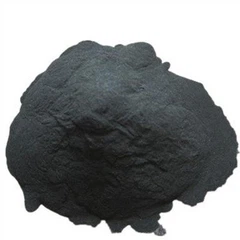
Graphite can be used as a lubricant in the powder metallurgy process. During the compaction of magnetic powders, friction between the powder particles and the die walls can lead to non - uniform compaction and poor part quality. Irregular graphite blocks can be crushed into fine powder and added to the magnetic powder mixture as a lubricant. The graphite powder reduces friction, allowing for more uniform compaction and better dimensional accuracy of the final magnetic parts.
Moreover, graphite can act as a carbon source during the sintering process. In some magnetic materials, carbon is added to improve their magnetic properties. The carbon from the graphite can diffuse into the magnetic matrix during sintering, enhancing the coercivity and remanence of the magnetic material. You can learn more about Graphite Electrode Blocks For Powder Metallurgy on our website.
7. Applications in Aluminum Production
Graphite electrode blocks are widely used in aluminum production, and irregular graphite blocks can also contribute to this process in the context of magnetic materials. In the electrolytic reduction of aluminum oxide to aluminum, a strong magnetic field is generated around the electrolytic cell.
Irregular graphite blocks can be used to manage the magnetic fields in the aluminum production process. By placing graphite blocks strategically around the electrolytic cell, the magnetic fields can be controlled to improve the efficiency of the electrolysis process. The eddy currents induced in the graphite can help in stabilizing the flow of molten aluminum and reducing energy consumption.
Furthermore, graphite's high thermal conductivity is beneficial in aluminum production. The electrolytic process generates a large amount of heat, and graphite's ability to conduct heat away from the cell helps in maintaining a stable operating temperature. For more information on Graphite Electrode Blocks For Aluminum Production, please visit our website.
8. Conclusion and Call to Action
In conclusion, irregular graphite blocks offer a wide range of applications in magnetic materials, from magnetic shielding and nanocomposites to maglev systems and medical imaging. Their unique properties, such as electrical conductivity, thermal stability, and non - standard shape, make them a versatile and valuable addition to the field of magnetic materials.
As a supplier of high - quality irregular graphite blocks, we are committed to providing our customers with the best products and solutions. Whether you are in the electronics, aerospace, medical, or metallurgy industry, our irregular graphite blocks can meet your specific requirements.
If you are interested in learning more about our products or discussing potential applications in your industry, please feel free to contact us. We look forward to the opportunity to work with you and contribute to the success of your projects.
References
- Cullity, B. D., & Graham, C. D. (2008). Introduction to Magnetic Materials. Wiley.
- Zuo, Y., & Zhang, X. (2016). Graphite - based Nanocomposites for Energy and Environmental Applications. Elsevier.
- Jiles, D. C. (1998). Introduction to Magnetism and Magnetic Materials. Chapman & Hall.
Send Inquiry