

How is superfine graphite powder dispersed in a liquid?
Jan 01, 2026
Leave a message
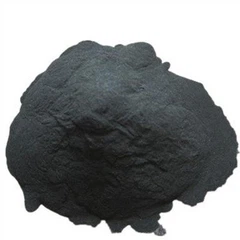
Superfine graphite powder, known for its exceptional physical and chemical properties, has a wide range of applications in various industries such as aerospace, electronics, and energy storage. However, one of the challenges in utilizing superfine graphite powder is achieving its uniform dispersion in a liquid medium. As a reputable superfine graphite powder supplier, we understand the significance of this process and are eager to share in - depth knowledge about how superfine graphite powder can be effectively dispersed in a liquid.
Factors Affecting the Dispersion of Superfine Graphite Powder in Liquid
To disperse superfine graphite powder in a liquid, we first need to consider several key factors. Particle size is an important aspect. Superfine graphite powder has extremely small particles, which increases the surface area and surface energy. This high surface energy causes the particles to agglomerate easily due to van der Waals forces and electrostatic interactions. The smaller the particle size, the more pronounced this agglomeration tendency.
The nature of the liquid medium also plays a crucial role. Different liquids have different polarities, viscosities, and surface tensions. Non - polar liquids may interact differently with graphite powder compared to polar ones. For example, if the liquid is too viscous, it can impede the movement of graphite particles and make it difficult to break up agglomerates. On the other hand, if the surface tension is too high, it may not wet the graphite particles properly, preventing dispersion.
Surface properties of the graphite powder are another determinant. The surface of graphite may have functional groups or contaminants that can influence its interaction with the liquid. For instance, if the graphite surface has hydrophobic functional groups, it will be more compatible with non - polar liquids, while hydrophilic functional groups will favor dispersion in polar liquids.


Dispersion Methods
Mechanical Dispersion
Mechanical dispersion is one of the most widely used methods. This method uses mechanical forces to break up the agglomerates of superfine graphite powder. One common approach is high - speed stirring. By using a high - speed mixer, the liquid containing graphite powder is rapidly agitated. The shearing forces generated during the stirring process can break the weak bonds between the agglomerated particles. However, the efficiency of high - speed stirring is limited, especially for extremely agglomerated particles.
Another mechanical method is ball milling. In ball milling, graphite powder and the liquid medium are placed in a mill with grinding balls. As the mill rotates, the grinding balls collide with the agglomerates, breaking them into smaller particles. Ball milling can be very effective in reducing particle size and improving dispersion. However, it may also introduce impurities from the grinding balls or the milling container, which need to be carefully controlled.
Ultrasonic Dispersion
Ultrasonic dispersion is based on the principle of ultrasonic cavitation. When ultrasonic waves are applied to the liquid containing graphite powder, tiny bubbles are formed and collapsed rapidly. The high - intensity shock waves generated during the bubble collapse can break up the agglomerates of graphite powder. Ultrasonic dispersion is a relatively fast and efficient method. It can often achieve good dispersion results in a short time. It is also suitable for delicate samples as it can operate at relatively low temperatures without causing significant thermal damage to the graphite powder.
Chemical Dispersion
Chemical dispersion involves the use of dispersants. Dispersants are substances that can be adsorbed on the surface of graphite particles, reducing the surface energy of the particles and preventing their agglomeration. There are two main types of dispersants: surfactants and polymers.
Surfactants have a hydrophilic head and a hydrophobic tail. The hydrophobic tail can adsorb on the surface of the graphite particles, while the hydrophilic head extends into the liquid medium. This creates a stable layer around the particles, preventing them from coming close to each other and agglomerating. Common surfactants used for graphite dispersion include sodium dodecyl sulfate (SDS).
Polymers can also act as effective dispersants. They can form a steric hindrance layer around the graphite particles. For example, polyethylene glycol (PEG) can be adsorbed on the graphite surface, creating a thick layer that prevents the particles from aggregating. The choice of dispersant depends on the properties of the liquid medium and the graphite powder.
Optimization of Dispersion Conditions
During the dispersion process, temperature, pH, and the concentration of graphite powder and dispersant need to be optimized. Temperature can affect the viscosity of the liquid and the adsorption of dispersants. Generally, an appropriate increase in temperature can reduce the viscosity of the liquid, facilitating the movement of particles and improving dispersion efficiency. However, too high a temperature may cause the degradation of the dispersant or the evaporation of the liquid.
The pH value of the liquid can also influence the dispersion. For some dispersants, their performance is pH - dependent. For example, in an acidic or alkaline environment, the charge distribution on the surface of the graphite particles and the dispersant may change, which can either enhance or reduce the dispersion effect.
The concentration of graphite powder in the liquid is an important parameter. If the concentration is too high, the particles are more likely to interact with each other and form agglomerates. Therefore, a reasonable concentration range needs to be determined according to the specific application requirements. Similarly, the concentration of the dispersant should be optimized. Too little dispersant may not be sufficient to stabilize the particles, while too much dispersant may cause secondary agglomeration or other side - effects.
Related Products for Better Dispersion Process
In our product range, we also offer some related materials that can be used in conjunction with superfine graphite powder in various dispersion - related applications. Calcined Petroleum Coke For Ceramics is a high - quality material that can be processed and used in combination with graphite powder in ceramic manufacturing. The calcination process can improve its structure and properties, making it more suitable for dispersion in liquid - based ceramic slurries.
High - purity Calcined Petroleum Coke is another product that can be used in applications where high - purity materials are required. Its high purity ensures that there are fewer impurities to interfere with the dispersion process and the final performance of the product.
Graphitized Calcined Petroleum Coke For Ceramics has a more ordered graphite - like structure after the graphitization process. This material can enhance the performance of the mixture when dispersed in a liquid together with superfine graphite powder, especially in applications such as advanced ceramic manufacturing.
Conclusion and Call to Action
Dispersing superfine graphite powder in a liquid is a complex but achievable process. By understanding the factors affecting dispersion, choosing appropriate dispersion methods, and optimizing the dispersion conditions, we can ensure the uniform dispersion of superfine graphite powder in various liquid media.
As a reliable superfine graphite powder supplier, we are committed to providing high - quality products and technical support. Whether you are in the research and development stage or large - scale production, our team of experts can offer you customized solutions to meet your specific needs. If you are interested in our superfine graphite powder or related products, and want to discuss procurement details, please feel free to reach out to us. We look forward to establishing a long - term and mutually beneficial cooperation with you.
References
- Smith, J. K., & Johnson, L. M. (2018). Dispersion of Nanoparticles in Liquids. Journal of Colloid and Interface Science, 520, 123 - 135.
- Wang, H., & Li, C. (2020). Influence of Dispersants on the Dispersion of Graphite Powder in Aqueous Solutions. Powder Technology, 365, 234 - 242.
- Liu, Y., et al. (2019). Optimization of Ultrasonic Dispersion Parameters for Superfine Graphite Powder. Ultrasonics Sonochemistry, 58, 104738.
Send Inquiry