

Can UHP Graphite Powder be used in the supercapacitor industry?
Oct 21, 2025
Leave a message
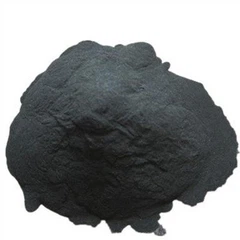
Ultra-high purity (UHP) graphite powder is a remarkable material with a wide range of applications across various industries. As a leading supplier of UHP graphite powder, I've often been asked whether this product can be used in the supercapacitor industry. In this blog post, I'll delve into the properties of UHP graphite powder, explore its potential in supercapacitors, and discuss the advantages it brings to this field.
Properties of UHP Graphite Powder
UHP graphite powder is characterized by its extremely high purity, typically exceeding 99.9%. This high purity is achieved through advanced purification processes that remove impurities such as ash, sulfur, and other trace elements. The result is a material with excellent electrical conductivity, thermal stability, and chemical resistance.
One of the key features of UHP graphite powder is its layered structure. Graphite consists of carbon atoms arranged in hexagonal layers, with weak van der Waals forces between the layers. This structure allows for easy intercalation of ions, making graphite an ideal material for applications where charge storage and release are required.
In addition to its high purity and layered structure, UHP graphite powder also has a large specific surface area. This means that it can provide a large number of active sites for ion adsorption and desorption, which is crucial for the performance of supercapacitors.
Supercapacitors: An Overview
Supercapacitors, also known as ultracapacitors or electrochemical capacitors, are energy storage devices that can store and release energy rapidly. They bridge the gap between traditional capacitors and batteries, offering higher energy density than capacitors and higher power density than batteries.
Supercapacitors work based on the principle of electrostatic double-layer capacitance or pseudocapacitance. In electrostatic double-layer capacitors (EDLCs), ions from the electrolyte are adsorbed onto the surface of the electrodes, forming an electric double layer. This double layer stores charge and allows for the rapid charging and discharging of the capacitor. Pseudocapacitors, on the other hand, involve faradaic reactions at the electrode surface, which can provide additional capacitance.
The performance of supercapacitors is determined by several factors, including the specific surface area of the electrodes, the conductivity of the materials, and the electrolyte used. Therefore, the choice of electrode materials is crucial for achieving high-performance supercapacitors.
Potential of UHP Graphite Powder in Supercapacitors
Given its unique properties, UHP graphite powder has significant potential for use in supercapacitors. Here are some of the reasons why:
- High Electrical Conductivity: The excellent electrical conductivity of UHP graphite powder allows for fast electron transfer within the supercapacitor electrodes. This results in low internal resistance and high power density, enabling the supercapacitor to charge and discharge rapidly.
- Large Specific Surface Area: As mentioned earlier, UHP graphite powder has a large specific surface area, which provides a large number of active sites for ion adsorption and desorption. This increases the capacitance of the supercapacitor and improves its energy storage capacity.
- Chemical Stability: UHP graphite powder is highly chemically stable, which means that it can withstand the harsh chemical environment inside the supercapacitor. This ensures the long-term stability and reliability of the supercapacitor.
- Low Cost: Compared to some other materials used in supercapacitors, such as carbon nanotubes and graphene, UHP graphite powder is relatively inexpensive. This makes it an attractive option for large-scale production of supercapacitors.
Applications of UHP Graphite Powder in Supercapacitors
UHP graphite powder can be used in both the electrodes and the current collectors of supercapacitors.
- Electrodes: UHP graphite powder can be used as the active material in the electrodes of supercapacitors. By mixing it with a binder and a conductive additive, a composite electrode can be prepared. The high specific surface area and electrical conductivity of UHP graphite powder contribute to the high capacitance and power density of the supercapacitor.
- Current Collectors: UHP graphite powder can also be used as a coating material for the current collectors in supercapacitors. The coating can improve the electrical contact between the electrode and the current collector, reduce the internal resistance of the supercapacitor, and enhance its overall performance.
Advantages of Using Our UHP Graphite Powder in Supercapacitors
As a supplier of UHP graphite powder, we take pride in offering high-quality products that meet the strict requirements of the supercapacitor industry. Here are some of the advantages of using our UHP graphite powder:


- Consistent Quality: We have strict quality control measures in place to ensure that our UHP graphite powder has consistent purity, particle size, and other properties. This ensures the reproducibility and reliability of the supercapacitor performance.
- Customizable Products: We can customize the particle size and surface properties of our UHP graphite powder according to the specific requirements of our customers. This allows for the optimization of the supercapacitor performance.
- Technical Support: Our team of experts can provide technical support and guidance to our customers on the use of UHP graphite powder in supercapacitors. We can help with electrode preparation, device assembly, and performance testing.
Comparison with Other Graphite Powders
In addition to UHP graphite powder, there are other types of graphite powders available in the market, such as Graphite Oxide Powder, Natural Flake Graphite Powder, and Artificial Graphite Powder. While these powders also have their own advantages, UHP graphite powder offers unique benefits for supercapacitor applications.
- Graphite Oxide Powder: Graphite oxide powder has a high oxygen content and a large number of functional groups on its surface. While this can provide additional capacitance through pseudocapacitive reactions, it also has lower electrical conductivity compared to UHP graphite powder. Therefore, UHP graphite powder may be more suitable for applications where high power density is required.
- Natural Flake Graphite Powder: Natural flake graphite powder has a high degree of crystallinity and good electrical conductivity. However, it may contain impurities such as ash and sulfur, which can affect the performance of the supercapacitor. UHP graphite powder, on the other hand, has extremely high purity and can provide better performance and stability.
- Artificial Graphite Powder: Artificial graphite powder is produced through a high-temperature treatment process and has a more uniform structure compared to natural graphite powder. However, the production process of artificial graphite powder is more complex and expensive. UHP graphite powder offers a cost-effective alternative with comparable performance.
Conclusion
In conclusion, UHP graphite powder has significant potential for use in the supercapacitor industry. Its high electrical conductivity, large specific surface area, chemical stability, and low cost make it an attractive option for the production of high-performance supercapacitors. As a leading supplier of UHP graphite powder, we are committed to providing high-quality products and excellent technical support to our customers in the supercapacitor industry.
If you are interested in using UHP graphite powder in your supercapacitor applications, please feel free to contact us for more information. We look forward to discussing your specific requirements and exploring the potential of our products in your projects.
References
- Simon, P., & Gogotsi, Y. (2008). Materials for electrochemical capacitors. Nature materials, 7(11), 845-854.
- Gogotsi, Y., & Simon, P. (2011). True performance metrics in electrochemical energy storage. Science, 334(6058), 917-918.
- Chmiola, J., Yushin, G., Gogotsi, Y., Portet, C., Simon, P., & Taberna, P. L. (2006). Anomalous increase in carbon capacitance at pore sizes less than 1 nanometer. Science, 313(5794), 1760-1763.
Send Inquiry