

What is the flowability of graphite powder?
Jan 09, 2026
Leave a message
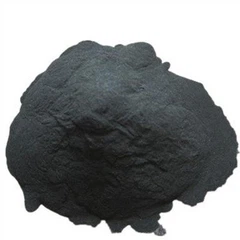
What is the flowability of graphite powder?
As a supplier of graphite powder, I often encounter customers who are curious about the flowability of graphite powder. Flowability is a crucial property that can significantly impact the handling, processing, and performance of graphite powder in various applications. In this blog post, I'll delve into what flowability means in the context of graphite powder, the factors that influence it, and its implications for different industries.
Understanding Flowability
Flowability refers to the ability of a powder to flow freely and uniformly under the influence of gravity or external forces. In the case of graphite powder, good flowability ensures that it can be easily transferred, mixed, and processed without clogging, bridging, or forming uneven layers. This property is essential for achieving consistent quality and efficient production in industries such as metallurgy, electronics, lubricants, and battery manufacturing.
Factors Affecting the Flowability of Graphite Powder
Several factors can influence the flowability of graphite powder. Understanding these factors is crucial for suppliers to produce high - quality graphite powder and for customers to select the most suitable product for their applications.
Particle Size and Shape
The particle size and shape of graphite powder play a significant role in its flowability. Generally, larger particles tend to have better flowability than smaller ones. Smaller particles have a larger surface area per unit mass, which increases the inter - particle friction and cohesion forces. This can cause the powder to agglomerate and flow less freely.
Regarding particle shape, spherical particles typically have better flowability compared to irregularly shaped particles. Spherical particles can roll over each other more easily, reducing the resistance to flow. For example, Spherical Calcined Petroleum Coke often exhibits improved flow characteristics due to its spherical shape.
Moisture Content
Moisture can have a detrimental effect on the flowability of graphite powder. Even a small amount of moisture can cause the particles to stick together, forming clumps and reducing the powder's ability to flow. Suppliers need to ensure proper drying and storage conditions to maintain low moisture levels in graphite powder. In some cases, desiccants or special packaging materials may be used to prevent moisture absorption during transportation and storage.
Surface Chemistry
The surface chemistry of graphite powder can also influence its flowability. Surface contaminants, such as oxides or adsorbed gases, can increase the inter - particle forces and reduce flowability. Graphite powder with a clean and smooth surface is more likely to flow freely. For instance, Graphitized Calcined Petroleum Coke For Chemical Reactions is often processed to have a well - defined surface chemistry, which can enhance its flow properties for use in chemical reactions.
Bulk Density
Bulk density is another important factor. A higher bulk density usually indicates better flowability, as the particles are more closely packed and there is less air between them. However, an extremely high bulk density can also lead to compaction and reduced flowability if the particles are compressed too tightly.
Measuring the Flowability of Graphite Powder
There are several methods to measure the flowability of graphite powder. One common method is the angle of repose. This is the angle formed by the surface of a pile of powder with the horizontal plane when the powder is poured onto a flat surface. A smaller angle of repose indicates better flowability.
Another method is the flow rate measurement. This involves measuring the time it takes for a certain amount of powder to flow through an orifice of a specified size. A higher flow rate implies better flowability.
Implications of Flowability in Different Industries
Metallurgy
In the metallurgical industry, graphite powder is often used as a lubricant, a carbon additive, or a refractory material. Good flowability is essential for accurate dosing and uniform distribution of graphite powder in the melting and casting processes. If the graphite powder does not flow well, it can lead to uneven carbon content in the metal, affecting the mechanical properties of the final product.
Electronics
In the electronics industry, graphite powder is used in applications such as battery electrodes and conductive coatings. For battery manufacturing, the flowability of graphite powder affects the electrode coating process. If the powder does not flow smoothly, it can result in uneven coating thickness, which can impact the battery's performance and safety.
Lubricants
Graphite powder is a popular solid lubricant due to its low friction coefficient. In lubricant formulations, the flowability of graphite powder is crucial for easy mixing with other components and for ensuring uniform distribution in the lubricating system. Poor flowability can lead to clumping and uneven lubrication, reducing the effectiveness of the lubricant.
Battery Manufacturing
In lithium - ion battery manufacturing, artificial graphite powder is widely used as the anode material. Artificial Graphite Powder with good flowability can be more easily processed into anode electrodes. It allows for better packing density and more uniform distribution of the active material, which is essential for improving the battery's energy density and cycle life.


Improving the Flowability of Graphite Powder
There are several ways to improve the flowability of graphite powder. One approach is to adjust the particle size distribution through sieving or classification processes. By removing fine particles or controlling the ratio of different particle sizes, the overall flowability can be enhanced.
Surface treatment is another option. Coating the graphite particles with a thin layer of a lubricating agent or a material that reduces inter - particle forces can improve flowability. Additionally, using anti - caking agents can prevent the powder from agglomerating.
Conclusion
The flowability of graphite powder is a complex property that is influenced by multiple factors, including particle size and shape, moisture content, surface chemistry, and bulk density. Understanding these factors and their impact on flowability is crucial for both suppliers and customers in the graphite powder industry.
As a supplier, we are committed to producing high - quality graphite powder with excellent flowability. We use advanced manufacturing processes and quality control measures to ensure that our products meet the diverse needs of our customers. Whether you are in the metallurgy, electronics, lubricants, or battery manufacturing industry, we can provide you with the most suitable graphite powder for your applications.
If you are interested in our graphite powder products or have any questions about flowability or other properties, please feel free to contact us for further discussion and procurement negotiation. We look forward to working with you to meet your specific requirements.
References
- Perry, R. H., & Green, D. W. (1997). Perry's Chemical Engineers' Handbook. McGraw - Hill.
- Powder Technology Handbook. (2000). CRC Press.
- Handbook of Powder Science and Technology. (1993). Marcel Dekker.
Send Inquiry