

Can superfine graphite powder be used in catalytic reactions?
Jan 19, 2026
Leave a message
Hey there! I'm a supplier of superfine graphite powder, and I've been getting a lot of questions lately about whether this amazing stuff can be used in catalytic reactions. So, I thought I'd sit down and share my thoughts on this topic.
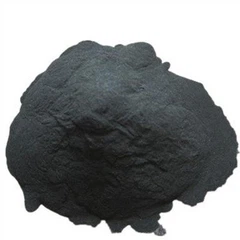
First off, let's talk a bit about what superfine graphite powder is. It's, well, exactly what it sounds like - graphite that's been ground down into super - fine particles. Graphite itself is a form of carbon with some pretty unique properties. It's got a layered structure, where the carbon atoms are arranged in hexagons in each layer, and these layers are held together by weak van der Waals forces. This gives graphite some interesting characteristics like good electrical conductivity, high thermal stability, and lubricity.
Now, onto the big question: Can superfine graphite powder be used in catalytic reactions? The short answer is yes, and there are a few reasons for that.
One of the key aspects of a good catalyst is its surface area. The more surface area a catalyst has, the more sites there are for reactant molecules to interact with. Superfine graphite powder has a large surface area because of its tiny particle size. This means that there are plenty of spots on the graphite particles where reactant molecules can adsorb and undergo chemical reactions. For example, in some oxidation reactions, the large surface area of superfine graphite powder allows for better contact between the reactants and the graphite surface, facilitating the transfer of electrons and speeding up the reaction.
Another important factor is the chemical stability of graphite. Catalysts need to be stable under the reaction conditions so that they don't break down or react with the reactants in an unwanted way. Graphite is highly stable, especially at high temperatures and in many chemical environments. This stability makes it suitable for use in catalytic reactions that occur under harsh conditions. For instance, in some industrial processes where high - temperature reactions are involved, superfine graphite powder can maintain its structure and catalytic activity.
Graphite also has some electronic properties that can be beneficial in catalytic reactions. Its delocalized electrons can participate in electron - transfer processes during a reaction. This is particularly useful in redox reactions, where the transfer of electrons is a crucial step. The ability of graphite to donate or accept electrons can help in promoting the reaction and changing the reaction pathway to make it more efficient.
Let's take a look at some specific examples of catalytic reactions where superfine graphite powder can be used.
In the field of environmental catalysis, it can be used for the removal of pollutants. For example, in the catalytic oxidation of volatile organic compounds (VOCs). VOCs are harmful pollutants that are released from various industrial processes and consumer products. Superfine graphite powder can act as a catalyst to oxidize these VOCs into less harmful substances like carbon dioxide and water. The large surface area of the graphite allows it to adsorb the VOC molecules, and its electronic properties help in the oxidation process.
In the energy sector, superfine graphite powder can play a role in fuel cell reactions. Fuel cells are devices that convert chemical energy into electrical energy. The catalytic reactions that occur at the electrodes of a fuel cell are crucial for its performance. Graphite can be used as a support material for other catalysts or even as a catalyst itself in some cases. Its electrical conductivity helps in the efficient transfer of electrons during the fuel cell reactions, improving the overall efficiency of the fuel cell.
Now, I'd like to mention some related products that might also be of interest. If you're looking into different types of graphite - based materials for catalytic reactions or other applications, you might want to check out Graphitized Petroleum Coke Powder. It's another form of graphite powder with its own unique properties and potential uses. Also, Graphite Oxide Powder has some interesting characteristics and can be used in a variety of chemical reactions. And for those in the battery industry, Graphitized Calcined Petroleum Coke For Batteries is a great option as it can be used in battery electrodes and might also have some catalytic applications related to battery reactions.
Of course, like any material, there are some limitations to using superfine graphite powder in catalytic reactions. One of the challenges is the selectivity of the reactions. Sometimes, graphite might catalyze multiple reactions simultaneously, and it can be difficult to control which reaction occurs preferentially. This requires some fine - tuning of the reaction conditions and the properties of the graphite powder, such as its surface functionalization.
Another aspect to consider is the cost - effectiveness. While graphite is relatively abundant, the process of producing superfine graphite powder can be costly. This might impact its widespread use in large - scale catalytic processes. However, as technology advances, the cost of production is likely to come down, making it a more viable option in the future.


So, if you're in the business of catalytic reactions or are just curious about exploring new materials for your processes, superfine graphite powder could be a great option to consider. It has a lot of potential, and with further research and development, we're likely to see even more applications for it in the catalytic field.
If you're interested in learning more about our superfine graphite powder or want to discuss potential applications in your catalytic reactions, I'd love to have a chat with you. Whether you're a small - scale research lab or a large - scale industrial operation, we can work together to find the right solution for your needs. Just reach out, and we can start the conversation about how superfine graphite powder can benefit your catalytic processes.
References
- Li, X., & Wu, H. (2018). Graphite - based catalysts for environmental applications. Journal of Environmental Sciences, 66, 1 - 10.
- Wang, Y., & Zhang, L. (2019). The role of graphite in fuel cell catalysis. Energy & Environmental Science, 12(3), 850 - 860.
Send Inquiry