


What Are The Uses Of Graphite Electrodes?
May 30, 2025
Leave a message
What are the uses of graphite electrodes?
Graphite electrodes are mainly used in metallurgy, chemical industry and other industries. The specific applications are as follows:
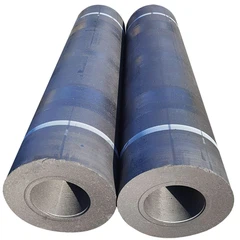
1. Metallurgy: Electric furnace steelmaking is a major user of graphite electrodes. Electric furnace steel production in my country accounts for about 18% of crude steel production, and graphite electrodes for steelmaking account for 70% to 80% of the total use of graphite electrodes. Electric furnace steelmaking uses graphite electrodes to introduce current into the furnace, and uses the high-temperature heat source generated by the arc between the electrode end and the charge for smelting.
2. Chemical industry: Submersible thermal electric furnaces are mainly used to produce industrial silicon and yellow phosphorus. Its characteristics are that the lower part of the conductive electrode is buried in the charge, an arc is formed in the charge layer, and the heat energy generated by the resistance of the charge itself is used to heat the charge. Among them, graphite electrodes are required for submersible thermal electric furnaces with higher current density. For example, about 100kg of graphite electrodes are consumed for every ton of silicon produced, and about 40kg of graphite electrodes are consumed for every ton of yellow phosphorus produced.
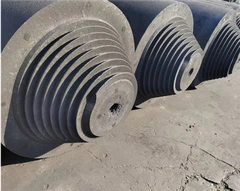
Graphite electrode is a high-temperature resistant graphite conductive material. Do you know the uses and properties of graphite electrodes?
Graphite electrode classification: ordinary power graphite electrode (RP); high power graphite electrode (HP); quasi-ultra-high power graphite electrode (SHP); ultra-high power graphite electrode (UHP).
(1) Used in electric arc steelmaking furnace
Graphite electrode materials can be mainly used for electric furnace steelmaking. Electric furnace steelmaking uses graphite electrodes to introduce working current into the furnace. The strong current at the lower end of the electrode can affect the arc discharge through the gas environment, and the heat generated by the arc is used for smelting. The size of the electric capacity is equipped with graphite electrodes with different diameters, which can be used continuously, and the connection between the electrodes is against the electrode joint. Graphite used as an electrode material for steelmaking accounts for about 70-80% of the total amount of graphite electrodes in China.
(2) Used in electric furnaces
It is mainly used to produce iron alloys, pure silicon, yellow phosphorus, calcium carbide and matte. Its characteristic is that the lower part of the conductive electrode is buried in the charge. Therefore, in addition to the heat generated by the arc between the electric plate and the charge, the resistance of the charge also generates heat when the current passes through the charge.
(3) Used in resistance furnaces
The graphitization furnace used for graphite material products in the production process, the melting furnace and production of melting technology glass, and the electric furnace used for silicon carbide are all resistance furnaces. The material management in the furnace is both a heating resistor and a heated object.
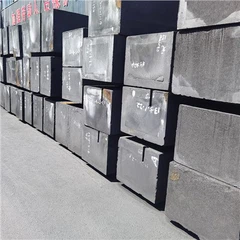
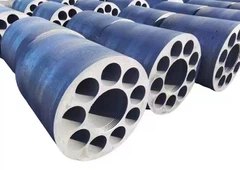
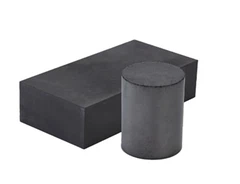
(4) A large number of graphite electrode blanks are also used to process into various crucibles, graphite boats, hot press molds and vacuum furnace heating elements and other special-shaped products.
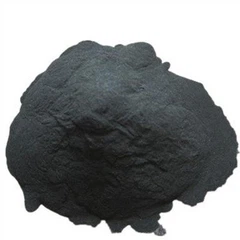
It should also be noted that among the graphite materials in the three high-temperature composite materials including graphite electrodes, graphite molds and graphite crucibles, at high temperatures, the three graphite materials are easy to oxidize and burn, thereby the carbon layer on the surface of the plastic material increases the porosity of the life structure. Graphite electrode is an important carbon product, made of petroleum coke and asphalt coke as aggregates and coal tar as binder. It is used in arc steelmaking furnaces, submerged arc furnaces and other equipment, and has the properties of conductivity, high temperature resistance, and thermal shock resistance. The manufacturing process is strict and there are many types, which need to be selected according to actual conditions. Graphite electrodes are widely used in smelting, chemical industry and other fields, focusing on environmental protection and resource utilization, and are of great significance to industrial development.
Graphite electrode is a kind of high-temperature resistant graphite conductive material made of petroleum coke and asphalt coke as aggregates and coal tar as binder, through raw material calcination, crushing and grinding, batching, kneading, molding, roasting, graphitization (carbonization), and machining. It is called artificial graphite electrode (referred to as graphite electrode). The equipment that uses it as a conductor to convert electrical energy into thermal energy to heat and refine the arc furnace charge is called graphite electrode arc furnace.
As an important carbon product, graphite electrode plays the role of conductivity and heat transfer in production. It is a consumable on smelting equipment such as arc steelmaking furnaces, submerged arc furnaces, electric furnaces and resistance furnaces.
Graphite electrodes are widely used and are mainly used in various smelting equipment such as electric arc steelmaking furnaces, ore-heat furnaces, electric furnaces and resistance furnaces. As a conductive material, graphite electrodes play a vital role in the smelting process. In electric arc steelmaking furnaces, graphite electrodes generate high-temperature arcs through conduction to melt the charge and achieve the purpose of steelmaking. In ore-heat furnaces and electric furnaces, graphite electrodes are used to conduct current and generate heat energy to heat and melt the charge. In addition, graphite electrodes are also widely used in chemical, metallurgical, mechanical, electronic and other industrial fields.
The properties of graphite electrodes mainly include conductivity, high temperature resistance, thermal shock resistance, oxidation resistance and mechanical strength. First, graphite electrodes have excellent conductivity and can effectively transmit current and generate high-temperature arcs. Secondly, graphite electrodes have extremely high high temperature resistance and can work stably for a long time in high temperature environments.
In addition, graphite electrodes also have good thermal shock resistance and can withstand rapid changes in temperature in the furnace without breaking. At the same time, graphite electrodes also have antioxidant properties, which can effectively prevent oxidation. Finally, graphite electrodes have high mechanical strength and can withstand various forces in the furnace without deformation or breakage. In practical applications, the performance of graphite electrodes directly affects the working efficiency and smelting effect of smelting equipment. Therefore, when selecting graphite electrodes, it is necessary to fully consider their performance indicators and make reasonable choices based on actual usage. At the same time, during use, it is also necessary to pay attention to the care and maintenance of graphite electrodes to extend their service life and improve the use effect.
In short, as an important carbon product, graphite electrodes have broad application prospects in industrial fields such as smelting, chemical industry, metallurgy, machinery, and electronics. With the continuous advancement of science and technology and the rapid development of industry, the performance and application of graphite electrodes will continue to improve and perfect, making greater contributions to the development of various industries. In addition to the basic properties and uses of graphite electrodes mentioned above, there are some other knowledge points worth knowing. For example, the manufacturing process of graphite electrodes requires multiple steps such as raw material calcination, crushing and grinding, batching, kneading, molding, roasting, graphitization (carbonization), and machining. Each step requires strict control of process parameters to ensure the quality and performance of the final product. In addition, there are many types and specifications of graphite electrodes. Different types of graphite electrodes have different uses and characteristics, and need to be selected according to actual conditions.
Send Inquiry