


Application Scenarios Of Graphite Products And Graphite Electrodes
Aug 17, 2025
Leave a message
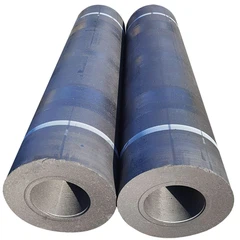
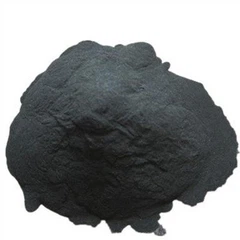
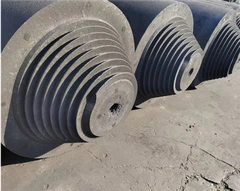
The primary raw material for graphite electrodes is petroleum coke. A small amount of pitch coke may be added to general power graphite electrodes. The sulfur content of both petroleum coke and pitch coke must not exceed 0.5%.
Graphite electrodes are used in electric arc steelmaking furnaces, a major application of graphite electrodes for graphite products. Electric arc steelmaking accounts for approximately 18% of my country's crude steel production, and graphite electrodes for steelmaking account for 70-80% of total graphite electrode consumption. Electric arc steelmaking uses graphite electrodes to conduct current into the furnace, generating a high-temperature heat source between the electrode tip and the charge. Submerged arc furnaces are primarily used to produce industrial silicon and yellow phosphorus. Their characteristic feature is that the lower portion of the conductive electrode is buried in the furnace, forming an arc within the charge layer. The heat generated by the charge's own resistance is then used to heat the charge. Submerged arc furnaces, which require higher current densities, require graphite electrodes. For example, approximately 100 kg of graphite electrodes are consumed per ton of silicon produced, and approximately 40 kg per ton of yellow phosphorus produced.
Resistive furnaces, such as graphitization furnaces for graphite product production, glass melting furnaces, and electric furnaces for silicon carbide production, are all examples of resistance furnaces. The charge within the furnace serves as both the heating resistor and the heated target. Typically, the conductive graphite electrode is embedded in the furnace headwall at the end of the resistance furnace, where it is not consumed continuously.
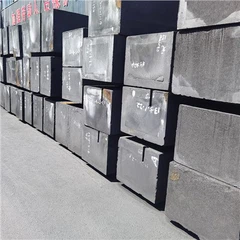
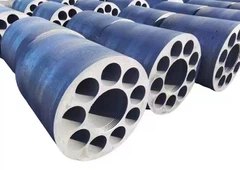
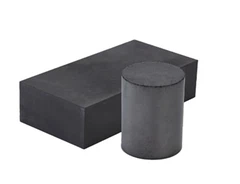
This type of furnace is used to produce custom-shaped graphite products. Graphite electrode blanks are also processed into various custom-shaped graphite products, such as crucibles, molds, boats, and heating elements. For example, in the quartz glass industry, 10 tons of graphite electrode blanks are required to produce 1 ton of electric melting tubes; and 100 kg of graphite electrode blanks are required to produce 1 ton of quartz bricks.
Send Inquiry