


What is the consumption of graphite electrodes?
Mar 07, 2025
Leave a message
The consumption of graphite electrodes in electric furnace steelmaking is mainly related to the quality of the electrode itself, and is also closely related to the furnace conditions of steelmaking (such as the age of the furnace, whether there are mechanical failures, whether there is continuous production, etc.) and steelmaking operations (such as smelting steel types, oxygen blowing time, furnace charge conditions, etc.).
1. End consumption
Including the increase of graphite materials caused by the high temperature of the arc and the loss of chemical reactions between the electrode end and the molten steel and slag. The rate of high temperature increase of the end mainly depends on the current density passing through the electrode, and secondly on the diameter size of the electrode side after oxidation. The end consumption is also related to whether the electrode is inserted into the molten steel to increase carbon.
2. Side oxidation
The chemical composition of the electrode is carbon. Carbon will undergo oxidation reactions with air, water vapor, and carbon dioxide under certain conditions. The amount of oxidation on the electrode side is related to the unit oxidation rate and the exposed area. Under normal circumstances, the amount of oxidation on the electrode side accounts for about 50% of the total electrode consumption. In recent years, in order to increase the speed of electric furnace smelting, the frequency of oxygen blowing operations has been increased, resulting in increased oxidation losses of the electrode. Frequently observing the redness of the electrode trunk and the taper of the lower end during the steelmaking process is an intuitive way to measure the electrode's antioxidant capacity.
3. Loss of the residual end
When the electrode is used continuously to the joint of the upper and lower electrodes, a small section of the electrode or joint (i.e. the residual body) is detached due to oxidation and thinning of the body or penetration of the crack. The size of the residual end loss is related to the shape of the joint, the internal structure of the electrode, and the vibration and impact of the electrode column.
4. Surface shedding and block falling
The result of rapid cooling and heating during the smelting process, and the poor thermal vibration resistance of the electrode itself.
5. Electrode breakage
Including electrode trunk breakage and joint breakage. Electrode breakage is related to the quality and processing cooperation of the graphite electrode and the joint itself, as well as the steelmaking operation. The cause of the occurrence is often the focus of dispute between steel mills and electrode manufacturers.
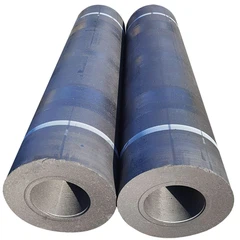
The main raw material for the production of graphite electrodes is petroleum coke. Ordinary power graphite electrodes can add a small amount of asphalt coke. The sulfur content of petroleum coke and asphalt coke cannot exceed 0.5%. Needle coke is also required when producing high power or ultra-high power graphite electrodes.
Send Inquiry