


Identical Purity, Double the Price Gap! Coarse-Grained vs. Fine-Grained Graphite: An In-Depth Analysis of Full-Lifecycle Costs and Selection Strategies
Apr 28, 2026
Leave a message
In its operations regarding the procurement and selection of high-purity graphite, LINZHANG XINHUI CARBON CO., LTD. has observed the following: even when both types meet high-purity standards of 99.9% or 99.99%, the selling price of coarse-grained high-purity graphite is significantly lower-often by a factor of 1 to 3 times-than that of fine-grained high-purity graphite. This price disparity is not merely a reflection of grain size differences; rather, it represents a stratification of costs across the entire value chain-encompassing raw materials, purification, molding, yield rates, and machining. Neither product category involves artificially inflated premiums nor compromised quality; they simply differ fundamentally in their manufacturing processes, structural properties, and applicable operating conditions.
I. Core Definitions
LINZHANG XINHUI CARBON CO., LTD. clearly delineates the technical boundaries between these two product categories:
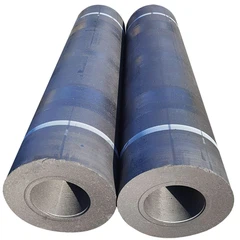
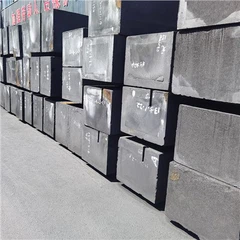
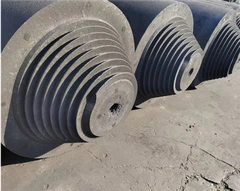
• Coarse-grained High-purity Graphite: Features an aggregate grain size of 0.1–3 mm. It is formed using die molding or extrusion techniques; the individual grains are visually discernible, porosity is relatively high, and both density and mechanical strength are moderate. Purity levels typically range from 3N to 4N.
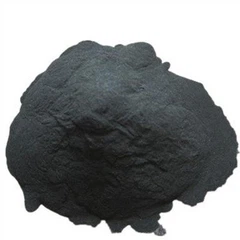
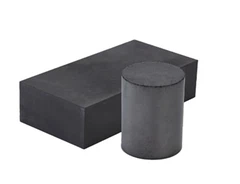
• Fine-grained High-purity Graphite: Features an aggregate grain size of 5–100 μm. Its core manufacturing process involves Cold Isostatic Pressing (CIP). The graphite powder is exceptionally fine, resulting in a dense, compact structure. Through multiple cycles of impregnation and baking to enhance density, it achieves superior density, uniformity, and mechanical strength, and can consistently attain ultra-high purity levels ranging from 4N to 5N.
Grain size dictates the manufacturing process; the process determines the cost; and the structural properties define the specific application scenarios.
II. Cost Differentials Across the Value Chain
1. Raw Material Costs
For its coarse-grained high-purity graphite, LINZHANG XINHUI CARBON CO., LTD. utilizes standard medium-to-coarse flake graphite aggregates, which do not require ultra-fine grinding. Consequently, raw material inventories are abundant, and costs are relatively low. In contrast, fine-grained high-purity graphite necessitates the use of high-purity concentrates. These concentrates undergo prolonged periods of ultra-fine grinding-a process that incurs significant costs due to equipment wear, high energy consumption, and material loss resulting from powder oxidation and agglomeration-resulting in raw material costs that are 35% to 80% higher.
2. Purification Energy Consumption
The specific surface area of the graphite powder directly influences the difficulty-and thus the energy requirements-of the purification process used to remove impurities. LINZHANG XINHUI CARBON CO., LTD.: Coarse-grained graphite features a low specific surface area, facilitating easy removal of impurities. Consequently, it requires shorter purification cycles and entails lower gas and electricity consumption; for a given level of purity, its energy consumption is 15%–30% lower than that of fine-grained graphite. In contrast, impurities in fine-grained graphite are diffusely distributed, necessitating extended high-temperature treatment durations and multiple acid-leaching cycles, resulting in energy consumption that is 1.5 to 2 times higher than that of coarse-grained graphite.
3. Molding Process
The company's coarse-grained products are primarily manufactured using die molding and extrusion techniques. These methods require low capital investment in equipment, facilitate efficient degassing during molding, and minimize the risk of delamination or cracking. Furthermore, they allow for large batch outputs and short production cycles. Fine-grained products, conversely, are formed using Cold Isostatic Pressing (CIP). This method entails high equipment costs and imposes stringent process requirements; the fine powder is prone to entrapping air, leading to porosity defects. Consequently, the process demands slow, steady-pressure molding as well as multiple impregnation and baking cycles to achieve adequate densification, thereby significantly extending the overall production cycle.
4. Finished Product Yield
LINZHANG XINHUI CARBON CO., LTD. possesses a mature process for coarse-grained high-purity graphite, achieving a yield rate of 85%–95% with low scrap costs. Fine-grained products, however, are susceptible to cracking, density irregularities, and void formation. The process for these products has a low tolerance for error, resulting in a yield rate of only 65%–80%; the high volume of defective products subsequently drives up the unit cost allocated to each finished piece.
5. Machining Costs
The company's coarse-grained graphite exhibits low cutting resistance and is primarily subjected to rough machining operations, resulting in minimal tool wear and short processing times. Fine-grained graphite, characterized by its high density and hardness, is typically utilized for precision components that demand high dimensional accuracy, superior surface finish, and chip-free edges. Consequently, machining fine-grained graphite presents significant technical challenges and causes severe tool wear; the required machining time is 1.5 to 3 times longer than that for coarse-grained graphite, driving up machining costs by 50%–120%.
Send Inquiry