

What is the triboelectric property of HP Graphite Powder?
Jun 19, 2025
Leave a message
What is the triboelectric property of HP Graphite Powder?
As a supplier of HP Graphite Powder, I often encounter inquiries about the various properties of this remarkable material, especially its triboelectric property. In this blog, I will delve into the concept of triboelectricity, explore the triboelectric characteristics of HP Graphite Powder, and discuss its implications in different applications.
Understanding Triboelectricity
Triboelectricity is the generation of electric charge through the contact and separation of two different materials. When two materials come into contact, electrons can transfer from one material to the other, leaving one material positively charged and the other negatively charged. This phenomenon is commonly observed in everyday life, such as when you rub a balloon against your hair and it sticks to the wall due to the electrostatic charge.
The triboelectric series is a list that ranks materials according to their tendency to gain or lose electrons when in contact with other materials. Materials at the top of the series tend to lose electrons and become positively charged, while those at the bottom tend to gain electrons and become negatively charged. The farther apart two materials are on the triboelectric series, the greater the potential for charge transfer when they come into contact.
Triboelectric Property of HP Graphite Powder
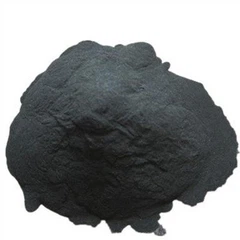
HP Graphite Powder, also known as High - Purity Graphite Powder, has unique triboelectric properties that make it an interesting material for various applications. Graphite is a form of carbon with a layered structure, where the carbon atoms are arranged in hexagonal rings within each layer. These layers are held together by weak van der Waals forces, allowing them to slide over each other easily.
In terms of triboelectricity, graphite generally has a tendency to gain electrons. When it comes into contact with certain materials, electrons can be transferred from the other material to the graphite powder, resulting in a negative charge on the graphite. The degree of charge transfer depends on several factors, including the nature of the contacting material, the surface area of the graphite powder, and the contact conditions such as pressure and duration of contact.
One of the factors that influence the triboelectric property of HP Graphite Powder is its high purity. High - purity graphite has fewer impurities, which means that the surface properties are more consistent. This allows for more predictable triboelectric behavior compared to lower - purity graphite. The smooth surface of the graphite layers also plays a role in the charge transfer process. The large surface area of the powder particles provides more opportunities for contact with other materials, enhancing the triboelectric effect.
Applications Based on Triboelectric Property
-
Electrostatic Discharge (ESD) Protection
- In the electronics industry, ESD can cause damage to sensitive electronic components. HP Graphite Powder can be used in ESD - protective materials. For example, it can be incorporated into polymers to create conductive composites. When these composites come into contact with charged objects, the graphite powder can help to dissipate the electrostatic charge safely. This is because the triboelectric property of graphite allows it to interact with the charge on the object and transfer the electrons, reducing the risk of sudden electrostatic discharge.
-
Triboelectric Nanogenerators (TENGs)
- Triboelectric nanogenerators are devices that convert mechanical energy into electrical energy based on the triboelectric effect. HP Graphite Powder can be used as one of the triboelectric materials in TENGs. When the graphite powder is brought into contact with another suitable material and then separated repeatedly, an alternating current can be generated. The unique layered structure of graphite enables efficient charge transfer during the contact - separation cycles, making it a potential candidate for improving the performance of TENGs. You can find more information about different types of graphite powders such as Carbon Graphite Powder and Artificial Graphite Powder which may also have applications in TENGs.
-
Lubrication and Anti - Static Applications
- In lubrication systems, HP Graphite Powder is often used as a solid lubricant. The triboelectric property of graphite can also play a role in reducing static electricity in these systems. When the graphite powder is used between moving parts, it not only reduces friction but also helps to prevent the build - up of static charge. This is important in applications where static electricity can attract dust and debris, causing wear and tear on the moving parts. Additionally, in some industries where there is a risk of explosion due to static sparks, such as the chemical and mining industries, the use of HP Graphite Powder can help to maintain a safe electrostatic environment.
-
Printing and Imaging

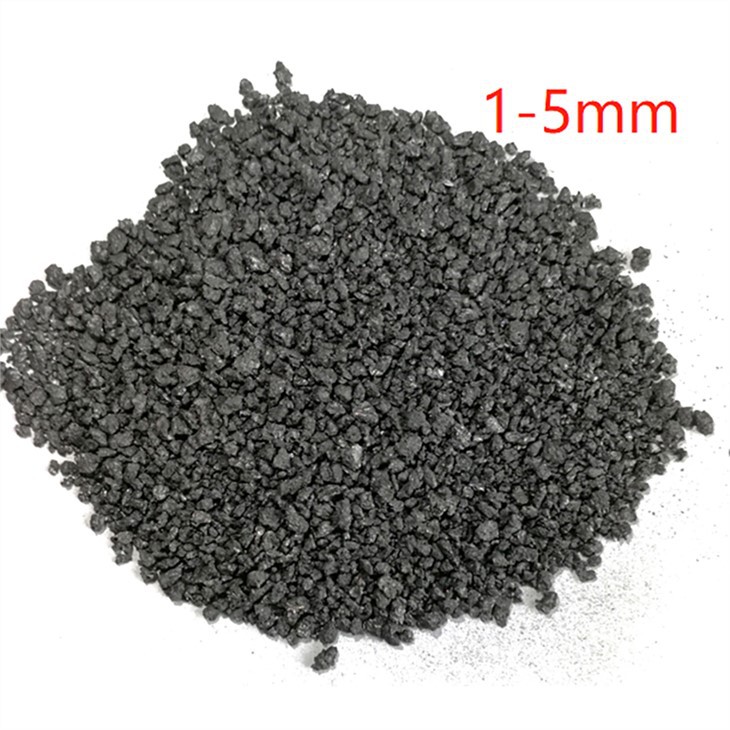
- In the printing industry, electrostatic forces are often used to transfer toner particles onto paper. HP Graphite Powder can be used in the development of advanced toner materials. Its triboelectric property can be exploited to control the charging of the toner particles, ensuring proper adhesion to the paper during the printing process. The ability to precisely control the charge on the toner particles can lead to higher - quality prints with better resolution and less toner waste.
Factors Affecting Triboelectric Performance
Several factors can affect the triboelectric performance of HP Graphite Powder. Particle size is an important factor. Smaller particle sizes generally have a larger surface area, which can lead to more significant charge transfer. However, extremely small particles may also agglomerate more easily, which can affect the contact with other materials.
The surface treatment of the graphite powder can also influence its triboelectric property. Surface modifications such as coating the graphite particles with certain polymers or functional groups can change the surface energy and the way electrons are transferred. For example, a hydrophilic coating may change the way the graphite interacts with water - based materials and thus affect the triboelectric behavior.
The environmental conditions, such as humidity and temperature, also play a role. High humidity can reduce the triboelectric charge because water molecules can act as a conductor and dissipate the charge. Temperature can affect the mobility of electrons and the physical properties of the contacting materials, thereby influencing the charge transfer process.
Comparison with Other Graphite Powders
Compared to RP Graphite Powder (Resin - Bonded Graphite Powder) and Artificial Graphite Powder, HP Graphite Powder has distinct triboelectric characteristics. RP Graphite Powder often has a resin matrix that can affect its surface properties and triboelectric behavior. The resin may act as a barrier to charge transfer or introduce additional variables in the triboelectric process.
Artificial Graphite Powder, on the other hand, may have different microstructures depending on the manufacturing process. Some artificial graphite powders may have a more ordered or disordered structure compared to HP Graphite Powder, which can lead to different triboelectric responses. HP Graphite Powder's high purity gives it a more stable and predictable triboelectric property, which is advantageous in applications where precise control of electrostatic charge is required.
Contact for Procurement
If you are interested in exploring the potential of HP Graphite Powder for your specific application, especially in relation to its triboelectric property, we would be more than happy to discuss your requirements. Our team of experts can provide detailed information about the product, including its specifications, triboelectric performance under different conditions, and how it can be optimized for your needs. We can also offer samples for you to conduct your own tests. Please reach out to us to start the procurement discussion and find the best solution for your business.
References
- Zhang, X., & Wang, Z. L. (2012). Triboelectric nanogenerators as new energy technology and self - powered sensors - Principles, problems and perspectives. Nano Energy, 1(1), 328 - 341.
- Dresselhaus, M. S., Dresselhaus, G., & Eklund, P. C. (1996). Science of fullerenes and carbon nanotubes. Academic Press.
- Kittel, C. (2004). Introduction to solid state physics. John Wiley & Sons.
Send Inquiry