

What is the surface energy of superfine graphite powder?
Jan 12, 2026
Leave a message
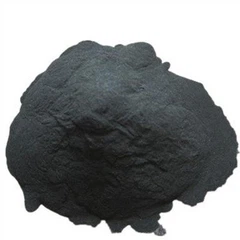
As a supplier of superfine graphite powder, I am often asked about various aspects of this remarkable material. One question that frequently comes up is, "What is the surface energy of superfine graphite powder?" In this blog post, I will delve into the concept of surface energy, its significance for superfine graphite powder, and its implications in different applications.
Understanding Surface Energy
Surface energy is a fundamental property of materials, representing the excess energy at the surface compared to the bulk. It arises due to the imbalance of intermolecular forces at the interface between a material and its surroundings. At the surface of a solid, atoms or molecules have fewer neighboring atoms compared to those in the bulk, resulting in a net inward force that creates a surface tension. This surface tension is directly related to the surface energy of the material.


For superfine graphite powder, the high surface - to - volume ratio makes surface energy a particularly important characteristic. As the particle size decreases to the superfine scale, the proportion of surface atoms increases significantly, leading to a relatively high surface energy. This high surface energy can have profound effects on the physical and chemical properties of the powder, such as its dispersibility, reactivity, and adhesion.
Measuring the Surface Energy of Superfine Graphite Powder
There are several methods to measure the surface energy of superfine graphite powder. One of the most common techniques is contact angle measurement. By measuring the contact angle of a liquid droplet on a powder compact or a thin film of the graphite powder, we can calculate the surface energy using appropriate equations, such as the Young - Dupré equation. Another method is inverse gas chromatography (IGC), which can provide detailed information about the surface energy components, including the dispersive and polar components.
The surface energy of superfine graphite powder can vary depending on several factors. The degree of graphitization is a crucial factor. Highly graphitized graphite powders generally have lower surface energy because the well - ordered graphite structure reduces the number of dangling bonds and surface defects. Particle size also plays a significant role. Smaller particles have higher surface energy due to their larger surface - to - volume ratio. Additionally, surface treatments, such as oxidation or coating, can modify the surface energy of the graphite powder. Oxidation can introduce polar functional groups on the surface, increasing the polar component of the surface energy.
Significance of Surface Energy in Applications
Lubrication
In lubrication applications, the surface energy of superfine graphite powder affects its ability to form a lubricating film. A powder with appropriate surface energy can adhere well to the contact surfaces, reducing friction and wear. The high surface energy of superfine graphite powder allows it to spread easily on the surfaces, forming a continuous and stable lubricating layer. This is particularly important in high - performance lubrication systems, where the lubricant needs to withstand extreme pressures and temperatures.
Composite Materials
When used in composite materials, the surface energy of superfine graphite powder influences its compatibility with the matrix material. For example, in polymer composites, a good match between the surface energy of the graphite powder and the polymer matrix is essential for achieving strong interfacial adhesion. If the surface energy difference is too large, the powder may agglomerate, leading to poor dispersion and reduced mechanical properties of the composite. By adjusting the surface energy of the graphite powder through surface treatment, we can improve its dispersion and interfacial bonding in the composite, resulting in enhanced performance. You can find more information about Graphitized Calcined Petroleum Coke For Composite Materials on our website.
Electrochemical Applications
In electrochemical applications, such as batteries and supercapacitors, the surface energy of superfine graphite powder affects the electrode - electrolyte interface. A high - surface - energy powder can provide more active sites for electrochemical reactions, improving the charge - discharge efficiency and cycling stability of the device. However, it also needs to be balanced with the wettability of the electrolyte. If the surface energy is too high, the electrolyte may not wet the electrode surface properly, leading to poor ion transport.
Our Superfine Graphite Powder Offerings
As a supplier of superfine graphite powder, we understand the importance of surface energy in different applications. We offer a wide range of superfine graphite powders with carefully controlled surface energy. Our products are produced using advanced manufacturing processes that ensure high purity and uniform particle size distribution. Whether you need graphite powder for lubrication, composite materials, or electrochemical applications, we can provide the right solution.
We also offer Graphitized Calcined Petroleum Coke For Titanium Metal Production, which is a high - quality raw material with excellent properties. Additionally, our Powdered Calcined Petroleum Coke is suitable for various industrial applications.
Conclusion and Contact
In conclusion, the surface energy of superfine graphite powder is a critical property that affects its performance in many applications. By understanding and controlling the surface energy, we can optimize the use of this material and develop high - performance products. Whether you are a researcher, an engineer, or a manufacturer, if you are interested in our superfine graphite powder or have any questions about surface energy and its applications, we encourage you to contact us for further discussion and potential procurement. We are committed to providing high - quality products and excellent customer service.
References
- Adamson, A. W., & Gast, A. P. (1997). Physical Chemistry of Surfaces. John Wiley & Sons.
- Israelachvili, J. N. (2011). Intermolecular and Surface Forces. Academic Press.
- Wu, S. (1982). Polymer Interface and Adhesion. Marcel Dekker.
Send Inquiry