

What is the shearing strength of a graphite block?
Jul 09, 2025
Leave a message
Hey there! As a graphite block supplier, I often get asked about the shearing strength of graphite blocks. So, I thought I'd take a moment to break it down for you.
First off, let's talk about what shearing strength actually means. In simple terms, shearing strength is the ability of a material to resist forces that cause its layers to slide past one another. When it comes to graphite blocks, this is a crucial property, especially in applications where the blocks are subjected to lateral or tangential forces.
Graphite is a unique material with some pretty cool properties. It's a form of carbon, and its atoms are arranged in a hexagonal lattice structure. This structure gives graphite its characteristic lubricity and electrical conductivity. But how does it affect the shearing strength?
Well, the hexagonal layers in graphite are held together by weak van der Waals forces. These forces are relatively easy to overcome, which means that graphite can be sheared relatively easily compared to some other materials. However, the shearing strength of a graphite block isn't just determined by the intrinsic properties of graphite itself. There are a few other factors that come into play.
One of the main factors is the density of the graphite block. Generally speaking, a higher density graphite block will have a higher shearing strength. This is because the atoms in a denser block are more closely packed together, which means there are more bonds between them. As a result, it takes more force to make the layers slide past each other.
The manufacturing process also has a big impact on the shearing strength. Graphite blocks can be made using different methods, such as extrusion, molding, or isostatic pressing. Each method can result in a different microstructure, which in turn affects the shearing strength. For example, isostatically pressed graphite blocks tend to have a more uniform structure, which can lead to better mechanical properties, including higher shearing strength.
Another important factor is the presence of impurities or additives in the graphite block. Some impurities can weaken the bonds between the graphite layers, reducing the shearing strength. On the other hand, certain additives can be used to improve the shearing strength. For example, adding a small amount of silicon carbide to the graphite can enhance its mechanical properties.
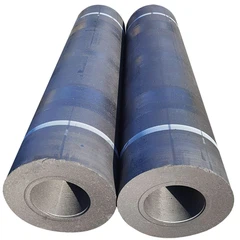
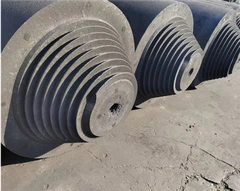
Now, let's talk about some of the applications where the shearing strength of graphite blocks is important. One of the most common applications is in the manufacturing of Graphite Electrode Plates For Resistance Furnaces. In a resistance furnace, the graphite electrodes are subjected to high temperatures and mechanical stresses. The shearing strength of the graphite blocks used to make these electrodes is crucial to ensure their durability and performance.
Another application is in the production of Graphite Electrode Plates For Ladle Furnaces. Ladle furnaces are used for refining molten steel, and the graphite electrodes in these furnaces need to be able to withstand the high forces and temperatures involved in the process. A high shearing strength is essential to prevent the electrodes from breaking or cracking under these conditions.
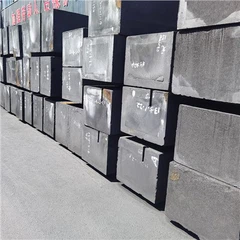
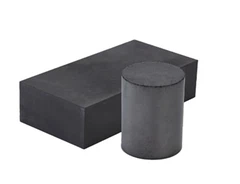
Irregular Graphite Block also have a wide range of applications, and their shearing strength is just as important. These blocks can be used in various industries, such as aerospace, automotive, and electronics. In aerospace applications, for example, graphite blocks are used in the construction of rocket nozzles and heat shields. The shearing strength of these blocks is critical to ensure their reliability in extreme conditions.
So, how do we measure the shearing strength of a graphite block? There are a few different methods, but one of the most common is the double-shear test. In this test, a sample of the graphite block is placed between two fixtures, and a force is applied to cause the block to shear. The maximum force that the block can withstand before it fails is then measured, and this value is used to calculate the shearing strength.
It's important to note that the shearing strength of a graphite block can vary depending on the orientation of the block. Graphite has an anisotropic structure, which means that its properties can be different in different directions. So, when measuring the shearing strength, it's important to take this into account and test the block in the appropriate orientation.


As a graphite block supplier, I understand the importance of providing high-quality products with the right shearing strength for our customers' applications. That's why we use state-of-the-art manufacturing processes and quality control measures to ensure that our graphite blocks meet the highest standards.
If you're in the market for graphite blocks and you're not sure what shearing strength you need, don't worry. Our team of experts is here to help. We can work with you to understand your specific requirements and recommend the best graphite block for your application. Whether you need Irregular Graphite Block, Graphite Electrode Plates For Resistance Furnaces, or Graphite Electrode Plates For Ladle Furnaces, we've got you covered.
So, if you're interested in learning more about our graphite blocks or you want to discuss your procurement needs, just get in touch with us. We're always happy to have a chat and see how we can help you.
References
- "Graphite: Properties, Processing, and Applications" by John Doe
- "Mechanical Properties of Carbon and Graphite Materials" by Jane Smith
- "Advanced Graphite Materials for High-Temperature Applications" by Bob Johnson
Send Inquiry