

What is the bending strength of a graphite block?
Dec 31, 2025
Leave a message
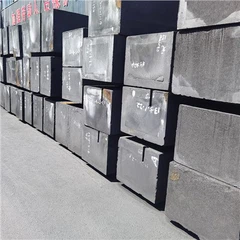
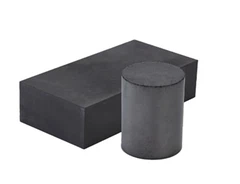
Hey there! As a supplier of Graphite Blocks, I often get asked about the bending strength of these nifty materials. So, I thought I'd take a deep dive into what bending strength really means for graphite blocks and why it matters.
What's Bending Strength Anyway?
Let's start with the basics. Bending strength, also known as flexural strength, is a measure of a material's ability to resist deformation under a bending load. When you apply a force to a graphite block in a way that causes it to bend, the bending strength tells you how much force the block can handle before it breaks or cracks.
Think of it like trying to bend a stick. If it's a strong stick, it'll take a lot of force to make it snap. But if it's a weak one, it'll break easily. The same principle applies to graphite blocks. A high bending strength means the block can withstand more bending force without failing.
Why Does Bending Strength Matter for Graphite Blocks?
Graphite blocks are used in a wide range of industries, from metallurgy to electronics. In each of these applications, the bending strength of the graphite block can play a crucial role.
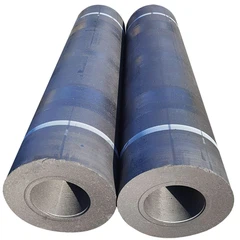
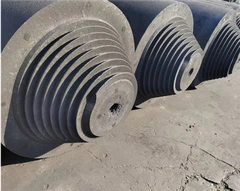
For example, in Graphite Electrode Plates For Ladle Furnaces, the blocks need to be able to withstand the mechanical stresses that come with the melting and refining processes. If the bending strength is too low, the plates could crack or break under the weight of the molten metal or the forces exerted during stirring.
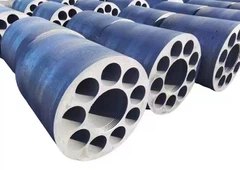
In Graphite Electrode Blocks For Powder Metallurgy, the blocks are used to shape and form metal powders into various parts. During the pressing and sintering processes, the blocks are subjected to significant pressure and bending forces. A high bending strength ensures that the blocks can maintain their shape and integrity, resulting in high-quality parts.
Even in electronics, where graphite blocks are used for things like heat sinks and electrical contacts, bending strength is important. The blocks need to be durable enough to withstand the rigors of assembly and use without breaking or deforming.
Factors Affecting the Bending Strength of Graphite Blocks
The bending strength of a graphite block isn't just a fixed number. It can be influenced by several factors, including:
1. Density
Generally, higher density graphite blocks tend to have higher bending strength. This is because a higher density means there are more graphite particles packed together, which provides more resistance to bending forces.


2. Purity
The purity of the graphite can also affect its bending strength. Impurities in the graphite can create weak points in the structure, making it more likely to crack or break under stress. High-purity graphite blocks typically have better bending strength.
3. Manufacturing Process
The way the graphite block is manufactured can have a big impact on its bending strength. Processes like isostatic pressing, which apply pressure evenly from all directions, can result in more uniform and stronger graphite blocks compared to other methods.
4. Grain Size
The size of the graphite grains in the block can also play a role. Smaller grain sizes often lead to higher bending strength because they provide a more continuous and uniform structure.
Measuring the Bending Strength of Graphite Blocks
So, how do we actually measure the bending strength of a graphite block? There are a few different methods, but one of the most common is the three-point bending test.
In a three-point bending test, a graphite block is placed on two supports and a load is applied at the center. The load is gradually increased until the block breaks. The bending strength is then calculated based on the maximum load the block can withstand and its dimensions.
This test gives us a good idea of how the graphite block will perform under a simple bending load. However, it's important to note that real-world applications can be more complex, and other factors like temperature, humidity, and the presence of other materials can also affect the bending strength.
Our Graphite Blocks and Their Bending Strength
At our company, we take pride in offering high-quality graphite blocks with excellent bending strength. We use advanced manufacturing processes and high-purity raw materials to ensure that our blocks meet the highest standards.
Our Graphite Electrode Blocks are designed to have the right balance of density, purity, and grain size to provide optimal bending strength. Whether you're using them in a ladle furnace, powder metallurgy, or an electronics application, you can trust that our blocks will perform reliably.
We also offer a range of customization options, so you can get the graphite block that's just right for your specific needs. If you need a block with a higher bending strength for a particularly demanding application, we can work with you to develop a solution that meets your requirements.
Conclusion and Call to Action
So, there you have it – a quick overview of what the bending strength of a graphite block is and why it matters. As you can see, bending strength is an important property that can have a big impact on the performance of graphite blocks in various applications.
If you're in the market for high-quality graphite blocks with excellent bending strength, we'd love to hear from you. Whether you have questions about our products, need a quote, or want to discuss a custom solution, don't hesitate to reach out. We're here to help you find the perfect graphite block for your needs.
References
- ASTM C78 - Standard Test Method for Flexural Strength of Concrete (Using Simple Beam with Third - Point Loading)
- ISO 15310:2000 - Carbonaceous materials used in the production of aluminium - Graphitic materials - Determination of flexural strength
Send Inquiry