

How does HP Graphite Powder influence the rheological properties of fluids?
Jul 08, 2025
Leave a message
As a supplier of HP Graphite Powder, I've witnessed firsthand the growing interest in how this remarkable material impacts the rheological properties of fluids. Rheology, the study of the flow and deformation of matter, is crucial in various industries, from manufacturing to pharmaceuticals. In this blog post, I'll delve into the science behind how HP Graphite Powder affects fluid behavior and explore its practical applications.
Understanding Rheological Properties
Before we discuss the influence of HP Graphite Powder, let's briefly review the key rheological properties of fluids. Viscosity, the measure of a fluid's resistance to flow, is perhaps the most well - known property. A high - viscosity fluid, like honey, flows slowly, while a low - viscosity fluid, such as water, flows easily. Another important property is shear stress, which is the force required to make a fluid flow. Shear rate refers to how quickly the fluid is being deformed or sheared.
There are different types of fluid behavior based on these properties. Newtonian fluids have a constant viscosity regardless of the shear rate. For example, water is a Newtonian fluid; its viscosity remains the same whether it's flowing slowly or rapidly. Non - Newtonian fluids, on the other hand, have a viscosity that changes with the shear rate. This can be further classified into shear - thinning (viscosity decreases with increasing shear rate), shear - thickening (viscosity increases with increasing shear rate), and viscoelastic (exhibiting both viscous and elastic behavior) fluids.
The Unique Characteristics of HP Graphite Powder
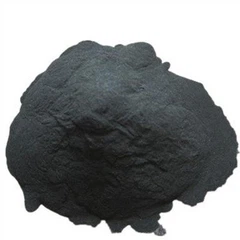
HP Graphite Powder is a high - purity form of graphite, which is a crystalline form of carbon. It has several unique properties that make it suitable for influencing fluid rheology. Firstly, graphite has a layered structure. The carbon atoms within each layer are strongly bonded in a hexagonal lattice, while the layers are held together by weak van der Waals forces. This allows the layers to slide over each other easily.
The high aspect ratio of graphite particles, which is the ratio of their length to their width, also plays a significant role. When added to a fluid, these particles can interact with each other and the fluid molecules in complex ways. Additionally, HP Graphite Powder has excellent thermal and electrical conductivity, as well as good chemical stability, which are beneficial in many industrial applications.
Impact on Viscosity
One of the most significant effects of HP Graphite Powder on fluid rheology is its influence on viscosity. When HP Graphite Powder is added to a fluid, it can increase the viscosity of the fluid. This is because the graphite particles disperse throughout the fluid and create a network structure. The interaction between the particles and the fluid molecules restricts the movement of the fluid, making it more resistant to flow.
However, the relationship between the amount of HP Graphite Powder added and the resulting viscosity is not always linear. At low concentrations, the increase in viscosity may be relatively small. As the concentration of graphite powder increases, the viscosity can increase more rapidly due to the formation of a more extensive particle network.
In some cases, HP Graphite Powder can also cause the fluid to exhibit non - Newtonian behavior. For shear - thinning fluids, the addition of graphite powder can enhance this property. As the shear rate increases, the graphite particle network breaks down, allowing the fluid to flow more easily and reducing the viscosity. This is useful in applications such as paint and ink manufacturing, where a lower viscosity during application (high shear rate) is desired, while a higher viscosity at rest (low shear rate) prevents the material from dripping or sagging.
Shear Stress and Shear Rate
HP Graphite Powder also affects the relationship between shear stress and shear rate. In a Newtonian fluid, the shear stress is directly proportional to the shear rate. When HP Graphite Powder is added, this relationship can change. The presence of graphite particles increases the shear stress required to achieve a certain shear rate.
The orientation of the graphite particles under shear also plays a role. At low shear rates, the particles may be randomly oriented. As the shear rate increases, the particles tend to align in the direction of flow. This alignment can reduce the resistance to flow to some extent, but overall, the addition of HP Graphite Powder still generally increases the shear stress needed for fluid flow.
Viscoelasticity
HP Graphite Powder can impart viscoelastic behavior to fluids. Viscoelastic fluids exhibit both viscous and elastic properties. The elastic component comes from the ability of the graphite particle network to store energy when deformed and release it when the deformation is removed.
This viscoelasticity can be beneficial in applications such as polymer processing. In polymer melts, the addition of HP Graphite Powder can improve the melt strength, which is important for processes like extrusion and blow - molding. The elastic nature of the fluid helps to maintain the shape of the extruded or molded product during processing.
Practical Applications
Lubricants
In the lubricant industry, HP Graphite Powder is often added to oils and greases. The addition of graphite powder can improve the lubricating properties of the fluid by reducing friction and wear. The graphite particles form a thin film between the moving surfaces, which acts as a solid lubricant. At the same time, the influence on rheology helps to keep the lubricant in place and provides better coverage of the surfaces.
Composites
In composite materials, HP Graphite Powder can be added to resin matrices. The improved rheological properties of the resin, such as increased viscosity and viscoelasticity, help in the manufacturing process. It can prevent the resin from flowing out of the composite structure during curing, ensuring a more uniform distribution of the resin and better mechanical properties of the final composite.
Drilling Fluids
In the oil and gas industry, drilling fluids are used to cool the drill bit, carry the cuttings to the surface, and maintain wellbore stability. HP Graphite Powder can be added to drilling fluids to improve their rheological properties. The increased viscosity helps to suspend the cuttings and prevent them from settling, while the shear - thinning behavior allows for efficient pumping of the fluid.
Other Related Graphite Powders
If you're interested in exploring other types of graphite powders, we also offer Artificial Graphite Powder, Graphite Oxide Powder, and Synthetic Graphite Powder. Each of these powders has its own unique properties and applications, and they can also have different effects on fluid rheology.


Conclusion
HP Graphite Powder has a profound influence on the rheological properties of fluids. It can change the viscosity, shear stress - shear rate relationship, and impart viscoelastic behavior to fluids. These effects make HP Graphite Powder a valuable additive in a wide range of industries, from lubricants and composites to drilling fluids.
If you're interested in learning more about how HP Graphite Powder can benefit your specific application or if you're looking to purchase HP Graphite Powder, please don't hesitate to contact us. We're here to provide you with the best quality products and technical support.
References
- Bird, R. B., Armstrong, R. C., & Hassager, O. (1987). Dynamics of Polymeric Liquids: Volume 1, Fluid Mechanics. John Wiley & Sons.
- Larson, R. G. (1999). The Structure and Rheology of Complex Fluids. Oxford University Press.
- Shenoy, A. V., & Saini, R. K. (2005). Rheology of Polymer - Matrix Nanocomposites. CRC Press.
Send Inquiry