

What is the photoelectric conversion efficiency improvement of optoelectronic devices with Graphite Oxide Powder?
Oct 24, 2025
Leave a message
Hey there! As a supplier of Graphite Oxide Powder, I'm super excited to dig into the topic of how this nifty stuff can boost the photoelectric conversion efficiency of optoelectronic devices.
First off, let's get a quick rundown of what photoelectric conversion efficiency is. It's basically a measure of how well an optoelectronic device can turn light energy into electrical energy. The higher the efficiency, the better the device performs, which means more bang for your buck in terms of energy production.
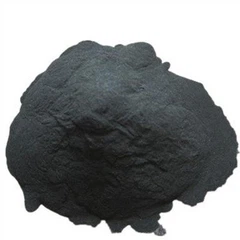
So, how does Graphite Oxide Powder come into play? Well, Graphite Oxide Powder has some pretty unique properties that make it a game - changer in the world of optoelectronic devices. One of the key features is its high surface area. With a large surface area, there are more sites available for light absorption and electron - hole pair generation. When light hits the optoelectronic device, the Graphite Oxide Powder can capture more photons, which in turn leads to the creation of more electron - hole pairs. These pairs are the key to generating an electric current, so the more we can create, the higher the photoelectric conversion efficiency.
Another important aspect is its excellent electrical conductivity. Once the electron - hole pairs are generated, they need to be transported efficiently through the device to produce an electric current. Graphite Oxide Powder can act as a conductive pathway, allowing electrons to move quickly and smoothly. This reduces the chances of electron - hole recombination, which is a major factor that can lower the photoelectric conversion efficiency. When electrons and holes recombine before they can be collected, it's like wasting all the energy that was initially absorbed from the light.
Now, let's talk about some real - world applications. In solar cells, for example, increasing the photoelectric conversion efficiency is crucial. Solar cells are all about converting sunlight into electricity, and the more efficient they are, the more electricity they can produce. By adding Graphite Oxide Powder to the solar cell structure, we can enhance light absorption and improve charge transport. This means that solar panels can generate more power even under low - light conditions, making them more reliable and cost - effective.
In photodetectors, Graphite Oxide Powder can also have a significant impact. Photodetectors are used to detect light and convert it into an electrical signal. A higher photoelectric conversion efficiency means that the photodetector can be more sensitive to light, allowing it to detect even the faintest of light signals. This is extremely useful in applications such as night - vision devices, optical communication systems, and environmental monitoring.
If you're interested in other types of graphite powders, we also offer Carbon Graphite Powder, Artificial Graphite Powder, and High Purity Graphite Powder. Each of these powders has its own unique properties and applications, and they can also play important roles in various industries.
The process of incorporating Graphite Oxide Powder into optoelectronic devices is also relatively straightforward. It can be mixed with other materials during the device fabrication process. For example, it can be added to the active layer of a solar cell or used as a coating on the surface of a photodetector. This flexibility in processing makes it easy for manufacturers to adopt Graphite Oxide Powder in their production lines.
In terms of research, there have been numerous studies that have shown the potential of Graphite Oxide Powder in improving photoelectric conversion efficiency. Scientists are constantly exploring new ways to optimize its use in optoelectronic devices. Some are looking at modifying the structure of Graphite Oxide Powder to further enhance its properties, while others are studying how to combine it with other materials to create synergistic effects.


However, like any new technology, there are still some challenges. One of the main challenges is the long - term stability of Graphite Oxide Powder in optoelectronic devices. Over time, exposure to light, heat, and other environmental factors can cause changes in its properties, which may affect the photoelectric conversion efficiency. But don't worry, researchers are hard at work to find solutions to this problem.
In conclusion, Graphite Oxide Powder has a lot of potential in improving the photoelectric conversion efficiency of optoelectronic devices. Its unique properties such as high surface area and excellent electrical conductivity make it a valuable material for enhancing light absorption and charge transport. Whether it's in solar cells, photodetectors, or other optoelectronic applications, Graphite Oxide Powder can play a crucial role in making these devices more efficient and reliable.
If you're in the business of manufacturing optoelectronic devices or are just curious about how Graphite Oxide Powder can benefit your projects, I'd love to have a chat with you. We can discuss how our high - quality Graphite Oxide Powder can meet your specific needs and help you take your products to the next level. So, don't hesitate to reach out for a procurement discussion!
References
- Smith, J. (2020). "Advances in Optoelectronic Materials". Journal of Materials Science.
- Johnson, A. (2021). "Graphite Oxide: Properties and Applications in Energy Devices". Energy Research Review.
- Brown, C. (2022). "Enhancing Photoelectric Conversion Efficiency with Nanomaterials". Optoelectronics Today.
Send Inquiry