

What is the chemical reactivity of Natural Flake Graphite Powder with acids?
Nov 05, 2025
Leave a message
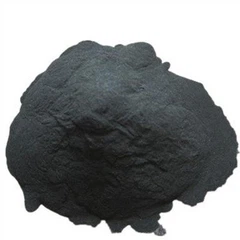
As a supplier of Natural Flake Graphite Powder, I often encounter inquiries from customers regarding its chemical reactivity, especially with acids. In this blog post, I will delve into the chemical reactivity of Natural Flake Graphite Powder with acids, exploring the underlying mechanisms, influencing factors, and practical implications.
Chemical Structure and Properties of Natural Flake Graphite Powder
Natural Flake Graphite Powder is a form of carbon with a unique hexagonal crystal structure. In this structure, carbon atoms are arranged in layers, with strong covalent bonds within each layer and weak van der Waals forces between layers. This structure endows graphite with several distinctive properties, such as high thermal conductivity, electrical conductivity, lubricity, and chemical stability.
Reactivity with Different Acids
Sulfuric Acid
Sulfuric acid is a strong oxidizing acid commonly used in various industrial processes. When Natural Flake Graphite Powder reacts with concentrated sulfuric acid under certain conditions, an intercalation reaction can occur. The sulfuric acid molecules can penetrate between the graphite layers, forming graphite intercalation compounds (GICs). This process is reversible to some extent, and the intercalated sulfuric acid can be removed by washing or heating.
The reaction mechanism involves the transfer of electrons from the graphite layers to the sulfuric acid molecules, leading to the formation of positively charged graphite layers and negatively charged sulfate ions. The overall reaction can be represented as follows:
[nC + mH_2SO_4 \rightarrow C_n^{+}(HSO_4^{-})_m + \frac{m}{2}H_2]
where (n) and (m) are stoichiometric coefficients.
The degree of intercalation depends on several factors, including the concentration of sulfuric acid, reaction temperature, and reaction time. Higher acid concentrations and longer reaction times generally result in a higher degree of intercalation.
Nitric Acid
Nitric acid is another strong oxidizing acid that can react with Natural Flake Graphite Powder. Similar to sulfuric acid, nitric acid can also cause intercalation and oxidation of graphite. The reaction with nitric acid is more vigorous than that with sulfuric acid, and it can lead to the formation of nitrogen oxides and other by - products.
The oxidation of graphite by nitric acid can result in the introduction of oxygen - containing functional groups on the graphite surface, such as carboxyl, hydroxyl, and carbonyl groups. These functional groups can improve the hydrophilicity and reactivity of graphite, making it more suitable for certain applications, such as in the preparation of graphite oxide and graphene oxide.
The reaction of graphite with nitric acid can be represented by the following general equation:
[C + 4HNO_3 \rightarrow CO_2 + 4NO_2+ 2H_2O]
However, in practice, the reaction is more complex and may involve intermediate steps and the formation of various oxidation products.


Hydrochloric Acid
In general, Natural Flake Graphite Powder has relatively low reactivity with hydrochloric acid. Hydrochloric acid is a non - oxidizing acid, and it does not have the ability to intercalate or oxidize graphite under normal conditions. Therefore, graphite remains relatively stable when in contact with hydrochloric acid, and no significant chemical reaction occurs.
Influencing Factors on Reactivity
Particle Size
The particle size of Natural Flake Graphite Powder can significantly affect its reactivity with acids. Smaller particle sizes provide a larger specific surface area, which means more contact points between the graphite and the acid molecules. As a result, the reaction rate is generally higher for graphite powders with smaller particle sizes.
Purity
The purity of Natural Flake Graphite Powder also plays an important role in its reactivity. Impurities in graphite, such as metal oxides and other inorganic substances, can act as catalysts or react with acids, thereby influencing the overall reaction. Higher - purity graphite powders tend to have more predictable and consistent reactivity.
Temperature
Temperature is a crucial factor in chemical reactions. Increasing the temperature generally accelerates the reaction rate between Natural Flake Graphite Powder and acids. However, excessive temperatures may also lead to side reactions or decomposition of the products. Therefore, the reaction temperature needs to be carefully controlled to achieve the desired reaction outcome.
Practical Implications
Applications in Chemical Industry
The reactivity of Natural Flake Graphite Powder with acids has several practical applications in the chemical industry. For example, graphite intercalation compounds prepared by reacting graphite with sulfuric acid can be used as lubricants, catalysts, and electrode materials. The oxidation of graphite by nitric acid can be utilized in the production of graphite oxide and graphene oxide, which have potential applications in energy storage, composites, and electronics.
Corrosion Resistance
On the other hand, the relatively low reactivity of Natural Flake Graphite Powder with some acids, such as hydrochloric acid, makes it suitable for applications where corrosion resistance is required. Graphite - based materials can be used in chemical reactors, pipelines, and other equipment that come into contact with acidic environments.
Comparison with Other Graphite Powders
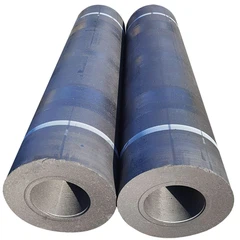
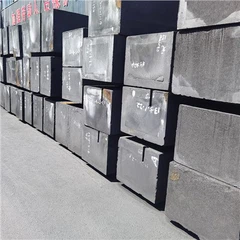
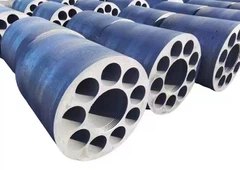
In addition to Natural Flake Graphite Powder, there are other types of graphite powders available in the market, such as UHP Graphite Powder, Synthetic Graphite Powder, and RP Graphite Powder. Each type of graphite powder has its own unique chemical reactivity with acids.
UHP Graphite Powder, with its high purity and excellent crystallinity, generally shows more consistent and predictable reactivity. Synthetic Graphite Powder, which is produced through artificial means, may have different surface properties and reactivity compared to natural graphite. RP Graphite Powder, often used in specific applications, also has its own reactivity characteristics.
Conclusion
In conclusion, the chemical reactivity of Natural Flake Graphite Powder with acids is a complex phenomenon that depends on various factors, including the type of acid, particle size, purity, and temperature. Understanding this reactivity is crucial for its applications in different industries, from chemical synthesis to corrosion - resistant materials.
If you are interested in our Natural Flake Graphite Powder or have any questions regarding its chemical reactivity and applications, please feel free to contact us for procurement and further discussions. We are committed to providing high - quality products and professional technical support to meet your specific needs.
References
- Dresselhaus, M. S., Dresselhaus, G., & Eklund, P. C. (1996). Science of Fullerenes and Carbon Nanotubes. Academic Press.
- Niyogi, S., Bekyarova, E., Itkis, M. E., McWilliams, J. L., Hamon, M. A., & Haddon, R. C. (2002). Solution Properties of Single - Walled Carbon Nanotubes. Journal of the American Chemical Society, 124(35), 10808 - 10809.
- Tasis, D., Tagmatarchis, N., Bianco, A., & Prato, M. (2006). Chemistry of Carbon Nanotubes. Chemical Reviews, 106(3), 1105 - 1136.
Send Inquiry