

What are the differences between different synthesis methods of Graphite Oxide Powder?
Nov 04, 2025
Leave a message
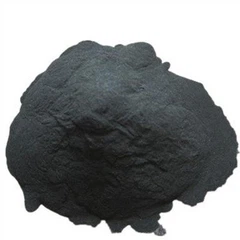
Hey there! As a supplier of Graphite Oxide Powder, I've spent a ton of time diving into the different synthesis methods. It's super interesting to see how each method can lead to unique properties in the final product. In this blog, I'll break down the key differences between these synthesis methods.
First off, let's talk about the Brodie method. This is one of the oldest ways to make Graphite Oxide Powder. Back in 1859, Benjamin Collins Brodie came up with this method. He used a mix of potassium chlorate and fuming nitric acid to oxidize graphite. The process is pretty intense, as it involves multiple oxidation steps. You start by adding the graphite to the acid mixture and then let it react over a long period. This method can produce Graphite Oxide Powder with a relatively high degree of oxidation. However, it has some major drawbacks. The reaction produces a lot of toxic gases, like chlorine dioxide, which is not only harmful to the environment but also to the people handling the process. Also, the reaction is quite slow, and it can take days to complete.
Next up is the Staudenmaier method. Developed in 1898 by Ludwig Staudenmaier, this method is an improvement over the Brodie method. It uses a combination of sulfuric acid, fuming nitric acid, and potassium chlorate. The addition of sulfuric acid speeds up the reaction compared to the Brodie method. The sulfuric acid helps in the protonation of the graphite, making it more susceptible to oxidation. The Staudenmaier method can achieve a higher oxidation state in a shorter time compared to the Brodie method. But, just like the Brodie method, it also generates toxic gases. The use of potassium chlorate is a safety concern, as it can be explosive under certain conditions.
Then we have the Hummers method, which is probably the most widely used method today. In 1958, William S. Hummers Jr. and Richard E. Offeman introduced this method. It uses potassium permanganate and sulfuric acid. This method is much faster and safer compared to the previous two methods. The reaction is exothermic, and it can be completed in a few hours. The potassium permanganate is a strong oxidizing agent, and it can quickly oxidize the graphite. The Hummers method produces Graphite Oxide Powder with a high degree of oxidation and a relatively uniform structure. However, it also has its limitations. The use of potassium permanganate can lead to the formation of manganese dioxide as a by - product, which needs to be removed from the final product.
There's also the Modified Hummers method. This is a variation of the Hummers method. The main difference is in the amount of reagents used and the reaction conditions. Some modifications involve adding phosphoric acid to the sulfuric acid - potassium permanganate mixture. The addition of phosphoric acid can improve the oxidation efficiency and reduce the formation of manganese dioxide. The Modified Hummers method can produce Graphite Oxide Powder with better properties, such as a higher surface area and more oxygen - containing functional groups.


Now, let's talk about how these differences in synthesis methods affect the properties of the Graphite Oxide Powder. The degree of oxidation is a crucial factor. A higher degree of oxidation means more oxygen - containing functional groups on the surface of the powder. These functional groups can improve the solubility of the powder in water and other solvents. For example, Graphite Oxide Powder made by the Hummers method usually has more carboxyl, hydroxyl, and epoxy groups compared to the powder made by the Brodie method.
The structure of the Graphite Oxide Powder also varies depending on the synthesis method. The Brodie and Staudenmaier methods can sometimes produce a more disordered structure, while the Hummers and Modified Hummers methods tend to produce a more ordered and uniform structure. This ordered structure can have an impact on the mechanical and electrical properties of the powder.
Another important aspect is the particle size. The synthesis method can influence the particle size of the Graphite Oxide Powder. For instance, the reaction conditions in the Modified Hummers method can be adjusted to control the particle size. Smaller particle sizes can lead to a larger surface area, which is beneficial for applications like catalysis and energy storage.
As a supplier, I understand the importance of these differences for our customers. Depending on the application, different properties of the Graphite Oxide Powder are required. If you're looking for a powder with a high degree of oxidation for use in polymer composites, the Hummers or Modified Hummers method might be the best choice. On the other hand, if you need a powder for a less demanding application where cost is a major factor, the Brodie or Staudenmaier method could be considered.
We also offer other types of graphite powders, such as Superfine Graphite Powder, UHP Graphite Powder, and Natural Flake Graphite Powder. Each of these powders has its own unique properties and applications.
If you're interested in our Graphite Oxide Powder or any of our other graphite products, we'd love to have a chat with you. Whether you need more information about the synthesis methods, the properties of the powders, or you're ready to place an order, just reach out to us. We're here to help you find the best product for your needs.
References:
- Brodie, B. C. (1859). On the atomic weight of graphite. Philosophical Transactions of the Royal Society of London, 149, 249 - 259.
- Staudenmaier, L. (1898). Über einige Derivate des Graphits. Berichte der Deutschen Chemischen Gesellschaft, 31(3), 1481 - 1487.
- Hummers, W. S., Jr., & Offeman, R. E. (1958). Preparation of graphitic oxide. Journal of the American Chemical Society, 80(6), 1339.
Send Inquiry