

What are the production processes of high - purity artificial graphite electrodes?
Dec 18, 2025
Leave a message
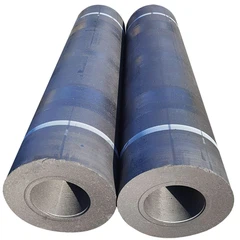
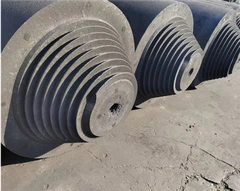
As a supplier of Artificial Graphite Electrodes, I'm often asked about the production processes of high-purity artificial graphite electrodes. Well, let me break it down for you in a way that's easy to understand.
Raw Material Selection
The first step in making high - purity artificial graphite electrodes is choosing the right raw materials. We mainly use high - quality petroleum coke and needle coke. Petroleum coke is a by - product of the oil refining process, while needle coke has a more ordered structure and better electrical conductivity.
We source our cokes from reliable suppliers. The quality of these cokes is crucial because it directly affects the final properties of the graphite electrodes. For instance, the sulfur and ash content in the cokes need to be as low as possible. High sulfur content can cause problems during the electrode's use, like corrosion and reduced electrical efficiency. And high ash content can introduce impurities into the final product, which is a big no - no for high - purity applications.
Calcination
Once we have the raw cokes, the next step is calcination. Calcination is basically heating the cokes at high temperatures, usually around 1200 - 1300°C in a rotary kiln or a shaft furnace. This process drives off the volatile matter in the cokes, such as moisture, hydrocarbons, and other impurities.
During calcination, the cokes also undergo some physical and chemical changes. Their density increases, and their structure becomes more stable. After calcination, the cokes are much more suitable for use in making graphite electrodes. This step is like building the foundation for a strong and durable electrode.
Grinding
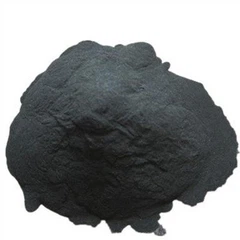
After calcination, the cokes are ready to be ground into fine powders. Grinding is an important process because the particle size of the powder will affect the electrode's performance. We use ball mills or other grinding equipment to reduce the calcined cokes into powders with a specific size distribution.
The particle size of the powder needs to be precisely controlled. If the particles are too large, the electrode may have a rough surface and poor density. On the other hand, if the particles are too small, it may cause problems during the subsequent mixing and forming processes. So, we always aim for an optimal particle size to ensure the best quality of the electrodes.
Mixing
Now that we have the fine coke powders, we mix them with a binder. The most commonly used binder is coal tar pitch. The mixing process is done in a heated mixer at a temperature of around 150 - 180°C. At this temperature, the coal tar pitch softens and can coat the coke particles evenly.
During mixing, we add a certain amount of pitch to the coke powders to achieve the right consistency. The ratio of coke to pitch is carefully determined based on the desired properties of the final electrode. This mixture is called the green paste, which has a dough - like consistency and is ready for the next forming step.


Forming
There are two main methods for forming high - purity artificial graphite electrodes: extrusion and molding.
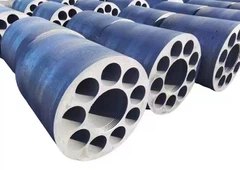
Extrusion is a process where the green paste is forced through a die to form a long, cylindrical shape. The extrusion process can produce electrodes of different diameters and lengths. It's a continuous process that allows for high - volume production. The pressure applied during extrusion helps to compact the paste and gives the electrode its initial shape and density.
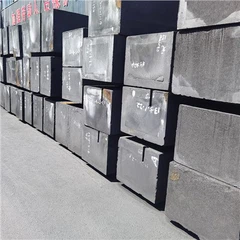
Molding, on the other hand, involves placing the green paste into a mold and applying pressure to form the electrode. This method is more suitable for making electrodes with complex shapes or small - batch production. After forming, the green electrodes have a solid shape but are still relatively weak.
Baking
The formed green electrodes then go through a baking process. Baking is done in a baking furnace at temperatures ranging from 800 - 1200°C. This process further hardens the electrodes by carbonizing the binder. During baking, the coal tar pitch decomposes and transforms into a carbon matrix that holds the coke particles together.
The baking process is slow and carefully controlled to avoid cracks and other defects in the electrodes. It usually takes several days to complete, depending on the size and thickness of the electrodes. After baking, the electrodes are much stronger and have better mechanical and electrical properties.
Impregnation
To improve the density and performance of the baked electrodes, we often use an impregnation process. In this process, the baked electrodes are soaked in a pitch - based impregnating agent under vacuum and pressure conditions.
The impregnating agent fills the pores in the electrodes, increasing their density and reducing their electrical resistance. This is especially important for high - purity applications where low resistance is required. After impregnation, the electrodes are usually baked again at a lower temperature to carbonize the impregnating agent.
Graphitization
The final and most critical step in making high - purity artificial graphite electrodes is graphitization. Graphitization is a high - temperature process that transforms the carbon structure of the electrodes into a graphite - like structure.
The electrodes are placed in a graphitization furnace and heated to extremely high temperatures, typically around 2800 - 3000°C. At these temperatures, the carbon atoms rearrange themselves into a more ordered, hexagonal lattice structure, which is characteristic of graphite. This structure gives the electrodes their excellent electrical conductivity, thermal conductivity, and chemical stability.
After graphitization, the electrodes are carefully inspected to ensure they meet the high - purity requirements. Any electrodes that don't meet the standards are rejected, and only the best - quality electrodes are selected for further processing or sale.
Applications of High - Purity Artificial Graphite Electrodes
High - purity artificial graphite electrodes have a wide range of applications. They are commonly used in electric arc furnaces for steelmaking, where they conduct electricity to generate heat and melt the scrap metal. For more information on our Ultra - low - resistance Graphite Electrodes, you can visit our website.
They are also used in the glass industry for melting and refining glass. Our Graphite Electrode For Glass Industry is specially designed to meet the high - purity requirements of this industry.
In addition, they play an important role in silicon production. Our Graphite Electrodes For Silicon Production are used to provide the high - temperature environment needed for the production of silicon.
Contact Us for Procurement
If you're in the market for high - purity artificial graphite electrodes, don't hesitate to contact us. We have a team of experts who can help you choose the right electrodes for your specific needs. Whether you need electrodes for steelmaking, glass production, or silicon manufacturing, we've got you covered. We pride ourselves on providing high - quality products and excellent customer service. So, get in touch with us today and let's start a great partnership together.
References
- Fitzer, E., & Ebert, H. - P. (1973). Carbon Reinforcements and Carbon - Matrix Composites. Springer - Verlag.
- Marsh, H., & Heintz, E. A. (1998). Introduction to Carbon Technologies. G. D. Edmondson.
Send Inquiry