

How to test the quality of HP Graphite Powder?
Nov 07, 2025
Leave a message
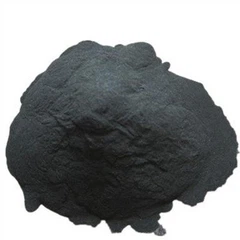
Hey there! I'm a supplier of HP Graphite Powder, and today I wanna share with you how to test the quality of this awesome stuff. HP Graphite Powder has a wide range of applications, from electronics to lubricants, so it's super important to make sure its quality meets the requirements.
Physical Properties Testing
Particle Size
The particle size of HP Graphite Powder is a crucial factor. You can use a laser particle size analyzer for this test. Just take a sample of the powder, disperse it properly in a suitable liquid medium, and then let the analyzer do its job. A well - graded particle size distribution is often desired. If the particles are too large, it might cause uneven dispersion in applications. On the other hand, if they're too small, it could lead to issues like increased dust generation. For instance, in some battery applications, the particle size of graphite powder can affect the battery's performance. You can check out more about different types of graphite powder, like Graphite Oxide Powder, which also has specific particle size requirements for its unique uses.
Density
Measuring the density of HP Graphite Powder can tell you a lot about its quality. You can use a pycnometer for this test. First, weigh the empty pycnometer, then fill it with the graphite powder and weigh it again. After that, fill the pycnometer with a liquid (usually a non - reactive one) and measure the combined weight. By using some basic math, you can calculate the density of the powder. A consistent density indicates a more uniform product. Deviations in density might mean there are impurities or variations in the manufacturing process.
Specific Surface Area
The specific surface area is another key parameter. The Brunauer - Emmett - Teller (BET) method is commonly used to measure it. In this method, the powder is degassed to remove any adsorbed gases, and then it's exposed to a known gas (usually nitrogen). The amount of gas adsorbed on the surface of the powder is measured, and from that, the specific surface area can be calculated. A higher specific surface area can be beneficial in some applications, like in catalysts, as it provides more active sites. But in other cases, it might not be necessary. You can learn more about the importance of specific surface area in different types of graphite powders, such as Carbon Graphite Powder, which is used in various industrial processes.
Chemical Properties Testing
Purity Analysis
Testing the purity of HP Graphite Powder is essential. Inductively coupled plasma mass spectrometry (ICP - MS) is a great tool for this. It can detect trace elements in the powder. You dissolve a sample of the powder in a suitable acid solution and then introduce it into the ICP - MS instrument. The instrument can identify and quantify elements like iron, copper, and silicon. High - purity graphite powder is often required in applications where even small amounts of impurities can cause problems, such as in semiconductor manufacturing.
Ash Content
Determining the ash content is also important. You take a known amount of the graphite powder and heat it in a furnace at a high temperature (usually around 800 - 1000°C) for a certain period. The remaining residue is the ash. A low ash content indicates a higher - quality product. Ash can come from impurities in the raw materials or from the manufacturing process. For example, in some high - end lubricant applications, a low ash content is necessary to prevent wear and tear on the machinery.
Moisture Content
Moisture can have a negative impact on the performance of HP Graphite Powder. You can use a moisture analyzer to measure the moisture content. Simply place a sample of the powder in the analyzer, and it will heat the sample and measure the weight loss due to the evaporation of moisture. A low moisture content is generally preferred, especially in applications where moisture can cause chemical reactions or affect the electrical properties of the powder.
Thermal Properties Testing
Thermal Conductivity
Testing the thermal conductivity of HP Graphite Powder is important, especially for applications where heat transfer is crucial, like in heat sinks. There are different methods to measure thermal conductivity, such as the transient plane source (TPS) method. In this method, a sensor is placed in contact with the powder sample, and a small amount of heat is applied. By measuring the temperature change over time, the thermal conductivity can be calculated. A high thermal conductivity is often desired in applications where efficient heat dissipation is needed.
Thermal Stability
To test the thermal stability of the powder, you can use thermogravimetric analysis (TGA) and differential scanning calorimetry (DSC). In TGA, the powder is heated at a controlled rate, and the change in its weight is monitored. This can show if there are any thermal decompositions or volatilizations. DSC measures the heat flow associated with physical and chemical changes in the powder as it's heated or cooled. These tests can help you determine the temperature range within which the HP Graphite Powder remains stable. For example, in high - temperature applications, like in aerospace components, the thermal stability of Superfine Graphite Powder is of utmost importance.
Performance Testing
Electrical Conductivity
Since HP Graphite Powder is often used in electrical applications, testing its electrical conductivity is a must. You can use a four - point probe method. In this method, four probes are placed in contact with the powder sample, and a current is passed through the outer two probes. The voltage is measured across the inner two probes, and from that, the electrical conductivity can be calculated. A high and consistent electrical conductivity is desired in applications like in batteries and electrical contacts.
Lubricity
If the HP Graphite Powder is intended for use as a lubricant, testing its lubricity is crucial. You can use a pin - on - disk tribometer for this test. In this setup, a pin is pressed against a rotating disk coated with the graphite powder, and the friction force is measured. A lower friction coefficient indicates better lubricity. Good lubricity can reduce wear and tear in mechanical systems, increasing their lifespan.


Conclusion
Testing the quality of HP Graphite Powder is a multi - faceted process. By checking the physical, chemical, thermal, and performance properties, you can ensure that the powder meets the requirements of your specific application. Whether you're in the electronics, automotive, or aerospace industry, having high - quality HP Graphite Powder is essential for the success of your products.
If you're interested in purchasing HP Graphite Powder or have any questions about its quality testing or applications, feel free to reach out. We're here to provide you with the best - quality products and support for your needs. Let's start a great business relationship and make your projects even more successful!
References
- ASTM International standards related to graphite powder testing
- Textbooks on materials science and engineering for graphite powder properties and testing methods
- Research papers on the applications and quality control of HP Graphite Powder
Send Inquiry