

How does UHP Graphite Powder perform in a radiation environment?
Aug 06, 2025
Leave a message
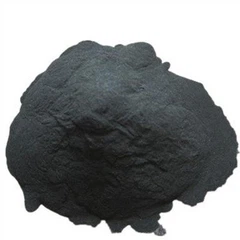
Ultra-high purity (UHP) graphite powder has emerged as a material of significant interest in various industries, especially in environments where radiation is a concern. As a supplier of UHP graphite powder, I have witnessed firsthand the growing demand for this unique material and its exceptional performance in radiation - prone settings. In this blog, I will delve into how UHP graphite powder behaves in a radiation environment, exploring its properties, advantages, and potential applications.
Properties of UHP Graphite Powder
UHP graphite powder is characterized by its extremely high purity, typically containing over 99.9% carbon. This high - purity level is achieved through advanced purification processes, which remove impurities such as sulfur, iron, and other trace elements. The crystalline structure of graphite, consisting of layers of carbon atoms arranged in a hexagonal lattice, gives it several remarkable properties.
One of the key properties of graphite is its high thermal conductivity. In a radiation environment, where heat generation can be a significant issue, the ability of UHP graphite powder to conduct heat efficiently helps in dissipating the heat generated by radiation. This is crucial for maintaining the stability and integrity of the materials and components in which the graphite powder is used.
Another important property is its chemical stability. Graphite is highly resistant to chemical attack, which is essential in radiation environments where the presence of ionizing radiation can cause chemical reactions and degradation of materials. The chemical inertness of UHP graphite powder ensures that it can withstand the harsh chemical conditions often associated with radiation exposure without significant deterioration.
Performance in a Radiation Environment
Radiation Resistance
UHP graphite powder exhibits excellent radiation resistance. When exposed to ionizing radiation, such as gamma rays or neutrons, graphite can absorb and scatter the radiation energy. The carbon atoms in the graphite lattice interact with the radiation particles, reducing their energy and preventing them from causing damage to surrounding materials.
In nuclear reactors, for example, UHP graphite powder can be used as a moderator or reflector. As a moderator, it slows down fast neutrons, increasing the probability of nuclear fission reactions. The radiation resistance of graphite ensures that it can maintain its structural integrity and performance over long periods of exposure to high - energy neutrons.
Mechanical Stability
Under radiation, many materials experience changes in their mechanical properties, such as embrittlement or swelling. UHP graphite powder, however, shows relatively good mechanical stability. The strong covalent bonds between carbon atoms in the graphite structure provide it with high strength and toughness. Although some minor changes in mechanical properties may occur over time due to radiation damage, these changes are often less severe compared to other materials.
This mechanical stability is crucial in applications where the graphite powder is used in structural components. For instance, in aerospace applications where radiation exposure is a concern, UHP graphite powder - based composites can be used to manufacture parts that need to maintain their mechanical integrity under radiation.
Electrical Conductivity
Graphite is a good electrical conductor, and UHP graphite powder retains this property even in a radiation environment. The delocalized electrons in the graphite lattice allow for the easy flow of electric current. In radiation - sensitive electronic devices, UHP graphite powder can be used as a conductive filler to enhance the electrical conductivity of polymers or other insulating materials. This helps in dissipating static charges that may be generated by radiation, reducing the risk of electrical damage to the devices.
Advantages of Using UHP Graphite Powder in Radiation Environments
Long - Term Performance
Due to its high purity and excellent radiation resistance, UHP graphite powder offers long - term performance in radiation environments. This reduces the need for frequent replacement of components, which can be costly and time - consuming, especially in nuclear or space applications.
Versatility
UHP graphite powder can be used in a wide range of applications in radiation environments. It can be incorporated into composites, coatings, or used as a standalone material. For example, it can be used to make radiation - shielding materials, electrodes in radiation - exposed electrochemical cells, or as a lubricant in radiation - prone mechanical systems.
Compatibility
UHP graphite powder is compatible with many other materials. It can be easily mixed with polymers, metals, or ceramics to form composites with enhanced properties. This compatibility allows for the development of customized materials that can meet the specific requirements of different radiation - related applications.
Applications in Radiation - Prone Industries
Nuclear Industry
In the nuclear industry, UHP graphite powder plays a vital role. As mentioned earlier, it can be used as a moderator and reflector in nuclear reactors. Additionally, it can be used in the construction of nuclear waste storage containers. The radiation resistance and chemical stability of UHP graphite powder make it an ideal material for containing radioactive waste and preventing its leakage into the environment.
Aerospace Industry
In aerospace, radiation exposure is a constant concern, especially for long - duration space missions. UHP graphite powder - based composites can be used to manufacture structural components of spacecraft, such as panels and frames. These composites offer high strength - to - weight ratios and radiation resistance, which are essential for the safety and performance of the spacecraft.


Medical Industry
In the medical field, radiation is used for various diagnostic and therapeutic purposes. UHP graphite powder can be used in the development of radiation - shielding materials for medical facilities. These materials can protect patients and medical staff from unnecessary radiation exposure during procedures such as X - rays, CT scans, and radiotherapy.
Comparing UHP Graphite Powder with Other Graphite Powders
When considering graphite powders for radiation environments, it is important to compare UHP graphite powder with other types, such as Natural Flake Graphite Powder and Synthetic Graphite Powder.
Natural flake graphite powder is derived from natural graphite ores. While it has some good properties, its purity is generally lower compared to UHP graphite powder. The presence of impurities in natural flake graphite can make it more susceptible to radiation - induced degradation and may affect its performance in radiation - sensitive applications.
Synthetic graphite powder, on the other hand, is produced through artificial means. Although it can have high purity levels, UHP graphite powder often undergoes more advanced purification processes, resulting in even higher purity and better performance in radiation environments.
Contact for Procurement
If you are interested in learning more about UHP Graphite Powder and its applications in radiation environments, or if you are looking to procure high - quality UHP graphite powder for your specific needs, I encourage you to reach out. Our team of experts is ready to assist you in finding the best solution for your requirements. Whether you are in the nuclear, aerospace, medical, or any other industry where radiation is a concern, we can provide you with the right UHP graphite powder products.
References
- "Graphite in Nuclear Reactors: Properties and Applications" - Journal of Nuclear Materials
- "Radiation Effects on Carbon - Based Materials" - Carbon Science Review
- "Advances in Graphite Composites for Aerospace Applications" - Aerospace Materials Journal
Send Inquiry