

How does the oxidation degree affect the properties of Graphite Oxide Powder?
Oct 16, 2025
Leave a message
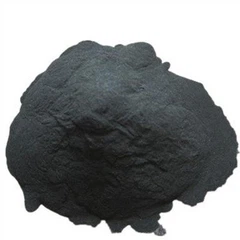
Graphite oxide powder, a fascinating material in the realm of materials science, has garnered significant attention due to its unique properties and wide - ranging applications. As a supplier of graphite oxide powder, I have witnessed firsthand the importance of understanding how the oxidation degree affects its properties. In this blog, I will delve into this topic, exploring the relationship between oxidation degree and various properties of graphite oxide powder.
Oxidation Process of Graphite to Graphite Oxide
Graphite is a well - known allotrope of carbon, consisting of layers of carbon atoms arranged in a hexagonal lattice. When graphite undergoes oxidation, oxygen - containing functional groups such as hydroxyl, epoxy, and carboxyl groups are introduced onto the graphite layers. The oxidation process is typically carried out using strong oxidizing agents like potassium permanganate, sulfuric acid, and nitric acid. The degree of oxidation can be controlled by adjusting reaction conditions such as the concentration of oxidizing agents, reaction time, and temperature.

Impact on Physical Properties
Particle Size and Morphology
The oxidation degree has a significant impact on the particle size and morphology of graphite oxide powder. At a low oxidation degree, the graphite layers are only slightly modified. The particles tend to retain a more ordered structure, similar to that of the original graphite. As the oxidation degree increases, the introduction of oxygen - containing groups disrupts the inter - layer interactions in graphite. This leads to the exfoliation of graphite layers, resulting in smaller particle sizes. The particles may also become more irregular in shape, as the oxidation process can cause local damage to the graphite lattice.
Solubility
One of the most notable effects of oxidation degree on the physical properties of graphite oxide powder is its solubility. Graphite itself is insoluble in most common solvents due to its strong inter - layer van der Waals forces. However, as the oxidation degree increases, the oxygen - containing functional groups on the graphite oxide surface make the powder more hydrophilic. At a high oxidation degree, graphite oxide powder can be dispersed in water and some polar organic solvents to form stable colloidal solutions. This enhanced solubility is crucial for many applications, such as in the preparation of composite materials and thin films.
Influence on Chemical Properties
Reactivity
The oxidation degree directly affects the chemical reactivity of graphite oxide powder. With an increase in the oxidation degree, the number of oxygen - containing functional groups on the surface of the powder increases. These functional groups can act as reactive sites for various chemical reactions. For example, the carboxyl groups can react with amines to form amide bonds, which is useful in the functionalization of graphite oxide for targeted drug delivery applications. The hydroxyl and epoxy groups can also participate in reactions such as esterification and ring - opening reactions, respectively.
Thermal Stability
The thermal stability of graphite oxide powder is closely related to its oxidation degree. At a low oxidation degree, the powder retains some of the thermal stability of graphite. However, as the oxidation degree rises, the oxygen - containing functional groups become more abundant. These groups are thermally unstable and can decompose at relatively low temperatures. During heating, the decomposition of these functional groups releases gases such as carbon dioxide and water vapor, which can cause the powder to expand and lose its structural integrity. Therefore, high - oxidation - degree graphite oxide powders generally have lower thermal stability compared to low - oxidation - degree ones.
Electrical and Mechanical Properties
Electrical Conductivity
Graphite is a good electrical conductor due to the delocalized electrons in its hexagonal carbon lattice. However, the oxidation process disrupts this electron - delocalized system. As the oxidation degree increases, the number of oxygen - containing groups interrupts the flow of electrons, leading to a significant decrease in the electrical conductivity of graphite oxide powder. At a high oxidation degree, graphite oxide can become an insulator. This property change is important in applications where electrical insulation or controlled conductivity is required, such as in electronic devices.
Mechanical Properties
The mechanical properties of graphite oxide powder - based materials are also influenced by the oxidation degree. In composite materials, the interaction between graphite oxide and the matrix material depends on the oxidation degree. At a low oxidation degree, the graphite oxide particles can provide some reinforcement to the matrix due to their relatively ordered structure and high modulus. However, as the oxidation degree increases, the weakened structure of graphite oxide may lead to a decrease in the mechanical strength of the composite. On the other hand, the enhanced solubility and reactivity at high oxidation degrees can also be utilized to improve the interfacial adhesion between graphite oxide and the matrix, which may have a positive impact on the mechanical properties in some cases.
Applications and the Role of Oxidation Degree
Energy Storage
In energy storage applications, such as lithium - ion batteries and supercapacitors, the oxidation degree of graphite oxide powder plays a crucial role. For lithium - ion batteries, a moderate oxidation degree can be beneficial. The oxygen - containing groups can provide additional lithium - ion storage sites, increasing the battery's capacity. At the same time, a certain degree of structural integrity is required to maintain good electrical conductivity and mechanical stability during the charge - discharge process. In supercapacitors, the high surface area and enhanced reactivity of high - oxidation - degree graphite oxide can be exploited to improve the capacitance performance.
Biomedical Applications
In the biomedical field, the oxidation degree of graphite oxide powder is carefully controlled for different applications. For drug delivery, high - oxidation - degree graphite oxide can be used due to its good solubility and reactivity. The functional groups on its surface can be used to conjugate with drugs and targeting ligands. However, in tissue engineering applications, a lower oxidation degree may be preferred to ensure better biocompatibility and mechanical support for cell growth.
Implications for Our Supply as a Graphite Oxide Powder Supplier
As a supplier of graphite oxide powder, understanding the relationship between oxidation degree and properties is essential for meeting the diverse needs of our customers. We offer a range of graphite oxide powders with different oxidation degrees to suit various applications. For customers who require materials with high electrical conductivity or thermal stability, we can provide low - oxidation - degree graphite oxide powders. On the other hand, for those who need materials with good solubility and high reactivity, our high - oxidation - degree products would be more suitable.
We also provide RP Graphite Powder, UHP Graphite Powder, and Artificial Graphite Powder, which can be used in combination with graphite oxide powder in different applications. Our technical support team is always ready to assist customers in selecting the most appropriate products based on their specific requirements.
If you are interested in our graphite oxide powder or other related products, we encourage you to contact us for procurement and further discussions. We are committed to providing high - quality products and excellent service to our customers.
References
- Dreyer, D. R., Park, S., Bielawski, C. W., & Ruoff, R. S. (2010). The chemistry of graphene oxide. Chemical Society Reviews, 39(1), 228 - 240.
- Szabo, T., Berkesi, O., Forgo, P., Josepovits, K., Sanakis, Y., Petridis, D., & Dekany, I. (2006). Evolution of surface functional groups in a series of graphite oxide samples. Chemistry of Materials, 18(9), 2141 - 2148.
- Stankovich, S., Dikin, D. A., Dommett, G. H. B., Kohlhaas, K. M., Zimney, E. J., Stach, E. A., ... & Ruoff, R. S. (2006). Graphene - based composite materials. Nature, 442(7100), 282 - 286.
Send Inquiry