

How does the carbon form in Natural Flake Graphite Powder affect its properties?
Dec 16, 2025
Leave a message
Hey there! As a supplier of Natural Flake Graphite Powder, I've spent a ton of time diving into the nitty - gritty details of this amazing material. One question that often pops up is: How does the carbon form in Natural Flake Graphite Powder affect its properties? Well, let's dig in and find out!


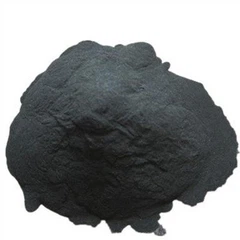
First off, let's talk a bit about what Natural Flake Graphite Powder is. It's a form of graphite that occurs naturally, and it's made up of carbon atoms arranged in a very specific way. Graphite, in general, is a crystalline form of carbon, and Natural Flake Graphite Powder has a unique flaky structure. This structure is a result of the way the carbon atoms bond and stack on top of each other.
The carbon atoms in graphite are arranged in layers. Each layer consists of carbon atoms bonded together in a hexagonal lattice. These layers are held together by weak van der Waals forces. This unique arrangement gives Natural Flake Graphite Powder some pretty cool properties.
One of the most significant properties affected by the carbon form is conductivity. Graphite is an excellent conductor of electricity. The carbon atoms in the hexagonal lattice have delocalized electrons. These electrons can move freely within the layers, allowing for the easy flow of electric current. In Natural Flake Graphite Powder, the flaky structure provides more pathways for the electrons to move. This means that the powder has high electrical conductivity, which makes it ideal for use in applications like batteries. For example, in lithium - ion batteries, Natural Flake Graphite Powder is used as an anode material because of its ability to conduct electricity efficiently. You can check out more about our Natural Flake Graphite Powder on our website.
Another property influenced by the carbon form is lubricity. The weak van der Waals forces between the layers of carbon atoms in graphite allow the layers to slide over each other easily. This gives Natural Flake Graphite Powder its excellent lubricating properties. It can be used in various industrial applications where reducing friction is crucial, such as in machinery and automotive parts. The flaky shape of the powder particles further enhances its lubricating ability as the flakes can easily interlock and form a smooth surface between moving parts.
Thermal conductivity is also affected by the carbon form in Natural Flake Graphite Powder. Similar to electrical conductivity, the delocalized electrons in the carbon lattice can transfer heat energy. The flaky structure of the powder increases the surface area available for heat transfer. This makes Natural Flake Graphite Powder a great material for applications where heat dissipation is important, like in heat sinks for electronic devices.
The carbon form also plays a role in the chemical stability of Natural Flake Graphite Powder. Graphite is relatively inert chemically. The strong covalent bonds within the carbon layers make it resistant to many chemicals and environmental factors. This chemical stability makes Natural Flake Graphite Powder suitable for use in harsh chemical environments, such as in chemical processing plants.
Now, let's compare Natural Flake Graphite Powder with Artificial Graphite Powder. Artificial graphite is made through a synthetic process, and its carbon form can be different from that of natural flake graphite. Artificial graphite often has a more uniform structure, which can result in more consistent properties. However, Natural Flake Graphite Powder has its own advantages. The natural flaky structure gives it unique properties that are sometimes difficult to replicate in artificial graphite. For example, the natural flake structure may provide better lubricity and conductivity in some cases.
We also offer HP Graphite Powder, which has its own set of properties. HP Graphite Powder is often processed to have a high purity and specific particle size distribution. The carbon form in HP Graphite Powder is carefully controlled during the manufacturing process to achieve the desired properties for specific applications, such as in high - end electronics.
The purity of the carbon in Natural Flake Graphite Powder also affects its properties. Impurities can disrupt the regular arrangement of carbon atoms in the lattice, which can reduce conductivity, lubricity, and other properties. At our company, we take great care to ensure the high purity of our Natural Flake Graphite Powder. We use advanced purification techniques to remove impurities and enhance the quality of the powder.
The particle size of Natural Flake Graphite Powder is related to the carbon form as well. The flaky structure can break down into different particle sizes during processing. Smaller particle sizes can increase the surface area of the powder, which can enhance properties like reactivity and dispersion. However, very small particles may also be more difficult to handle and may have different flow characteristics.
In terms of mechanical properties, the carbon form in Natural Flake Graphite Powder can influence its strength and flexibility. While graphite is not known for its high strength in bulk form, the flaky structure of the powder can provide some degree of flexibility. When used in composite materials, the Natural Flake Graphite Powder can reinforce the matrix and improve the overall mechanical properties of the composite.
The carbon form in Natural Flake Graphite Powder has a profound impact on its electrical, thermal, lubricating, chemical, and mechanical properties. These properties make it a versatile material with a wide range of applications in various industries.
If you're interested in using Natural Flake Graphite Powder for your specific application, we'd love to have a chat with you. Whether you need it for batteries, lubrication, or any other use, we can provide you with high - quality products and expert advice. Just reach out to us, and we'll be happy to discuss your requirements and how our Natural Flake Graphite Powder can meet them.
References
- "Graphite: A Versatile Material" - Journal of Materials Science
- "Carbon Nanostructures and Their Applications" - Springer Publishing
- "Properties and Applications of Natural and Artificial Graphite" - Industrial Materials Review
Send Inquiry