

How can I test the quality of RP Graphite Powder?
Dec 16, 2025
Leave a message
Hey there! As a supplier of RP Graphite Powder, I often get asked about how to test the quality of this stuff. Well, I'm here to share some insights on that.
First off, let's talk about why testing the quality of RP Graphite Powder is so important. Whether you're using it in the electronics industry, for lubricants, or in some high - tech applications, the quality of the powder can significantly impact the performance of the end - product. A low - quality powder might not have the right conductivity, lubricity, or other properties required for the specific use.
Physical Inspection
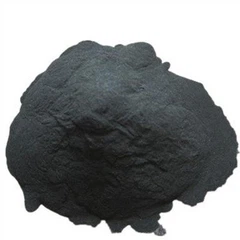
The first step in testing the quality of RP Graphite Powder is a simple physical inspection. Take a close look at the powder. It should have a consistent color. Usually, high - quality RP Graphite Powder has a deep, uniform black color. If you see any signs of discoloration, like patches of gray or other hues, it could be a sign of impurities or improper processing.
Also, check the texture. The powder should be fine and smooth. You can rub a small amount between your fingers. If it feels gritty or has large particles, that's not a good sign. High - quality powder should flow easily and not clump together. If you notice clumps, it might mean that the powder has absorbed moisture or there are some bonding agents present that shouldn't be.
Particle Size Analysis
Particle size is a crucial factor when it comes to RP Graphite Powder. Different applications require different particle sizes. For example, in some high - precision electronics applications, you might need Superfine Graphite Powder with extremely small particle sizes.
There are a few ways to analyze particle size. One common method is laser diffraction. In this technique, a laser beam is passed through a suspension of the graphite powder. The way the laser light is scattered by the particles can be used to determine their size distribution. You can get a particle size analyzer for this purpose. It will give you detailed information about the average particle size, the range of particle sizes, and the distribution curve.
Another method is microscopy. You can use an optical microscope or an electron microscope to directly observe the particles. This can give you a visual understanding of the particle shape and size. With an electron microscope, you can even see very fine details and detect any irregularities in the particles.


Purity Testing
The purity of RP Graphite Powder is super important. Impurities can affect the powder's properties in many ways. For example, metallic impurities can reduce the electrical conductivity of the powder.
One way to test purity is through chemical analysis. You can use techniques like inductively coupled plasma mass spectrometry (ICP - MS). This method can detect trace amounts of various elements in the powder. It can tell you the exact concentration of different impurities, such as iron, copper, and silicon.
Another common method is combustion analysis. In this process, a sample of the graphite powder is burned in a controlled environment. The amount of carbon dioxide produced can be measured, and from that, you can calculate the carbon content of the powder. High - quality RP Graphite Powder should have a very high carbon content, usually above 99%.
Electrical Conductivity Testing
Since RP Graphite Powder is often used in applications where electrical conductivity is important, testing this property is a must. You can use a simple conductivity meter. First, you need to prepare a sample of the powder in a specific way. Usually, you'll compress the powder into a pellet or a block.
Then, you connect the conductivity meter to the sample and measure the electrical resistance. The lower the resistance, the higher the conductivity. You can compare the measured conductivity with the expected values for high - quality RP Graphite Powder. If the conductivity is lower than expected, it could be due to impurities or improper particle packing.
Lubricity Testing
If the powder is going to be used as a lubricant, you need to test its lubricity. One way to do this is through a friction test. You can set up a simple friction testing apparatus, where a surface is rubbed against another surface with the graphite powder in between.
Measure the force required to move the surfaces relative to each other. A high - quality lubricating RP Graphite Powder should reduce the friction significantly. You can also observe the wear on the surfaces after the test. Less wear indicates better lubricity.
Thermal Stability Testing
In some applications, RP Graphite Powder needs to withstand high temperatures. To test its thermal stability, you can use a thermogravimetric analyzer (TGA). In this device, a sample of the powder is heated at a controlled rate. The weight loss of the sample is measured as the temperature increases.
If the powder starts to decompose or lose weight at relatively low temperatures, it might not be suitable for high - temperature applications. High - quality RP Graphite Powder should have good thermal stability and not decompose until very high temperatures, usually above 1000°C.
Moisture Content Testing
Moisture can have a big impact on the quality of RP Graphite Powder. It can cause the powder to clump, reduce its electrical conductivity, and affect its chemical stability.
You can use a moisture analyzer to measure the moisture content. The most common type is the halogen moisture analyzer. In this device, a sample of the powder is heated, and the moisture is evaporated. The weight loss during the heating process is used to calculate the moisture content. High - quality powder should have a very low moisture content, usually less than 0.5%.
Comparing with Standards
Once you've done all these tests, it's a good idea to compare your results with industry standards. There are some well - established standards for RP Graphite Powder in different industries. By comparing your test results with these standards, you can quickly determine if your powder meets the requirements.
If you're not sure which standards to follow, you can look at the specifications provided by your customers. They usually have specific requirements based on their applications.
Conclusion
Testing the quality of RP Graphite Powder is a multi - step process. By doing physical inspections, particle size analysis, purity testing, and testing other important properties like electrical conductivity, lubricity, thermal stability, and moisture content, you can ensure that you're getting high - quality powder.
If you're in the market for high - quality RP Graphite Powder, or if you have any questions about the testing process, don't hesitate to reach out. We offer a wide range of graphite powders, including UHP Graphite Powder and Carbon Graphite Powder, and we're always happy to help you find the right product for your needs. Let's start a conversation about your requirements and see how we can work together!
References
- ASTM International standards for graphite materials
- Journal articles on graphite powder characterization and testing
Send Inquiry