

How does humidity affect the storage of Graphite Oxide Powder?
Jun 18, 2025
Leave a message
As a supplier of Graphite Oxide Powder, I've witnessed firsthand the critical role that environmental factors play in the quality and longevity of this valuable material. Among these factors, humidity stands out as a particularly influential variable. In this blog, I'll delve into how humidity affects the storage of Graphite Oxide Powder and share some practical insights based on my years of experience in the industry.
Understanding Graphite Oxide Powder
Before we explore the impact of humidity, let's briefly review what Graphite Oxide Powder is. Graphite Oxide is a compound derived from graphite, where oxygen-containing functional groups are introduced onto the graphite layers. This modification imparts unique properties to the material, making it useful in a wide range of applications, including energy storage, composites, and sensors.
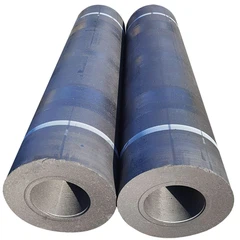
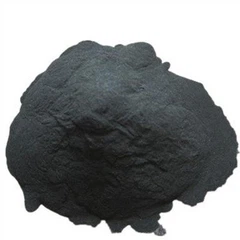
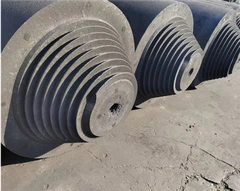
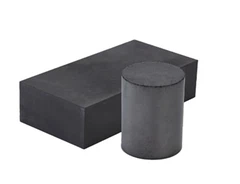
Our company offers different types of graphite powders, such as HP Graphite Powder, UHP Graphite Powder, and Synthetic Graphite Powder. Each type has its own characteristics and applications, but all require proper storage to maintain their quality.
The Impact of Humidity on Graphite Oxide Powder
Humidity refers to the amount of water vapor present in the air. When it comes to storing Graphite Oxide Powder, humidity can have several significant effects:
1. Chemical Reactions
Graphite Oxide Powder is highly reactive, and the presence of water vapor can trigger chemical reactions. Water molecules can interact with the oxygen-containing functional groups on the graphite oxide surface, leading to hydrolysis or other chemical changes. These reactions can alter the structure and properties of the powder, reducing its effectiveness in various applications.
For example, hydrolysis can break down the covalent bonds between the graphite layers and the functional groups, resulting in the loss of oxygen content and a decrease in the powder's hydrophilicity. This can be particularly problematic in applications where the hydrophilic nature of Graphite Oxide Powder is crucial, such as in the preparation of aqueous dispersions or in applications involving water-based systems.
2. Agglomeration
High humidity can cause the Graphite Oxide Powder particles to agglomerate. Water vapor can act as a binder, causing the particles to stick together and form larger clusters. This agglomeration can make it difficult to disperse the powder evenly in a matrix, leading to inconsistent performance in applications such as composites or coatings.
In addition, agglomeration can also affect the flowability of the powder, making it more difficult to handle and process. This can increase production costs and reduce the efficiency of manufacturing processes.
3. Moisture Absorption
Graphite Oxide Powder has a high affinity for water, and it can absorb moisture from the surrounding environment. When the powder absorbs moisture, its weight and volume can increase, which can affect its handling and storage. Moreover, the absorbed moisture can also promote the growth of microorganisms, such as bacteria and fungi, which can contaminate the powder and reduce its quality.
4. Oxidation
Humidity can also accelerate the oxidation of Graphite Oxide Powder. In the presence of water vapor, oxygen in the air can react with the powder, leading to the formation of additional oxygen-containing functional groups. This oxidation can further change the properties of the powder, such as its electrical conductivity and thermal stability.
Optimal Storage Conditions
To minimize the impact of humidity on Graphite Oxide Powder, it's essential to store it under optimal conditions. Here are some recommendations:
1. Low Humidity Environment
The ideal storage environment for Graphite Oxide Powder is a low-humidity area. A relative humidity of less than 30% is recommended to prevent moisture absorption and chemical reactions. This can be achieved by storing the powder in a sealed container or in a controlled environment, such as a desiccator or a humidity-controlled storage room.
2. Temperature Control
Temperature also plays a role in the storage of Graphite Oxide Powder. It's best to store the powder at a stable temperature, preferably between 20°C and 25°C. Fluctuations in temperature can cause condensation, which can increase the humidity inside the storage container.
3. Proper Packaging
Using appropriate packaging materials is crucial for protecting the powder from humidity. Sealed plastic bags or containers with moisture-resistant liners are recommended. Additionally, adding desiccant packets to the packaging can help absorb any moisture that may enter the container.
4. Avoid Exposure to Air
Graphite Oxide Powder should be kept away from direct exposure to air, as air contains oxygen and moisture. When opening the storage container, it's important to minimize the time the powder is exposed to the atmosphere and to reseal the container tightly after use.
Monitoring and Quality Assurance
Regular monitoring of the storage conditions is essential to ensure the quality of Graphite Oxide Powder. This can include using humidity sensors to measure the relative humidity inside the storage area and conducting periodic quality checks on the powder.
Quality checks can involve analyzing the powder's physical and chemical properties, such as its particle size distribution, oxygen content, and dispersion stability. By monitoring these properties, any changes in the powder's quality can be detected early, and appropriate measures can be taken to prevent further degradation.


Conclusion
Humidity has a significant impact on the storage of Graphite Oxide Powder. By understanding the effects of humidity and implementing proper storage practices, we can ensure the quality and performance of this valuable material. As a supplier, I'm committed to providing high-quality Graphite Oxide Powder and offering guidance on its proper storage and handling.
If you're interested in purchasing Graphite Oxide Powder or have any questions about its storage or applications, please feel free to contact us for further information and to discuss your specific needs. We look forward to working with you to meet your requirements.
References
- Nair, R. R., Blake, P., Grigorenko, A. N., Novoselov, K. S., Booth, T. J., Stauber, T., ... & Geim, A. K. (2008). Fine structure constant defines visual transparency of graphene. Science, 320(5881), 1308-1308.
- Ruoff, R. S., & Tour, J. M. (2011). Chemistry of graphene oxide. Chemical Society Reviews, 40(4), 2277-2292.
- Stankovich, S., Dikin, D. A., Dommett, G. H. B., Kohlhaas, K. M., Zimney, E. J., Stach, E. A., ... & Ruoff, R. S. (2006). Graphene-based composite materials. Nature, 442(7100), 282-286.
Send Inquiry