

Can superfine graphite powder be used in the desalination industry?
Oct 28, 2025
Leave a message
Can superfine graphite powder be used in the desalination industry?
As a supplier of superfine graphite powder, I often get asked about the potential applications of our product. One area that has recently piqued my interest is the desalination industry. With the growing global demand for fresh water and the increasing scarcity of this precious resource, desalination has emerged as a crucial solution. In this blog post, I will explore the possibility of using superfine graphite powder in the desalination process.
Understanding Superfine Graphite Powder
Before delving into its potential use in desalination, let's first understand what superfine graphite powder is. Graphite is a form of carbon with a unique crystalline structure that gives it exceptional properties such as high electrical and thermal conductivity, chemical stability, and lubricity. Superfine graphite powder is a highly refined form of graphite where the particles are extremely small, typically in the micrometer or nanometer range.
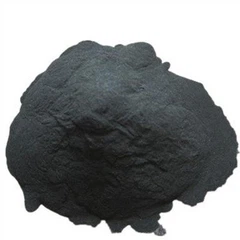
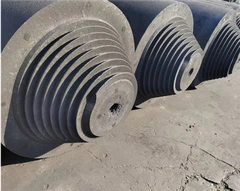
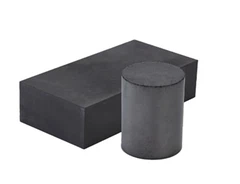
We offer different types of graphite powder, including UHP Graphite Powder, HP Graphite Powder, and Artificial Graphite Powder. Each type has its own set of characteristics and is suitable for different applications.
The Desalination Industry
Desalination is the process of removing salt and other impurities from seawater or brackish water to make it suitable for human consumption, agricultural use, and industrial processes. There are several desalination technologies available, including reverse osmosis (RO), multi - stage flash distillation (MSF), and multi - effect distillation (MED).
Reverse osmosis is the most widely used desalination technology today. It works by applying pressure to seawater on one side of a semi - permeable membrane, forcing water molecules to pass through the membrane while leaving behind salt and other contaminants. However, this process faces challenges such as membrane fouling, high energy consumption, and the need for regular maintenance.
Potential Applications of Superfine Graphite Powder in Desalination
1. Anti - fouling Properties
One of the major problems in desalination plants is membrane fouling. Fouling occurs when particles, microorganisms, and organic matter accumulate on the surface of the membrane, reducing its efficiency and lifespan. Superfine graphite powder has excellent lubricity and chemical stability, which could potentially prevent the adhesion of foulants to the membrane surface.
The small particle size of superfine graphite powder allows it to form a thin, uniform layer on the membrane surface. This layer can act as a physical barrier, preventing direct contact between the foulants and the membrane. Additionally, the chemical inertness of graphite makes it resistant to the chemical reactions that often lead to fouling.
2. Improving Membrane Conductivity
In some advanced desalination processes, such as capacitive deionization (CDI), electrical conductivity plays a crucial role. CDI is a technology that uses electrodes to remove ions from water by applying an electric field. Superfine graphite powder has high electrical conductivity, which could be used to enhance the performance of electrodes in CDI systems.
By incorporating superfine graphite powder into the electrode material, the electrical conductivity of the electrode can be increased. This would result in more efficient ion removal and lower energy consumption during the desalination process.
3. Heat Transfer Enhancement
In thermal desalination processes like multi - stage flash distillation and multi - effect distillation, heat transfer is a critical factor. Superfine graphite powder has high thermal conductivity, which can be used to improve the heat transfer efficiency in these systems.
Graphite powder can be added to the heat transfer fluids or coatings used in the desalination equipment. The high thermal conductivity of graphite allows for faster and more efficient heat transfer, reducing the energy required to heat the seawater and increasing the overall productivity of the desalination plant.
Challenges and Limitations
While the potential applications of superfine graphite powder in the desalination industry are promising, there are also some challenges and limitations that need to be addressed.
1. Compatibility with Membrane Materials
The use of superfine graphite powder on membranes needs to ensure its compatibility with the membrane material. If the graphite powder is not compatible, it could cause damage to the membrane or affect its performance in other ways. Further research is needed to determine the optimal way to incorporate graphite powder into the membrane structure without compromising its integrity.
2. Cost - effectiveness
The cost of producing superfine graphite powder can be relatively high, especially for high - purity grades. In order for it to be widely adopted in the desalination industry, the cost - effectiveness needs to be carefully evaluated. This includes considering the cost of production, the potential savings in energy and maintenance, and the overall impact on the desalination process.
3. Environmental Impact
Although graphite is a natural and relatively environmentally friendly material, the large - scale use of superfine graphite powder in desalination plants could have potential environmental impacts. For example, the release of graphite particles into the environment during the desalination process needs to be monitored and controlled to ensure that it does not cause any harm to the ecosystem.
Research and Development
There is currently limited research on the use of superfine graphite powder in the desalination industry. However, some preliminary studies have shown promising results. For example, research on using graphite - based coatings for anti - fouling purposes in other industries has demonstrated their effectiveness. These findings could be extrapolated to the desalination field.


We are actively involved in research and development to explore the potential of superfine graphite powder in desalination. Our team of scientists and engineers is working on developing new formulations and applications to overcome the challenges mentioned above.
Conclusion
In conclusion, superfine graphite powder has the potential to play an important role in the desalination industry. Its unique properties such as anti - fouling, high electrical and thermal conductivity make it a promising candidate for improving the efficiency and performance of desalination processes.
However, more research and development are needed to fully understand its capabilities and overcome the challenges associated with its use. We believe that with further innovation and collaboration, superfine graphite powder could become an integral part of the future desalination technologies.
If you are interested in exploring the use of superfine graphite powder in your desalination projects, please feel free to contact us for more information and to discuss potential procurement opportunities. We are committed to providing high - quality products and technical support to meet your specific needs.
References
- "Desalination Technology: Current Status and Future Trends" by X. Li, et al.
- "Graphite and Its Applications" by R. B. McKee.
- "Membrane Fouling in Desalination Processes" by S. Vrouwenvelder, et al.
Send Inquiry