

Can Graphite Oxide Powder be functionalized?
Jun 10, 2025
Leave a message
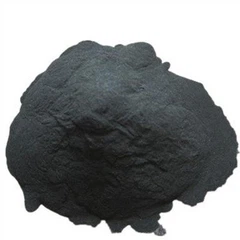
Graphite oxide powder, a derivative of graphite, has attracted significant attention in the scientific and industrial communities due to its unique properties and potential applications. As a leading supplier of Graphite Oxide Powder, I often encounter questions regarding its functionalization. In this blog post, I will explore the possibility of functionalizing graphite oxide powder, its implications, and how it can open up new opportunities in various fields.
Understanding Graphite Oxide Powder
Before delving into functionalization, it is essential to understand what graphite oxide powder is. Graphite oxide is obtained by treating graphite with strong oxidizing agents. This process introduces oxygen-containing functional groups such as hydroxyl, epoxy, and carboxyl groups on the graphite layers. These functional groups disrupt the regular structure of graphite, making the layers more hydrophilic and easier to separate.
The resulting graphite oxide powder has a high surface area, which makes it an excellent candidate for applications in adsorption, catalysis, and energy storage. Its unique structure also allows for further modification through functionalization, which can enhance its properties and expand its range of applications.
The Concept of Functionalization
Functionalization refers to the process of modifying a material by attaching specific functional groups or molecules to its surface. In the case of graphite oxide powder, functionalization can be achieved through various chemical reactions that target the oxygen-containing groups on its surface.
The main goal of functionalizing graphite oxide powder is to tailor its properties to meet the requirements of specific applications. For example, functionalization can improve the dispersion of graphite oxide powder in solvents, enhance its compatibility with other materials, or introduce new functionalities such as electrical conductivity, magnetic properties, or catalytic activity.
Methods of Functionalizing Graphite Oxide Powder
There are several methods available for functionalizing graphite oxide powder, each with its own advantages and limitations. Some of the commonly used methods include:
Covalent Functionalization
Covalent functionalization involves the formation of covalent bonds between the functional groups on the graphite oxide surface and the functionalizing agents. This method provides a stable and durable modification of the graphite oxide powder.
One example of covalent functionalization is the reaction of graphite oxide with amines. The carboxyl groups on the graphite oxide surface can react with amines to form amide bonds. This reaction not only introduces new functional groups but also improves the solubility of graphite oxide in organic solvents.
Non - Covalent Functionalization
Non - covalent functionalization relies on weak interactions such as van der Waals forces, hydrogen bonding, or π - π stacking to attach functional molecules to the graphite oxide surface. This method is less invasive than covalent functionalization and preserves the original structure of graphite oxide to a large extent.
For instance, surfactants can be used for non - covalent functionalization of graphite oxide powder. Surfactants adsorb onto the graphite oxide surface through hydrophobic interactions, improving its dispersion in water or organic solvents.
Polymer Grafting
Polymer grafting involves the attachment of polymer chains to the graphite oxide surface. This can be achieved through either "grafting from" or "grafting to" methods.
In the "grafting from" method, polymerization is initiated from the functional groups on the graphite oxide surface. This results in the growth of polymer chains directly from the graphite oxide surface, providing a strong bond between the polymer and the graphite oxide.


The "grafting to" method, on the other hand, involves the pre - synthesized polymer chains reacting with the functional groups on the graphite oxide surface. This method is relatively simple but may result in a lower grafting density.
Applications of Functionalized Graphite Oxide Powder
The functionalization of graphite oxide powder opens up a wide range of applications in various fields. Some of the notable applications include:
Composite Materials
Functionalized graphite oxide powder can be used as a filler in composite materials. By enhancing its compatibility with the polymer matrix, functionalization can improve the mechanical, thermal, and electrical properties of the composites. For example, functionalized graphite oxide can be incorporated into epoxy resins to produce high - performance composites with improved strength and stiffness.
Energy Storage
In the field of energy storage, functionalized graphite oxide powder shows great potential. For lithium - ion batteries, functionalization can improve the electrochemical performance of graphite oxide electrodes by increasing their capacity and cycling stability. Additionally, functionalized graphite oxide can be used in supercapacitors to enhance their energy density and power density.
Environmental Remediation
Functionalized graphite oxide powder can be used for environmental remediation due to its high adsorption capacity. By functionalizing graphite oxide with specific functional groups, it can selectively adsorb pollutants such as heavy metals, organic dyes, and pesticides from water.
Our Offerings as a Graphite Oxide Powder Supplier
As a supplier of Graphite Oxide Powder, we understand the importance of providing high - quality products that meet the diverse needs of our customers. We offer graphite oxide powder with different particle sizes and degrees of oxidation to suit various applications.
In addition to our standard products, we also provide customized functionalization services. Our team of experts can work with you to develop functionalized graphite oxide powder that meets your specific requirements. Whether you need graphite oxide powder functionalized for composite materials, energy storage, or environmental applications, we have the expertise and resources to deliver.
We also offer related products such as Synthetic Graphite Powder and HP Graphite Powder, which can be used in conjunction with graphite oxide powder for different applications.
Conclusion
In conclusion, graphite oxide powder can indeed be functionalized through various chemical methods. The functionalization of graphite oxide powder not only enhances its existing properties but also introduces new functionalities, opening up a wide range of applications in different fields.
As a supplier of graphite oxide powder, we are committed to providing high - quality products and customized solutions to our customers. If you are interested in exploring the potential of functionalized graphite oxide powder for your applications, we encourage you to contact us for further discussions and procurement. Our team is ready to assist you in finding the best solutions for your needs.
References
- Niyogi, S., Bekyarova, E., Itkis, M. E., McWilliams, J. L., Hamon, M. A., & Haddon, R. C. (2006). Functionalization of graphite oxide. Journal of the American Chemical Society, 128(41), 13574 - 13580.
- Dreyer, D. R., Park, S., Bielawski, C. W., & Ruoff, R. S. (2010). The chemistry of graphene oxide. Chemical Society Reviews, 39(1), 228 - 240.
- Li, D., Muller, M. B., Gilje, S., Kaner, R. B., & Wallace, G. G. (2008). Processable aqueous dispersions of graphene nanosheets. Nature Nanotechnology, 3(2), 101 - 105.
Send Inquiry