

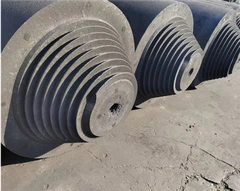
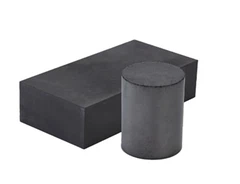

What is Isostatic Graphite
Sep 27, 2024
Leave a message
1. Production Process
The production of isostatic graphite begins with a mixture of coke and pitch.
This mixture is then isostatically pressed.
Isostatic pressing involves compressing the mixture under high pressure in a CIP.
This ensures a uniform density and structure throughout the material.
After forming, the graphite blanks are heat treated at temperatures between 2500 and 2800 °C.
This process improves the properties of the graphite and purifies the material.
2.2. Properties
Isostatic graphite is known for its extremely high heat and chemical resistance.
This makes it suitable for environments where other materials would degrade quickly.
It has excellent thermal shock resistance.
It can withstand drastic temperature changes without cracking or breaking.
This is crucial in applications involving extreme thermal fluctuations.
It has high electrical and thermal conductivity.
It conducts electricity and heat efficiently, making it useful in a variety of industrial applications.
Strength increases with increasing temperature.
Unlike many materials that weaken at high temperatures, isostatic graphite increases in strength, increasing its durability in extreme conditions.
Easy to process and high purity.
It can be precisely machined into a variety of shapes and purified to extremely low impurity levels (<5 ppm).
This is critical for applications that require high precision and high purity.
3. Applications
Isostatic graphite is used in a wide range of industries.
These industries include nuclear energy, metallurgy, semiconductors, solar energy and continuous casting.
Isostatic graphite is particularly important in applications where traditional structural graphite cannot meet performance requirements.
This is because it has a longer service life and stronger performance.
It can also be used in electrical discharge machining (EDM) processes.
Its properties make it an ideal material for manufacturing complex precision parts.
4. Manufacturing advantages
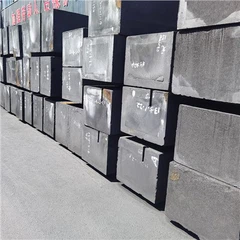
The isostatic pressing process used to manufacture this graphite produces graphite blocks with extremely uniform structure.
This ensures that the physical parameters of the entire material are constant.
This uniformity is critical in applications where consistency and reliability are extremely important.
5. Summary
Isostatic graphite is an excellent material for applications requiring high performance under extreme conditions.
Its unique production process and excellent properties make it stand out.
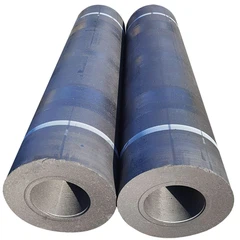
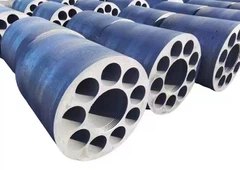
It is capable of precise processing and has a variety of forms from blocks and plates to tubes and electrodes, making it an indispensable and versatile material in modern industry.
Send Inquiry