


The difference between glassy carbon electrode and graphite electrode
Jan 17, 2025
Leave a message
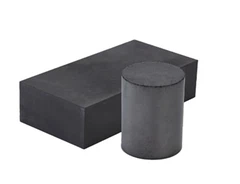
Glassy carbon electrode; One step of the surface treatment of the solid electrode is mechanical grinding and polishing to the mirror surface. Especially when there is an inert layer or a strong adsorption layer on the electrode surface, it must be treated mechanically or by heating.
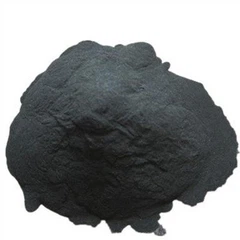
The materials commonly used for polishing electrodes are diamond, CeO2, ZrO2, MgO and α-Al2O3 powder. When polishing, they are always polished in the order of lower polishing agent particle size.
During the experiment, the glassy carbon electrode with a diameter of 3mm was first polished step by step with metallographic sandpaper (1#~7#), and then polished to a mirror surface on suede with 1.0 and 0.3μm Al2O3 slurry in turn. After each polishing, the surface dirt was washed off first, and then moved into an ultrasonic water bath for cleaning, 2~3min each time, repeated three times, and finally ultrasonically cleaned with 1:1 ethanol, 1:1 HNO3 and distilled water in turn.
After thorough washing, the electrode should be activated by cyclic voltammetry in 0.5-1mol/L H2SO4 solution, with a scanning range of 1.0~-1.0V, and repeated scanning until a stable cyclic voltammetry diagram is reached.
Finally, the cyclic voltammetry curve of 1×10⁻³mol/L K3Fe(CN)6 solution was recorded in 0.20mol/LKNO3 to test the electrode performance, with a scanning speed of 50 mV/s and a scanning range of 0.6 ~-0.1V. The electrode can only be used if the peak potential difference in the cyclic voltammetry diagram obtained under laboratory conditions is below 80mV and as close to 64mV as possible, otherwise the electrode should be reprocessed until it meets the requirements.
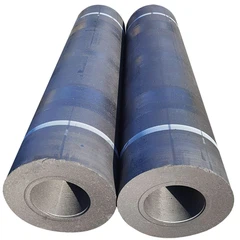
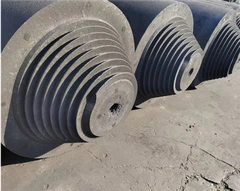
Graphite electrode is a high-temperature resistant and antioxidant conductive material produced by a series of processes such as crushing, batching, kneading, molding, roasting, impregnation, graphitization, and mechanical processing using petroleum coke as aggregate and coal tar as binder.
Graphite electrode has good electrical properties and chemical stability, high mechanical strength at high temperatures, low impurity content, and good vibration resistance. It is a good conductor of heat and electricity.
It is widely used in steelmaking arc furnaces, refining furnaces, ore-arc furnaces for producing ferroalloys, industrial silicon, yellow phosphorus, corundum, and other smelting furnaces that use electric arcs to generate high temperatures.
According to the different power and current during use, different raw materials and production processes are used to produce it, which can be divided into ordinary power graphite electrodes, high power graphite electrodes, and ultra-high power graphite electrodes. According to the diameter of the electrode, there are different specifications of φ75~600mm.
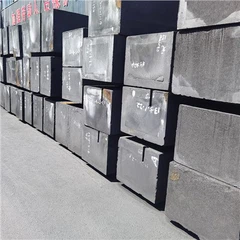
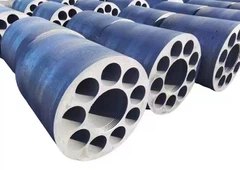
According to the special requirements of users, special specifications of graphite electrodes and special-shaped graphite products can be processed and produced. Glassy carbon electrode When the stripping voltammetry is carried out in a relatively positive potential range, glassy carbon electrode can be used.
Send Inquiry