

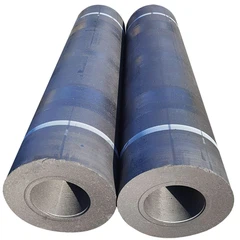
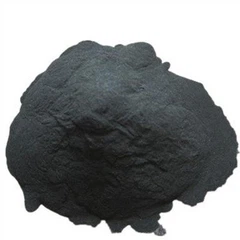
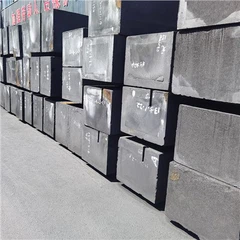
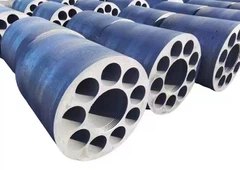

Raw materials and manufacturing process of graphite electrodes
Sep 06, 2024
Leave a message
The raw materials for producing graphite electrodes are petroleum coke, needle coke and coal tar
Petroleum coke is a combustible solid product obtained by coking petroleum residue and petroleum asphalt. It is black and porous, with carbon as the main element and very low ash content, generally below 0.5%. Petroleum coke belongs to the category of easily graphitized carbon. Petroleum coke is widely used in chemical and metallurgical industries and is the main raw material for producing artificial graphite products and carbon products for electrolytic aluminum.
Petroleum coke can be divided into raw coke and calcined coke according to the heat treatment temperature. The former is petroleum coke obtained by delayed coking, contains a large amount of volatile matter and has low mechanical strength. Calcined coke is obtained by calcining raw coke. Most refineries in China only produce raw coke, and calcination operations are mostly carried out in carbon plants.
Petroleum coke can be divided into three types according to the sulfur content: high-sulfur coke (sulfur content above 1.5%), medium-sulfur coke (sulfur content 0.5%-1.5%), and low-sulfur coke (sulfur content below 0.5%). Graphite electrodes and other artificial graphite products are generally produced using low-sulfur coke. Needle coke is a high-quality coke with obvious fibrous texture, extremely low thermal expansion coefficient, and easy graphitization. When the coke block breaks, it can be split into long and thin strip particles (the aspect ratio is generally above 1.75) according to the texture. The anisotropic fibrous structure can be observed under a polarizing microscope, so it is called needle coke. The anisotropy of the physical and mechanical properties of needle coke is very obvious. It has good electrical and thermal conductivity parallel to the long axis of the particle, and has a low thermal expansion coefficient. During extrusion molding, the long axis of most particles is arranged in the extrusion direction. Therefore, needle coke is the key raw material for manufacturing high-power or ultra-high-power graphite electrodes. The graphite electrodes produced have low resistivity, small thermal expansion coefficient and good thermal shock resistance. Needle coke is divided into oil-based needle coke produced with petroleum residue as raw material and coal-based needle coke produced with refined coal tar as raw material. Coal tar is one of the main products of deep processing of coal tar. It is a mixture of various hydrocarbons. It is a black, high-viscosity semi-solid or solid at room temperature. It has no fixed melting point. It softens and then melts after heating. The density is 1.25-1.35g/cm3. According to the softening point, it is divided into three types: low-temperature, medium-temperature and high-temperature asphalt. The yield of medium-temperature asphalt is 54-56% of coal tar. The composition of coal tar is extremely complex, which is related to the properties of coal tar and the content of heteroatoms, and is also affected by the coking process system and coal tar processing conditions. There are many indicators to characterize the properties of coal tar, such as asphalt softening point, toluene insoluble matter (TI), quinoline insoluble matter (QI), coking value and rheological properties of coal tar. Coal tar is used as a binder and impregnant in the carbon industry, and its performance has a great influence on the production process and product quality of carbon products. Binder asphalt generally uses medium-temperature or medium-temperature modified asphalt with moderate softening point, high coking value and high β resin. The impregnant should use medium-temperature asphalt with low softening point, low QI and good rheological properties.
Send Inquiry