

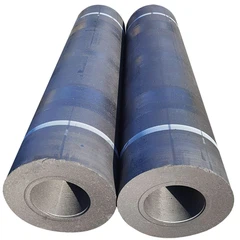
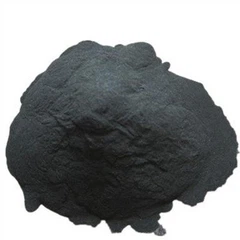
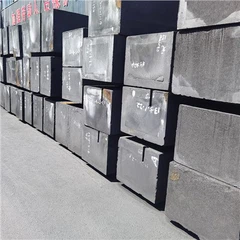
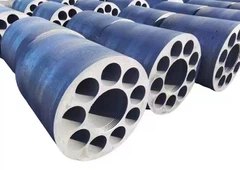
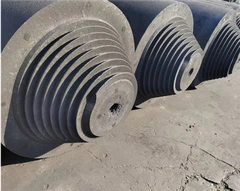
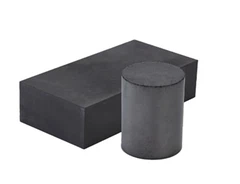

Graphitized carbon electrode
Sep 14, 2024
Leave a message
Product Overview
The resistivity of traditional carbon electrodes is relatively high, the allowable current density is low, and the power consumption per unit product is relatively high. Compared with traditional carbon electrodes, graphitized carbon electrodes have low resistivity, low electrode self-consumption, and energy saving when used. At the same time, graphitized carbon electrodes have low ash content (especially when smelting high-purity industrial silicon, the content of iron, aluminum, calcium and other elements in graphitized carbon electrodes themselves is much lower than that of conventional carbon electrodes, which is beneficial to improving the quality of silicon), good oxidation resistance, can improve the thermal efficiency and unit time output of submerged arc furnaces, and shorten the smelting time.
Product Series
Φ960mm, Φ1020mm, Φ1146mm, Φ1272mm, the technical indicators of the specifications are reliable and stable.
Performance and application
This product is mainly made of petroleum coke and coal tar as binders, and is made through calcination, batching, kneading, pressing, roasting, graphitization, and machining. It is a conductor that releases electric energy in the form of an arc in an electric arc furnace to heat and melt the charge. The electrodes produced by our company are carbon electrode graphitization products, suitable for the smelting production of metal silicon, ferroalloys, etc. in ore-heat furnaces.
Application industry
The electrode is an ultra-high temperature conductive material, mainly used as a conductive material in ore-heat furnaces for the production of industrial silicon, ferroalloys, yellow phosphorus, calcium carbide, etc.
Since the 1980s, due to the continuous expansion of my country's infrastructure scale, the use of ore-heat furnaces to smelt yellow phosphorus, calcium carbide, ferroalloys, industrial silicon and other industries has developed rapidly, especially after entering the 1990s, the development has been even faster. Since the final heating treatment temperature of traditional carbon electrodes is about 1100℃, and the operating temperature of the ore-fired furnace for smelting industrial silicon, yellow phosphorus, calcium carbide, ferroalloy and fused magnesium is 1800-2200℃, when the temperature reaches 1600-2000℃ during the heating process of the ore-fired furnace, the nitrogen, sulfur and other metal impurities contained in the traditional carbon electrodes escape in gaseous form, causing a serious "crystal expansion" phenomenon, resulting in cracks in the electrodes. In severe cases, the electrodes may fall off or break during use, affecting the ore-fired furnace smelting production. Carbon electrodes that have been graphitized can avoid such phenomena and effectively prevent cracks or falling off during use.
Send Inquiry