


Brief description and classification of graphite electrodes
May 22, 2025
Leave a message
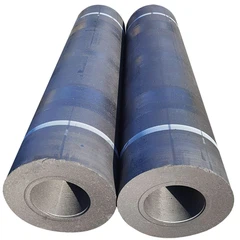
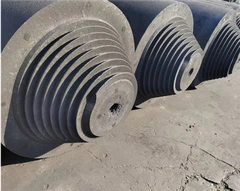
According to the difference in raw materials used and the physical and chemical indicators of finished products, graphite electrodes are divided into three varieties: ordinary power graphite electrodes (RP grade), high power graphite electrodes (HP grade) and ultra-high power graphite electrodes (UHP grade). This is because graphite electrodes are mainly used as conductive materials in electric arc steelmaking furnaces. In the 1980s, the international electric furnace steelmaking industry divided electric arc steelmaking furnaces into three categories according to the transformer input power per ton of furnace capacity: ordinary power electric furnaces (RP furnaces), high power electric furnaces (HP furnaces) and ultra-high power electric furnaces (UHP furnaces). The transformer input power of ordinary power electric furnaces above 20t per ton of furnace capacity is generally about 300kW/t; high-power electric furnaces are about 400kW/t; electric furnaces below 40t have an input power of 500-600kW/t, electric furnaces between 50-80t have an input power of 400-500kW/t, and electric furnaces above 100t have an input power of 350-450kW/t, which are called ultra-high power electric furnaces. By the end of the 1980s, economically developed countries had eliminated a large number of small and medium-sized ordinary power electric furnaces below 50t, and most of the newly built electric furnaces were ultra-high power large electric furnaces of 80-150t, and the input power was increased to 800kW/t. In the early 1990s, some ultra-high power electric furnaces were further increased to 1000-1200kW/t. The graphite electrodes used in high-power and ultra-high-power electric furnaces operate under more stringent conditions. As the current density passing through the electrodes increases significantly, the following problems arise:
(1) The electrode temperature increases due to resistance heat and hot air flow, which increases the thermal expansion of the electrode and the joint, and the oxidation consumption of the electrode also increases.
(2) The temperature difference between the center of the electrode and the outer circle of the electrode increases, and the thermal stress caused by the temperature difference also increases accordingly, making the electrode prone to cracks and surface peeling.
(3) The electromagnetic force increases, causing severe vibration. Under severe vibration, the probability of the electrode breaking due to loose connection and disconnection increases. Therefore, the physical and mechanical properties of high-power and ultra-high-power graphite electrodes must be better than those of ordinary power graphite electrodes, such as lower resistivity, higher volume density and higher mechanical strength, smaller thermal expansion coefficient, and good thermal shock resistance. Table 1 lists the common standard series and matching graphite electrode diameters of three different power arc steelmaking furnaces in the late 1980s. In order to meet the needs of steel mills to develop high-power and ultra-high-power electric furnaces, carbon factories in Europe, the United States and Japan have mainly produced two quality standards of graphite electrodes since the 1980s, namely high-power graphite electrodes and ultra-high-power graphite electrodes. Ordinary power graphite electrodes are rarely produced due to their small sales.
Graphite Electrodes for DC Arc Furnaces DC arc furnaces are a new type of electric furnace steelmaking equipment that matured in the early 1980s. The early DC arc furnaces were modified on the basis of the original AC arc furnaces. Some used 3 graphite electrodes, and some used 2 graphite electrodes. However, most of the newly designed DC arc furnaces after the mid-1980s only used 1 graphite electrode. Compared with the AC arc furnaces with the same power using 3 graphite electrodes, the total surface area of the electrodes oxidized at high temperatures is greatly reduced. For DC arc furnaces operating at ultra-high power, the consumption of graphite electrodes per ton of steel can be reduced by about 50%. When the current of the DC arc furnace passes through the electrode, no skin effect and proximity effect are produced. The current is evenly distributed on the cross section of the electrode. In addition, the DC arc has good stability, small mechanical vibration during operation, and low noise of the electric furnace. The diameter of the graphite electrode used in a DC arc furnace is also calculated based on the furnace capacity and the allowable current density of the electrode. For ultra-high power furnaces with the same input power, a DC furnace using one graphite electrode has a larger electrode diameter. For example, an AC arc furnace with a capacity of 150t uses an electrode with a diameter of 600mm, while a DC arc furnace of the same capacity uses an electrode with a diameter of 700-750mm. The quality requirements of DC arc furnaces for graphite electrodes are higher than those used in AC arc furnaces.
Send Inquiry