

What is the swelling behavior of high purity graphite powder in solvents?
Jun 09, 2025
Leave a message
The swelling behavior of high purity graphite powder in solvents is a fascinating topic that has significant implications for various industries. As a leading supplier of high purity graphite powder, I have witnessed firsthand the importance of understanding this phenomenon. In this blog post, I will delve into the details of the swelling behavior of high purity graphite powder in solvents, exploring the factors that influence it and its practical applications.
Understanding High Purity Graphite Powder
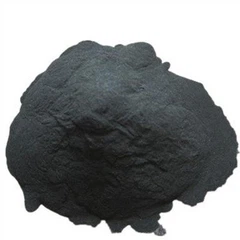
High purity graphite powder is a versatile material known for its excellent electrical conductivity, thermal stability, and chemical resistance. It is used in a wide range of applications, including batteries, lubricants, fuel cells, and aerospace components. The purity of graphite powder is crucial, as impurities can affect its performance and properties. Our company specializes in providing high purity graphite powder with a purity level of over 99.9%, ensuring the highest quality for our customers.
There are different types of high purity graphite powder available, such as Artificial Graphite Powder, Natural Flake Graphite Powder, and Graphite Oxide Powder. Each type has its own unique characteristics and applications, but they all share the common property of swelling in certain solvents.
Swelling Behavior of High Purity Graphite Powder in Solvents
Swelling refers to the increase in volume of a material when it is immersed in a solvent. In the case of high purity graphite powder, swelling occurs due to the interaction between the graphite particles and the solvent molecules. The solvent molecules penetrate the interlayer spaces of the graphite structure, causing the layers to separate and the powder to expand.
The swelling behavior of high purity graphite powder is influenced by several factors, including the type of solvent, the temperature, the duration of immersion, and the properties of the graphite powder itself. Polar solvents, such as water and alcohols, tend to cause more swelling than non - polar solvents, such as hexane and toluene. This is because polar solvents can form stronger interactions with the graphite surface through hydrogen bonding or dipole - dipole interactions.
Temperature also plays a crucial role in the swelling process. Generally, an increase in temperature leads to an increase in the swelling rate and the degree of swelling. Higher temperatures provide more energy for the solvent molecules to penetrate the graphite structure and break the weak van der Waals forces between the graphite layers.
The duration of immersion is another important factor. As the powder is immersed in the solvent for a longer time, more solvent molecules can enter the graphite structure, resulting in greater swelling. However, there is usually a saturation point beyond which further immersion does not lead to significant additional swelling.
The properties of the graphite powder, such as its particle size, surface area, and degree of crystallinity, also affect the swelling behavior. Smaller particle sizes and higher surface areas provide more contact points between the graphite and the solvent, facilitating the penetration of solvent molecules and increasing the degree of swelling. Highly crystalline graphite powders may have more ordered structures, which can either promote or restrict solvent penetration depending on the orientation of the crystal planes.
Mechanisms of Swelling
There are two main mechanisms that contribute to the swelling of high purity graphite powder in solvents: intercalation and adsorption.
Intercalation occurs when solvent molecules insert themselves between the graphite layers. This process is driven by the favorable interactions between the solvent molecules and the graphite layers. For example, in the case of graphite oxide powder, the oxygen - containing functional groups on the graphite surface can form hydrogen bonds with polar solvent molecules, promoting intercalation. Once the solvent molecules are intercalated, they can cause the layers to separate and the powder to swell.
Adsorption refers to the attachment of solvent molecules to the surface of the graphite particles. This can occur through physical adsorption (van der Waals forces) or chemical adsorption (chemical bonding). Adsorbed solvent molecules can increase the volume of the powder by creating a solvent - rich layer around the particles. In some cases, adsorption can also act as a precursor to intercalation, as the adsorbed solvent molecules can gradually diffuse into the interlayer spaces.


Practical Applications of Swelling Behavior
The swelling behavior of high purity graphite powder in solvents has several practical applications.
In the field of energy storage, such as lithium - ion batteries, the swelling of graphite electrodes in the electrolyte can affect the battery performance. Understanding the swelling behavior can help in designing better electrode materials and electrolytes to improve the cycling stability and capacity of the batteries. For example, by controlling the degree of swelling, it is possible to prevent the electrode from cracking or delaminating during charge - discharge cycles.
In the production of graphite composites, the swelling of graphite powder in solvents can be used to improve the dispersion of graphite in the matrix material. When the graphite powder swells in a suitable solvent, it becomes more flexible and easier to mix with other components. This can lead to better - distributed graphite particles in the composite, enhancing its mechanical, electrical, and thermal properties.
In the area of environmental remediation, the swelling of graphite powder can be utilized for the adsorption of pollutants. Swollen graphite has a larger surface area and more accessible pores, which can increase its adsorption capacity for contaminants such as heavy metals and organic compounds.
Controlling the Swelling Behavior
Controlling the swelling behavior of high purity graphite powder is essential for optimizing its performance in different applications. There are several ways to control the swelling:
Solvent Selection: Choosing the appropriate solvent can significantly affect the degree of swelling. By selecting a solvent with a lower swelling capacity, it is possible to limit the expansion of the graphite powder. For example, using a non - polar solvent instead of a polar solvent can reduce swelling.
Surface Modification: Modifying the surface of the graphite powder can change its interaction with the solvent. For instance, coating the graphite particles with a thin layer of a hydrophobic material can reduce the adsorption of polar solvents and thus limit swelling.
Temperature and Pressure Control: Adjusting the temperature and pressure during the swelling process can also control the degree of swelling. Lower temperatures and higher pressures can reduce the swelling rate and the final degree of swelling.
Conclusion
The swelling behavior of high purity graphite powder in solvents is a complex but important phenomenon. It is influenced by various factors, including the type of solvent, temperature, duration of immersion, and the properties of the graphite powder. Understanding the mechanisms and applications of swelling can help in developing new materials and processes in different industries.
As a supplier of high purity graphite powder, we are committed to providing our customers with high - quality products and technical support. If you are interested in learning more about the swelling behavior of our graphite powder or have specific requirements for your applications, we encourage you to contact us for further discussion and potential procurement. Our team of experts is ready to assist you in finding the most suitable graphite powder for your needs.
References
- Dresselhaus, M. S., Dresselhaus, G., & Eklund, P. C. (1996). Graphite Intercalation Compounds. In Science of Fullerenes and Carbon Nanotubes (pp. 879 - 931). Academic Press.
- Niyogi, S., Hamon, M. A., Hu, H., Zhao, B., Bhowmik, P., Sen, R., & Itkis, M. E. (2002). Solution Properties of Single - Walled Carbon Nanotubes. Journal of the American Chemical Society, 124(14), 760 - 767.
- Aksay, I. A., Liu, J., Honnell, K., Margrave, J. L., & Shelimov, K. B. (1996). Graphite Oxide Nanoplatelets. Chemical Physics Letters, 252(5 - 6), 333 - 339.
Send Inquiry