

How to control the particle size during the production of superfine graphite powder?
Jun 06, 2025
Leave a message
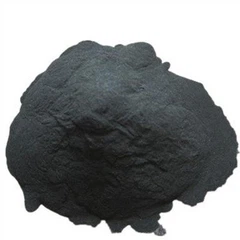
Hey there! As a supplier of superfine graphite powder, I've been getting a lot of questions lately about how to control the particle size during production. It's a crucial aspect that can significantly impact the quality and performance of the final product. So, I thought I'd share some insights based on my experience in the industry.
Understanding the Importance of Particle Size
First things first, why does particle size matter? Well, in the world of superfine graphite powder, the particle size can affect everything from the powder's physical properties to its chemical reactivity. For instance, finer particles generally have a larger surface area, which can enhance their reactivity and dispersibility. This is particularly important in applications like batteries, where a high surface area can improve the battery's performance.


On the other hand, if the particles are too large, they may not disperse evenly, leading to inconsistent performance. In some cases, large particles can also cause clogging in manufacturing processes, which can be a real headache. So, finding the right balance is key.
Factors Affecting Particle Size
There are several factors that can influence the particle size during the production of superfine graphite powder. Let's take a closer look at some of the most important ones.
Raw Material Selection
The type of graphite you start with plays a significant role in determining the final particle size. For example, Natural Flake Graphite Powder has a different structure and particle size distribution compared to other types of graphite. When choosing your raw material, it's important to consider its natural particle size and how it will respond to the milling process.
Milling Process
The milling process is where the magic happens. There are several types of mills available, each with its own advantages and disadvantages. Ball mills, for example, are commonly used in the production of superfine graphite powder. They work by rotating a cylinder filled with balls, which crush and grind the graphite particles. The speed of the rotation, the size and type of the balls, and the duration of the milling process can all affect the final particle size.
Another popular option is jet mills. These mills use high-speed jets of gas to accelerate the graphite particles and cause them to collide with each other, resulting in size reduction. Jet mills are known for their ability to produce very fine particles with a narrow size distribution.
Classification
After the milling process, the graphite powder needs to be classified to separate the particles based on their size. This is typically done using a classifier, which can be a mechanical or air classifier. The classifier works by separating the particles based on their size and density. The finer particles are collected and used as the final product, while the larger particles are sent back to the mill for further processing.
Controlling Particle Size
Now that we understand the factors that affect particle size, let's talk about how to control it. Here are some tips and techniques that can help you achieve the desired particle size during the production of superfine graphite powder.
Optimize the Milling Process
As mentioned earlier, the milling process is crucial for controlling particle size. To optimize the process, you need to carefully select the type of mill, the milling parameters, and the duration of the milling. For example, if you're using a ball mill, you may need to adjust the speed of the rotation and the size of the balls to achieve the desired particle size.
It's also important to monitor the milling process closely and make adjustments as needed. You can use techniques like particle size analysis to measure the particle size distribution during the milling process and make adjustments accordingly.
Use a Classifier
Classification is an essential step in the production of superfine graphite powder. By using a classifier, you can ensure that the final product has a narrow size distribution and meets the required specifications. When choosing a classifier, make sure to select one that is suitable for your specific application and the desired particle size range.
Control the Raw Material Quality
The quality of the raw material can also affect the final particle size. Make sure to source high-quality graphite from a reliable supplier. You may also need to pre-process the raw material to remove any impurities or large particles before milling.
Consider Post-Processing Treatments
In some cases, post-processing treatments may be necessary to further control the particle size. For example, you may need to use a surface treatment to modify the surface properties of the graphite particles, which can affect their dispersibility and agglomeration behavior.
Quality Assurance
To ensure that the superfine graphite powder meets the required specifications, it's important to implement a quality assurance program. This program should include regular particle size analysis, as well as other tests to measure the physical and chemical properties of the powder.
You can use techniques like laser diffraction to measure the particle size distribution of the powder. This technique is fast, accurate, and non-destructive, making it ideal for quality control purposes.
Applications of Superfine Graphite Powder
Superfine graphite powder has a wide range of applications in various industries. Here are some of the most common applications:
Batteries
Superfine graphite powder is widely used in the production of lithium-ion batteries. It is used as an anode material, which plays a crucial role in the battery's performance. The high surface area and good conductivity of superfine graphite powder make it an ideal choice for this application.
Lubricants
Graphite is known for its excellent lubricating properties. Superfine graphite powder can be used as a lubricant additive in various applications, such as automotive engines, industrial machinery, and aerospace components.
Conductive Materials
Due to its high conductivity, superfine graphite powder is used in the production of conductive materials, such as conductive coatings, electrodes, and sensors.
Refractories
Graphite has high thermal stability and chemical resistance, making it suitable for use in refractories. Superfine graphite powder can be used as a raw material in the production of refractory bricks and other high-temperature applications.
Conclusion
Controlling the particle size during the production of superfine graphite powder is crucial for ensuring the quality and performance of the final product. By understanding the factors that affect particle size and implementing the right techniques and processes, you can achieve the desired particle size and meet the requirements of your customers.
If you're interested in purchasing high-quality superfine graphite powder, we'd love to hear from you. We offer a wide range of High Purity Graphite Powder and UHP Graphite Powder products that are suitable for various applications. Contact us today to discuss your specific needs and get a quote.
References
- "Graphite: A Versatile Material for Modern Technologies" - Journal of Materials Science
- "Particle Size Analysis: Principles and Applications" - ASTM International
- "Milling and Classification of Fine and Ultrafine Powders" - Powder Technology Handbook
Send Inquiry