

What is the magnetic property of UHP Graphite Powder?
Dec 11, 2025
Leave a message
In the world of advanced materials, UHP Graphite Powder stands out as a remarkable substance with a wide range of unique properties and applications. As a dedicated supplier of UHP Graphite Powder, I've had the privilege of delving deep into its characteristics, and one aspect that often piques the interest of researchers and industry professionals alike is its magnetic property. In this blog post, we'll explore what exactly the magnetic property of UHP Graphite Powder is, how it's measured, and its implications in various fields.
Understanding UHP Graphite Powder
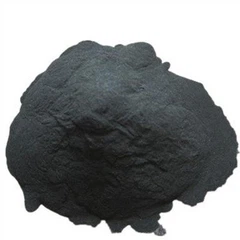
Before we dive into the magnetic properties, let's briefly understand what UHP Graphite Powder is. UHP, or Ultra-High Purity, graphite powder is a form of graphite that has been refined to an extremely high level of purity, typically over 99.9%. This high purity is achieved through advanced purification processes, which remove impurities such as ash, sulfur, and volatile matter.


Graphite itself is a crystalline form of carbon, with a hexagonal lattice structure. The unique arrangement of carbon atoms in graphite gives it several extraordinary properties, including high electrical conductivity, thermal conductivity, lubricity, and chemical stability. These properties make UHP Graphite Powder suitable for a variety of applications, from electronics and energy storage to lubricants and refractory materials.
The Magnetic Property of Graphite: General Overview
Graphite is generally considered to be diamagnetic. Diamagnetism is a property where a material produces a magnetic field in opposition to an externally applied magnetic field. When a diamagnetic material is placed in a magnetic field, it is repelled by the field. This is in contrast to paramagnetic materials, which are attracted to a magnetic field, and ferromagnetic materials, which can form permanent magnets.
The diamagnetism of graphite arises from the motion of electrons in its hexagonal carbon rings. When an external magnetic field is applied, the electrons in the carbon rings experience a Lorentz force, which causes them to move in circular paths. These circulating electrons create an induced magnetic field that opposes the applied magnetic field, resulting in the repulsion effect.
Measuring the Magnetic Property of UHP Graphite Powder
To accurately measure the magnetic property of UHP Graphite Powder, several techniques can be employed. One of the most common methods is the use of a superconducting quantum interference device (SQUID) magnetometer. This highly sensitive instrument can detect very small magnetic fields and is capable of measuring the magnetization of a material as a function of temperature, applied magnetic field, and other parameters.
Another technique is the vibrating sample magnetometer (VSM), which measures the magnetic moment of a sample by vibrating it in a magnetic field and detecting the induced voltage. VSM is a widely used method for measuring the magnetic properties of various materials, including powders.
In addition to these specialized instruments, other techniques such as the Gouy balance can also be used to measure the magnetic susceptibility of UHP Graphite Powder. The Gouy balance measures the force exerted on a sample when it is placed in a non-uniform magnetic field, which is related to its magnetic susceptibility.
Factors Affecting the Magnetic Property of UHP Graphite Powder
Several factors can affect the magnetic property of UHP Graphite Powder. One of the most significant factors is the degree of crystallinity. Highly crystalline graphite has a more ordered structure, which allows for more efficient electron circulation and thus stronger diamagnetism. In contrast, graphite with lower crystallinity may have a weaker diamagnetic response.
The size and shape of the graphite particles can also influence its magnetic property. Smaller particles generally have a larger surface area to volume ratio, which can affect the electron motion and the overall magnetic behavior. Additionally, the presence of impurities or defects in the graphite structure can disrupt the electron circulation and reduce the diamagnetic effect.
The temperature can also have an impact on the magnetic property of UHP Graphite Powder. Generally, the diamagnetic susceptibility of graphite decreases with increasing temperature. This is because at higher temperatures, the thermal motion of the electrons becomes more random, which reduces the ability of the electrons to circulate in response to an external magnetic field.
Applications of the Magnetic Property of UHP Graphite Powder
The magnetic property of UHP Graphite Powder has several important applications in various fields. One of the most notable applications is in magnetic levitation (Maglev) technology. Due to its diamagnetic nature, UHP Graphite Powder can be used to create stable levitation systems. In Maglev trains, for example, diamagnetic materials are used to counteract the gravitational force and allow the train to float above the tracks, reducing friction and enabling high-speed travel.
In the field of electronics, the diamagnetic property of UHP Graphite Powder can be utilized in magnetic shielding applications. By using graphite-based materials, it is possible to create shields that can block or reduce the influence of external magnetic fields on sensitive electronic components, such as hard drives and sensors.
UHP Graphite Powder can also be used in magnetic resonance imaging (MRI) systems. In MRI, the diamagnetic property of graphite can be exploited to improve the homogeneity of the magnetic field, which is essential for obtaining high-quality images.
Comparison with Other Graphite Powders
When comparing UHP Graphite Powder with other types of graphite powders, such as High Purity Graphite Powder and Superfine Graphite Powder, the magnetic property can vary.
High Purity Graphite Powder, although having a relatively high level of purity, may not have the same level of refinement as UHP Graphite Powder. This can result in a slightly different magnetic behavior, as the presence of impurities can affect the electron motion and the diamagnetic response.
Superfine Graphite Powder, on the other hand, has a very small particle size. While the small particle size can enhance certain properties of graphite, such as its surface reactivity, it can also have an impact on the magnetic property. The increased surface area to volume ratio in superfine graphite powder may lead to more complex electron interactions and a different magnetic response compared to UHP Graphite Powder.
Conclusion and Call to Action
The magnetic property of UHP Graphite Powder is a fascinating aspect of this advanced material. Its diamagnetic nature, combined with its high purity and other unique properties, makes it suitable for a wide range of applications in various industries.
As a supplier of UHP Graphite Powder, we are committed to providing high-quality products that meet the specific needs of our customers. Whether you are conducting research in the field of materials science, developing innovative technologies, or looking for reliable materials for your industrial applications, our UHP Graphite Powder can be an excellent choice.
If you are interested in learning more about our UHP Graphite Powder or have specific requirements for your project, we encourage you to contact us for further discussion and procurement. We look forward to collaborating with you and exploring the potential of UHP Graphite Powder in your applications.
References
- Bundy, F. P., & Strong, H. M. (1961). The crystal structure of graphite under high pressure. The Journal of Chemical Physics, 34(1), 384-392.
- Blakemore, J. S. (1985). Solid State Physics. Cambridge University Press.
- Ohring, M. (2002). Materials Science of Thin Films: Deposition and Structure. Academic Press.
Send Inquiry