

What is the hardness of graphite powder?
Jul 18, 2025
Leave a message
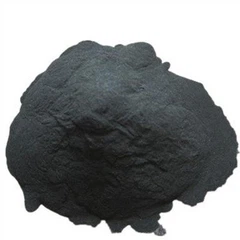
Graphite powder is a versatile and widely used material in various industries, from electronics to metallurgy. One of the key properties that often comes under scrutiny is its hardness. As a supplier of high - quality graphite powder, I am here to delve deep into the topic of the hardness of graphite powder and shed light on its significance.
Understanding the Structure of Graphite
Before we discuss the hardness of graphite powder, it's essential to understand its atomic structure. Graphite is a form of carbon, and its atoms are arranged in a hexagonal lattice structure. These layers of carbon atoms are held together by weak van der Waals forces, while the carbon atoms within each layer are strongly bonded by covalent bonds. This unique structure gives graphite its distinct physical properties, including its relatively low hardness.
Measuring the Hardness of Graphite Powder
Hardness is typically measured using various scales, with the Mohs scale being one of the most well - known. On the Mohs scale, which ranges from 1 (softest) to 10 (hardest), graphite has a hardness of around 1 - 2. This indicates that graphite is a relatively soft material. The softness can be attributed to the weak van der Waals forces between the layers of carbon atoms. When a force is applied, the layers can easily slide over one another, which is why graphite is often used as a lubricant.
Another way to measure hardness is through the Vickers hardness test. In this test, a diamond indenter is pressed into the material, and the size of the indentation is measured to determine the hardness. For graphite powder, the Vickers hardness value is generally quite low compared to many other materials. This low hardness makes graphite powder suitable for applications where a soft, easily deformable material is required.
Factors Affecting the Hardness of Graphite Powder
The hardness of graphite powder can be influenced by several factors:
Purity
The purity of graphite powder plays a crucial role in determining its hardness. Higher - purity graphite, such as UHP Graphite Powder, tends to have a more uniform structure. Impurities can disrupt the regular arrangement of carbon atoms, making the material less consistent in terms of hardness. In high - purity graphite, the carbon atoms are more likely to form a perfect hexagonal lattice, resulting in a more predictable and often slightly harder material compared to impure graphite.


Particle Size
The particle size of graphite powder also affects its hardness. Superfine Graphite Powder with smaller particle sizes may exhibit different hardness characteristics compared to coarser powders. Smaller particles have a larger surface - area - to - volume ratio, which can influence the way the powder behaves under stress. In some cases, superfine graphite powder may appear to be more "compact" and have slightly different mechanical properties, potentially leading to a marginal increase in hardness.
Manufacturing Process
The method used to produce graphite powder can have a significant impact on its hardness. For example, Artificial Graphite Powder is manufactured through specific processes that can control the structure and properties of the final product. The heat treatment, pressure, and other parameters during the manufacturing process can be adjusted to achieve a desired level of hardness. In contrast, natural graphite powder is mined and processed, and its properties are more dependent on the natural ore's characteristics.
Applications Based on Hardness
The relatively low hardness of graphite powder makes it suitable for a wide range of applications:
Lubrication
As mentioned earlier, the softness of graphite powder allows the layers of carbon atoms to slide easily over one another. This property makes it an excellent lubricant in various industrial applications. It can be used in machinery to reduce friction between moving parts, thereby extending the lifespan of the equipment and improving its efficiency.
Pencil Lead
Graphite powder is the main component of pencil lead. The low hardness enables the graphite to leave a mark on paper as the layers of carbon atoms are transferred onto the paper surface when pressure is applied. The softness can be adjusted by mixing graphite with clay in different proportions to create pencils of different hardness levels, from very soft (e.g., 9B) to very hard (e.g., 9H).
Battery Electrodes
In the field of energy storage, graphite powder is used in battery electrodes, especially in lithium - ion batteries. The softness of graphite allows it to accommodate the insertion and extraction of lithium ions during the charging and discharging process. The ability of the graphite layers to expand and contract without significant damage is crucial for the long - term performance of the battery.
Importance of Hardness in Our Product Line
As a graphite powder supplier, understanding the hardness of our products is of utmost importance. We ensure that our customers receive graphite powder with the appropriate hardness for their specific applications. For customers in the lubrication industry, we provide graphite powder with the optimal softness to ensure smooth lubrication. For those in the electronics industry, we offer graphite powder with the right hardness for battery electrode applications.
We carefully control the factors that affect hardness, such as purity and particle size. Our Artificial Graphite Powder is produced using advanced manufacturing techniques to achieve a consistent and desired hardness level. Our Superfine Graphite Powder is processed to have a uniform particle size, which helps in maintaining the desired hardness characteristics. And our UHP Graphite Powder is highly pure, ensuring a more stable and predictable hardness.
Contact Us for Your Graphite Powder Needs
If you are in the market for high - quality graphite powder with the right hardness for your application, we are here to help. Our team of experts can provide detailed information about the hardness of our products and assist you in choosing the most suitable graphite powder for your specific requirements. Whether you need graphite powder for lubrication, battery electrodes, or any other application, we have the solution. Reach out to us to start a conversation about your graphite powder procurement and let us help you find the perfect product for your business.
References
- "Introduction to Carbon Materials Science" by Peter A. Thrower
- "Materials Science and Engineering: An Introduction" by William D. Callister Jr. and David G. Rethwisch
- "Lubrication Fundamentals" by Bernard J. Hamrock
Send Inquiry