

What is the energy - storage mechanism of Graphite Oxide Powder in these devices?
May 23, 2025
Leave a message
As a supplier of Graphite Oxide Powder, I've witnessed the growing interest in its energy - storage capabilities across various devices. In this blog, I'll delve into the energy - storage mechanism of Graphite Oxide Powder in these devices, exploring the underlying scientific principles and its practical applications.
1. Introduction to Graphite Oxide Powder
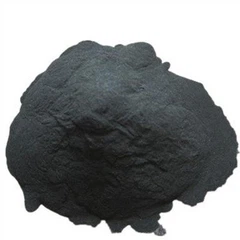
Graphite Oxide Powder is a derivative of graphite, obtained through a series of oxidation processes. It has unique properties that set it apart from other carbon - based materials. The oxidation process introduces oxygen - containing functional groups such as hydroxyl, epoxy, and carboxyl groups on the graphite layers. These functional groups not only change the chemical properties of graphite but also significantly affect its physical structure.
The structure of Graphite Oxide Powder is characterized by a distorted hexagonal lattice due to the presence of oxygen functional groups. This distortion creates more space between the graphite layers, which is crucial for its energy - storage applications. The oxygen - containing groups also enhance the surface wettability of the powder, allowing for better interaction with electrolytes in energy - storage devices.
2. Energy - Storage Mechanisms in Different Devices
2.1 Lithium - Ion Batteries
In lithium - ion batteries, Graphite Oxide Powder can serve as an anode material. The energy - storage mechanism is mainly based on the intercalation and de - intercalation of lithium ions. When the battery is being charged, lithium ions are released from the cathode and migrate through the electrolyte to the anode. In the case of Graphite Oxide Powder, the lithium ions can intercalate between the distorted graphite layers.


The oxygen - containing functional groups on the surface of Graphite Oxide Powder play a vital role in this process. They can act as active sites for lithium - ion adsorption. The functional groups can also provide additional channels for lithium - ion diffusion, reducing the diffusion resistance. As a result, the intercalation of lithium ions becomes more efficient, leading to a higher charge - storage capacity.
During the discharge process, the lithium ions de - intercalate from the anode and return to the cathode, releasing electrical energy. The presence of oxygen functional groups can also improve the reversibility of the lithium - ion intercalation and de - intercalation process, which is essential for the long - term stability of the battery.
2.2 Supercapacitors
Supercapacitors are another type of energy - storage device where Graphite Oxide Powder shows great potential. The energy - storage mechanism in supercapacitors can be divided into two main types: electrical double - layer capacitance (EDLC) and pseudocapacitance.
For EDLC, the large surface area of Graphite Oxide Powder is the key factor. The oxygen - containing functional groups increase the surface roughness of the powder, effectively increasing the surface area available for ion adsorption. When a voltage is applied, ions from the electrolyte are adsorbed on the surface of the Graphite Oxide Powder, forming an electrical double - layer. The energy is stored in the electric field between the adsorbed ions and the charged surface of the powder.
In addition to EDLC, Graphite Oxide Powder can also exhibit pseudocapacitance. The oxygen - containing functional groups can participate in redox reactions with the electrolyte ions. These redox reactions can store additional charge, further enhancing the energy - storage capacity of the supercapacitor. The combination of EDLC and pseudocapacitance makes Graphite Oxide Powder a promising material for high - performance supercapacitors.
3. Comparison with Other Graphite - Based Powders
To better understand the energy - storage mechanism of Graphite Oxide Powder, it's useful to compare it with other graphite - based powders such as [RP Graphite Powder](/graphite - powder/rp - graphite - powder.html), [Natural Flake Graphite Powder](/graphite - powder/natural - flake - graphite - powder.html), and [UHP Graphite Powder](/graphite - powder/uhp - graphite - powder.html).
RP Graphite Powder is known for its high purity and good conductivity. However, its energy - storage capacity is limited compared to Graphite Oxide Powder. The lack of oxygen - containing functional groups in RP Graphite Powder restricts its ability to interact with electrolyte ions and store charge through redox reactions.
Natural Flake Graphite Powder has a layered structure similar to graphite, but its surface is relatively smooth. This smooth surface reduces the surface area available for ion adsorption in energy - storage devices. In contrast, the distorted structure and oxygen - containing functional groups of Graphite Oxide Powder provide more active sites and larger surface area for energy storage.
UHP Graphite Powder is mainly used in applications that require high - temperature resistance and high conductivity. While it has excellent electrical properties, its energy - storage performance is not as good as Graphite Oxide Powder. The oxidation process of Graphite Oxide Powder modifies its structure and properties, making it more suitable for energy - storage applications.
4. Practical Applications and Future Prospects
The unique energy - storage mechanism of Graphite Oxide Powder makes it suitable for a wide range of practical applications. In portable electronic devices such as smartphones and laptops, the high energy - storage capacity and fast charging/discharging characteristics of Graphite Oxide Powder can improve the battery performance.
In electric vehicles, using Graphite Oxide Powder in batteries can increase the driving range and reduce the charging time. The long - term stability of the energy - storage process also ensures the reliability of the vehicle's power system.
In the field of renewable energy storage, supercapacitors based on Graphite Oxide Powder can store the energy generated by solar panels and wind turbines. This stored energy can be released when needed, helping to balance the power grid and improve the efficiency of renewable energy utilization.
Looking to the future, further research on Graphite Oxide Powder is expected to focus on optimizing its structure and properties. By controlling the degree of oxidation and the type of oxygen - containing functional groups, we can further enhance its energy - storage capacity and performance. New synthesis methods may also be developed to produce Graphite Oxide Powder with more uniform properties and lower costs.
5. Conclusion and Call to Action
In conclusion, the energy - storage mechanism of Graphite Oxide Powder in various devices is based on its unique structure and the presence of oxygen - containing functional groups. These features enable efficient lithium - ion intercalation in lithium - ion batteries and both electrical double - layer capacitance and pseudocapacitance in supercapacitors. Compared with other graphite - based powders, Graphite Oxide Powder offers superior energy - storage performance.
If you're interested in exploring the potential of Graphite Oxide Powder for your energy - storage applications, I invite you to contact me for further discussions. We can work together to find the best solutions for your specific needs. Whether you're a battery manufacturer, a researcher, or an engineer in the energy field, our high - quality Graphite Oxide Powder can provide you with the performance you're looking for.
References
- Ruoff, R. S., et al. "Graphene oxide: preparation, functionalization, and electrochemical applications." Chemical Society Reviews, 2010.
- Simon, P., & Gogotsi, Y. "Materials for electrochemical capacitors." Nature Materials, 2008.
- Tarascon, J. M., & Armand, M. "Issues and challenges facing rechargeable lithium batteries." Nature, 2001.
Send Inquiry