

What is the dielectric constant of UHP Graphite Powder?
May 20, 2025
Leave a message
The dielectric constant, also known as relative permittivity, is a fundamental physical property that describes how a material responds to an applied electric field. It measures the ability of a substance to store electrical energy in an electric field and is an important parameter in various electrical and electronic applications. In this blog post, we'll explore the dielectric constant of Ultra - High Purity (UHP) Graphite Powder, and as a supplier of UHP Graphite Powder, I'll also provide some insights into its significance in different industries.


Understanding the Basics of Dielectric Constant
Before delving into the dielectric constant of UHP Graphite Powder, it's essential to understand what the dielectric constant represents. The dielectric constant (εr) of a material is defined as the ratio of the permittivity of the material (ε) to the permittivity of free space (ε0). Mathematically, εr = ε/ε0. A high dielectric constant indicates that a material can store more electrical energy per unit volume when placed in an electric field compared to a vacuum.
The dielectric constant is influenced by several factors, including the material's chemical composition, molecular structure, temperature, and the frequency of the applied electric field. Different materials have different dielectric constants, and these values can vary significantly depending on the specific conditions under which they are measured.
Dielectric Constant of UHP Graphite Powder
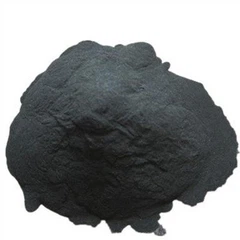
UHP Graphite Powder is a form of graphite with extremely high purity levels, typically containing over 99.9% carbon. Graphite is a well - known allotrope of carbon with unique electrical and thermal properties. It has a layered structure, where carbon atoms are arranged in hexagonal planes held together by weak van der Waals forces.
The dielectric constant of UHP Graphite Powder is influenced by its unique structure and purity. In general, graphite has a relatively low dielectric constant compared to some other dielectric materials. The value of the dielectric constant of graphite can range from about 2 to 10, depending on factors such as the degree of graphitization, particle size, and the frequency of the applied electric field.
At low frequencies, the dielectric constant of UHP Graphite Powder is mainly determined by the polarization mechanisms within the material. These mechanisms include electronic polarization, where the electron cloud around the carbon atoms is distorted in the presence of an electric field, and ionic polarization, which is less significant in graphite due to its covalent bonding.
As the frequency of the applied electric field increases, the dielectric constant of UHP Graphite Powder may decrease. This is because the polarization mechanisms within the material cannot keep up with the rapidly changing electric field, resulting in a reduced ability to store electrical energy.
Factors Affecting the Dielectric Constant of UHP Graphite Powder
Purity
The high purity of UHP Graphite Powder is one of its defining characteristics. Impurities in graphite can act as charge carriers or scattering centers, which can affect the polarization mechanisms and, consequently, the dielectric constant. Higher purity levels generally result in more consistent and predictable dielectric properties.
Particle Size
The particle size of UHP Graphite Powder can also have an impact on its dielectric constant. Smaller particle sizes may lead to a larger surface area - to - volume ratio, which can enhance the polarization effects at the particle surfaces. This can potentially increase the dielectric constant of the powder, especially at low frequencies.
Degree of Graphitization
The degree of graphitization refers to the extent to which the carbon atoms in the graphite are arranged in a perfect hexagonal lattice structure. A higher degree of graphitization typically results in better electrical conductivity and more ordered polarization mechanisms, which can influence the dielectric constant.
Applications of UHP Graphite Powder Based on its Dielectric Properties
Electrical and Electronic Applications
In electrical and electronic applications, UHP Graphite Powder can be used as a conductive filler in composite materials. Its relatively low dielectric constant, combined with its high electrical conductivity, makes it suitable for applications where both electrical conduction and low dielectric loss are required. For example, it can be used in the manufacturing of printed circuit boards, electromagnetic shielding materials, and high - frequency antennas.
Energy Storage
Graphite is also widely used in energy storage devices such as lithium - ion batteries. The dielectric properties of UHP Graphite Powder can affect the performance of these batteries, particularly in terms of the charge - discharge efficiency and the stability of the electrode - electrolyte interface.
Thermal Management
In addition to its electrical properties, UHP Graphite Powder has excellent thermal conductivity. This makes it useful in applications where both electrical and thermal management are important, such as in high - power electronic devices. The dielectric constant of the graphite powder can influence the electrical insulation properties of the thermal management materials, ensuring safe and efficient operation.
Comparison with Other Graphite Powders
When comparing UHP Graphite Powder with other types of graphite powders such as RP Graphite Powder and HP Graphite Powder, the dielectric constant can vary. RP Graphite Powder, which is of regular purity, may have a more variable dielectric constant due to the presence of impurities. HP Graphite Powder, with a higher purity than RP but lower than UHP, may have dielectric properties that are intermediate between the two.
Superfine Graphite Powder also has unique dielectric characteristics. Its extremely small particle size can lead to enhanced surface - related polarization effects, potentially resulting in a different dielectric constant compared to coarser graphite powders.
Significance for Our Business as a Supplier
As a supplier of UHP Graphite Powder, understanding the dielectric constant and its influencing factors is crucial. We can provide our customers with high - quality UHP Graphite Powder that meets their specific requirements in terms of dielectric properties. By carefully controlling the production process, we can ensure consistent purity, particle size, and degree of graphitization, which in turn leads to reliable dielectric performance.
We also offer technical support to our customers, helping them select the most suitable UHP Graphite Powder for their applications. Whether it's for electrical, electronic, energy storage, or thermal management applications, we can provide guidance based on our in - depth knowledge of the material's dielectric properties.
Contact Us for Procurement and Discussion
If you are interested in UHP Graphite Powder and its dielectric properties for your specific application, we encourage you to contact us. Our team of experts is ready to discuss your requirements, provide samples, and offer competitive pricing. We are committed to providing the best quality UHP Graphite Powder and excellent customer service.
References
- "Introduction to Dielectrics" by David A. Saylor.
- "Graphite: Structure, Properties, and Applications" edited by Surajit Chattopadhyay.
- Research papers on the electrical properties of graphite published in leading materials science journals.
Send Inquiry