

What is the dielectric constant of synthetic graphite powder?
Dec 24, 2025
Leave a message
What is the Dielectric Constant of Synthetic Graphite Powder?
In the realm of advanced materials, synthetic graphite powder stands out as a versatile and high - performance substance. As a leading supplier of synthetic graphite powder, I often encounter inquiries about its various properties, and among them, the dielectric constant is a topic of particular interest. In this blog, I will delve into the concept of the dielectric constant of synthetic graphite powder, exploring its significance, influencing factors, and practical applications.
Understanding the Dielectric Constant
The dielectric constant, also known as the relative permittivity, is a fundamental property of a material that describes its ability to store electrical energy in an electric field. It is defined as the ratio of the capacitance of a capacitor filled with the material to the capacitance of the same capacitor in a vacuum. A higher dielectric constant indicates that the material can store more electrical energy per unit volume when placed in an electric field.
For synthetic graphite powder, the dielectric constant plays a crucial role in determining its behavior in electrical and electronic applications. Graphite, in its pure form, consists of carbon atoms arranged in a hexagonal lattice structure, which gives it unique electrical and thermal properties. Synthetic graphite powder is produced through a high - temperature process, which enhances its purity and structural integrity compared to natural graphite.
Dielectric Constant of Synthetic Graphite Powder
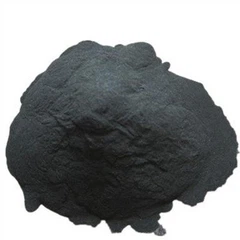
The dielectric constant of synthetic graphite powder is typically in the range of 2 - 5, although it can vary depending on several factors. One of the primary factors influencing the dielectric constant is the particle size of the graphite powder. Finer particles generally have a higher surface - to - volume ratio, which can lead to increased polarization within the material and a higher dielectric constant.
For example, our Superfine Graphite Powder has a very small particle size, which may result in a dielectric constant at the upper end of the typical range. This makes it suitable for applications where a higher dielectric constant is desired, such as in certain types of capacitors.
The degree of crystallinity also affects the dielectric constant. Highly crystalline synthetic graphite powder has a more ordered structure, which can lead to more efficient polarization and a relatively higher dielectric constant compared to less crystalline counterparts. During the production process, the control of temperature and pressure can significantly influence the crystallinity of the synthetic graphite powder.
Another important factor is the presence of impurities. Impurities in the synthetic graphite powder can disrupt the regular lattice structure of carbon atoms, affecting the polarization process and thus altering the dielectric constant. As a supplier, we take great care to ensure the high purity of our synthetic graphite powder through advanced purification techniques. This helps to maintain a consistent and predictable dielectric constant for our products.
Significance in Applications
The dielectric constant of synthetic graphite powder is of great significance in a variety of applications. In the field of electronics, it is used in the manufacturing of capacitors. Capacitors are essential components in electronic circuits, used for energy storage, filtering, and coupling. Synthetic graphite powder with an appropriate dielectric constant can improve the capacitance and performance of capacitors.
In addition, synthetic graphite powder is also used in electromagnetic shielding applications. The dielectric properties of the graphite powder, including the dielectric constant, affect its ability to absorb and reflect electromagnetic waves. A suitable dielectric constant allows the graphite powder to effectively shield electronic devices from external electromagnetic interference, ensuring their stable operation.


In the field of materials science, synthetic graphite powder can be used as a filler in composite materials. When added to polymers or other matrices, the dielectric constant of the composite material can be adjusted by varying the amount and properties of the synthetic graphite powder. This is useful for developing materials with specific dielectric properties for applications such as microwave devices and communication systems.
Comparing with Other Graphite Powders
It is also interesting to compare the dielectric constant of synthetic graphite powder with other types of graphite powders. Natural Flake Graphite Powder is another common type of graphite powder. Natural flake graphite has a more random structure compared to synthetic graphite, which may result in a different dielectric constant. In general, the dielectric constant of natural flake graphite powder may be more variable due to its natural origin and the presence of more impurities.
Artificial Graphite Powder, similar to synthetic graphite powder, is produced through artificial means. However, the production process and raw materials may vary, which can lead to differences in the dielectric constant. Our synthetic graphite powder is produced using a carefully controlled process, which ensures a high - quality and consistent dielectric constant compared to some artificial graphite powders on the market.
Conclusion
In conclusion, the dielectric constant of synthetic graphite powder is a key property that determines its performance in various electrical and electronic applications. As a supplier of synthetic graphite powder, we are committed to providing high - quality products with a well - defined and consistent dielectric constant. Our products, including Superfine Graphite Powder, are carefully manufactured and tested to meet the specific requirements of our customers.
If you are interested in our synthetic graphite powder or have any questions about its dielectric constant or other properties, please feel free to contact us. We are more than willing to discuss your needs and provide you with the best solutions. We look forward to the opportunity to work with you and contribute to your projects.
References
- Rosen, S. L. (Ed.). (2012). "Electrical Engineering Handbook". CRC Press.
- Dressel, M., & Grüner, G. (2002). "Electrodynamics of Solids: Optical Properties of Metals, Semiconductors, and Superconductors". Cambridge University Press.
- Singh, R. P., & Ray, S. S. (2009). "Properties and Applications of Graphite and its Composites". Springer.
Send Inquiry