

What is the density of graphite powder?
May 27, 2025
Leave a message
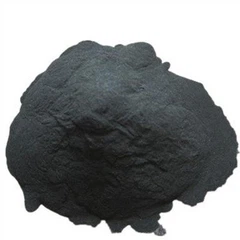
As a trusted supplier of high-quality graphite powder, I often encounter inquiries about the density of graphite powder. Density is a fundamental physical property that plays a crucial role in various applications of graphite powder. In this blog post, I will delve into the concept of graphite powder density, explore the factors that influence it, and discuss its significance in different industries.
Understanding Graphite Powder Density
Density is defined as the mass of a substance per unit volume. For graphite powder, it is typically expressed in grams per cubic centimeter (g/cm³) or kilograms per cubic meter (kg/m³). The density of graphite powder can vary depending on several factors, including the type of graphite, particle size, and the degree of compaction.
Graphite exists in different forms, such as natural flake graphite, synthetic graphite, and carbon graphite. Each type has its own unique density characteristics. For instance, Natural Flake Graphite Powder is derived from natural graphite ore and has a relatively high density due to its well - ordered crystal structure. On the other hand, Synthetic Graphite Powder is produced through chemical processes and can have a more uniform density distribution, which may be adjusted based on the manufacturing process. Carbon Graphite Powder is also a distinct type, often with properties tailored to specific industrial needs, and its density can vary accordingly.
Particle size is another important factor affecting the density of graphite powder. Finer particles tend to pack more closely together, resulting in a higher bulk density. Coarser particles, on the other hand, have more void spaces between them, leading to a lower bulk density. The degree of compaction also plays a role. When graphite powder is compressed, the void spaces are reduced, and the density increases.
Typical Density Ranges of Different Graphite Powders
The density of natural flake graphite powder usually ranges from about 2.2 to 2.3 g/cm³. This relatively high density is due to the high degree of crystallinity and the layered structure of natural flake graphite. The layers of carbon atoms in natural flake graphite are arranged in a hexagonal lattice, which allows for efficient packing of the atoms, resulting in a dense material.
Synthetic graphite powder can have a density in the range of 1.5 to 2.2 g/cm³. The density of synthetic graphite can be controlled during the manufacturing process by adjusting factors such as the raw materials used, the temperature of the heat treatment, and the pressure applied. For example, high - temperature heat treatment can increase the crystallinity of synthetic graphite, leading to a higher density.
Carbon graphite powder typically has a density that can vary widely, from around 1.2 to 2.0 g/cm³. The density of carbon graphite powder depends on the source of the carbon and the manufacturing process. Some carbon graphite powders are made from petroleum coke, while others are derived from coal tar pitch. The choice of raw material and the processing conditions can significantly affect the final density of the powder.
Significance of Graphite Powder Density in Different Industries
Battery Industry
In the battery industry, especially in lithium - ion batteries, graphite powder is used as the anode material. The density of graphite powder affects the energy density and the performance of the battery. A higher - density graphite powder can pack more carbon atoms into a given volume, which means more lithium ions can be stored during the charging process. This leads to a higher energy density of the battery, allowing it to store more energy per unit volume. Additionally, the density of graphite powder can also affect the charge - discharge rate and the cycle life of the battery.
Lubricant Industry
Graphite powder is widely used as a lubricant due to its excellent lubricating properties. The density of graphite powder can influence its lubricating performance. A powder with an appropriate density can form a more uniform lubricating film on the surface of the moving parts. If the density is too low, the powder may not adhere well to the surface, resulting in poor lubrication. On the other hand, if the density is too high, the powder may be too difficult to spread, also reducing the lubricating effect.
Refractory Industry
In the refractory industry, graphite powder is used to improve the thermal shock resistance and corrosion resistance of refractory materials. The density of graphite powder affects the physical and mechanical properties of the refractory products. A higher - density graphite powder can enhance the strength and density of the refractory material, making it more resistant to high temperatures and chemical corrosion.
Measuring the Density of Graphite Powder
There are several methods to measure the density of graphite powder. One common method is the pycnometer method. A pycnometer is a precision - made glass container with a known volume. A sample of graphite powder is placed in the pycnometer, and the mass of the powder is measured. The pycnometer is then filled with a liquid (usually a non - reactive liquid such as ethanol) to displace the air in the powder. The mass of the pycnometer with the powder and the liquid is measured, and the density of the powder can be calculated based on the known volume of the pycnometer and the masses measured.
Another method is the gas pycnometry method. In this method, a sample of graphite powder is placed in a chamber, and a gas (usually helium) is introduced into the chamber. The pressure and volume changes of the gas are measured, and the density of the powder is calculated based on the ideal gas law. This method is more accurate than the pycnometer method, especially for measuring the true density of graphite powder.


Conclusion
The density of graphite powder is a critical property that varies depending on the type of graphite, particle size, and compaction degree. Different types of graphite powders, such as Natural Flake Graphite Powder, Synthetic Graphite Powder, and Carbon Graphite Powder, have their own typical density ranges. Understanding the density of graphite powder is essential for its applications in various industries, including the battery, lubricant, and refractory industries.
If you are interested in purchasing high - quality graphite powder for your specific application, I invite you to contact me for further discussions. We can work together to select the most suitable graphite powder with the appropriate density and other properties to meet your needs.
References
- Kittel, C. (1996). Introduction to Solid State Physics. Wiley.
- Askeland, D. R., & Wright, W. J. (2010). The Science and Engineering of Materials. Cengage Learning.
Send Inquiry