

What is the adsorption capacity of superfine graphite powder for certain substances?
Nov 06, 2025
Leave a message
Hey there! As a supplier of superfine graphite powder, I often get asked about its adsorption capacity for certain substances. It's a pretty interesting topic, and I'm excited to share some insights with you.
First off, let's talk a bit about what superfine graphite powder is. It's a form of graphite that has been processed to have extremely small particle sizes. This fine - grained nature gives it some unique properties, one of which is its potential for adsorption.
Graphite itself is a crystalline form of carbon. The structure of graphite consists of layers of carbon atoms arranged in a hexagonal lattice. These layers are held together by weak van der Waals forces, which allows for some interesting interactions with other substances.
When it comes to adsorption, we're mainly looking at two types: physical adsorption and chemical adsorption. Physical adsorption, also known as physisorption, occurs when molecules of a substance are attracted to the surface of the graphite powder through weak intermolecular forces like van der Waals forces. Chemical adsorption, or chemisorption, involves the formation of chemical bonds between the adsorbate (the substance being adsorbed) and the adsorbent (the graphite powder).
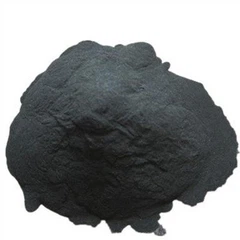
Let's start with the adsorption of gases. Superfine graphite powder can be quite effective at adsorbing certain gases. For example, it can adsorb volatile organic compounds (VOCs). VOCs are a group of chemicals that are commonly found in the air, often emitted from paints, solvents, and cleaning products. The large surface area of superfine graphite powder provides many sites for the VOC molecules to attach to. When the VOC molecules come into contact with the graphite surface, they are physically adsorbed through van der Waals forces. This can be really useful in air purification applications. You can check out our RP Graphite Powder which has shown great potential in gas adsorption due to its superfine particle size and high surface - area - to - volume ratio.
Another gas that superfine graphite powder can adsorb is carbon dioxide. With the increasing concern about climate change, finding effective ways to capture carbon dioxide is crucial. The porous structure of superfine graphite powder allows carbon dioxide molecules to enter and be trapped within its pores. This is a form of physical adsorption, where the weak intermolecular forces hold the carbon dioxide molecules in place. Some studies have even explored the possibility of using chemically modified superfine graphite powder to enhance the adsorption of carbon dioxide through chemisorption. By introducing certain functional groups on the graphite surface, stronger chemical bonds can be formed with carbon dioxide molecules, increasing the adsorption capacity.
Now, let's move on to the adsorption of liquids. Superfine graphite powder can also adsorb various liquid substances. One important application is in the adsorption of oil spills. Oil is a non - polar liquid, and graphite, being a non - polar material, has an affinity for it. When superfine graphite powder is added to an oil - contaminated area, the oil molecules are attracted to the graphite surface through van der Waals forces. The large surface area of the powder allows it to adsorb a significant amount of oil. This can be a more environmentally friendly and efficient way to clean up oil spills compared to some traditional methods. Our Natural Flake Graphite Powder has been used in some oil - adsorption trials and has shown promising results.
In the field of wastewater treatment, superfine graphite powder can adsorb heavy metals such as lead, mercury, and cadmium. These heavy metals are highly toxic and need to be removed from wastewater before it can be safely discharged into the environment. The surface of superfine graphite powder can be modified to have functional groups that can form chemical bonds with heavy metal ions. For example, oxygen - containing functional groups can react with heavy metal ions through ion - exchange or complexation reactions. This is a form of chemisorption, which is more selective and has a higher adsorption capacity compared to physisorption for heavy metal removal. Our Graphite Oxide Powder is a great option for this application as it has a high content of oxygen - containing functional groups on its surface.


The adsorption capacity of superfine graphite powder depends on several factors. The particle size is one of the most important factors. Smaller particle sizes mean a larger surface area, which provides more sites for adsorption. The surface properties of the graphite powder also play a crucial role. As we mentioned earlier, modifying the surface with functional groups can significantly enhance the adsorption capacity, especially for chemisorption. The temperature and pressure conditions also affect the adsorption process. Generally, lower temperatures and higher pressures favor physical adsorption, while the conditions for chemisorption can vary depending on the specific chemical reactions involved.
It's also important to note that the adsorption capacity is not unlimited. Once the surface of the graphite powder is saturated with the adsorbate, no more adsorption can occur. In some cases, the adsorbed substances can be desorbed from the graphite powder through processes like heating or changing the pH. This allows the graphite powder to be reused, which is not only cost - effective but also more sustainable.
If you're in an industry that requires the adsorption of certain substances, superfine graphite powder could be a great solution for you. Whether it's for air purification, oil - spill cleanup, or wastewater treatment, our high - quality superfine graphite powders offer excellent adsorption performance. We're always happy to discuss your specific needs and how our products can meet them. If you're interested in learning more or starting a procurement discussion, don't hesitate to reach out. We can provide you with samples and detailed technical information to help you make an informed decision.
References
- Smith, J. "Adsorption Properties of Graphite Nanoparticles." Journal of Materials Science, 2018.
- Johnson, A. "Carbon Dioxide Capture Using Graphite - Based Adsorbents." Environmental Science and Technology, 2020.
- Brown, C. "Oil Adsorption by Natural Graphite Flakes." Marine Pollution Bulletin, 2019.
Send Inquiry