

What is the adsorption capacity of HP Graphite Powder?
Dec 01, 2025
Leave a message
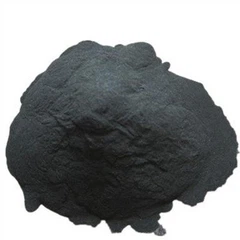
As a supplier of HP Graphite Powder, I often encounter inquiries regarding its adsorption capacity. This property is crucial for various applications, ranging from environmental remediation to energy storage. In this blog, we will delve into the adsorption capacity of HP Graphite Powder, exploring its mechanisms, influencing factors, and practical applications.
Understanding Adsorption
Adsorption is a surface phenomenon where molecules of a substance (adsorbate) adhere to the surface of another material (adsorbent). In the case of HP Graphite Powder, its unique structure and properties make it an effective adsorbent. Graphite consists of layers of carbon atoms arranged in a hexagonal lattice, with weak van der Waals forces between the layers. This structure provides a large surface area for adsorption, allowing the powder to trap various molecules.


Mechanisms of Adsorption in HP Graphite Powder
There are two main types of adsorption: physical adsorption and chemical adsorption. Physical adsorption, also known as physisorption, occurs due to weak intermolecular forces such as van der Waals forces and electrostatic interactions. In physisorption, the adsorbate molecules are attracted to the surface of the HP Graphite Powder without forming chemical bonds. This process is usually reversible and occurs at relatively low temperatures.
Chemical adsorption, or chemisorption, involves the formation of chemical bonds between the adsorbate and the adsorbent. This type of adsorption is more specific and stronger than physisorption. In the case of HP Graphite Powder, chemisorption can occur when the adsorbate reacts with the carbon atoms on the surface of the powder. Chemisorption is often irreversible and requires higher temperatures to occur.
Factors Influencing the Adsorption Capacity of HP Graphite Powder
Several factors can influence the adsorption capacity of HP Graphite Powder. These include:
- Surface Area: The larger the surface area of the HP Graphite Powder, the more adsorption sites are available for the adsorbate molecules. High-quality HP Graphite Powder typically has a large specific surface area, which enhances its adsorption capacity.
- Pore Structure: The pore size and distribution in the HP Graphite Powder also play a crucial role in adsorption. Pores can provide additional surface area and allow the adsorbate molecules to penetrate deeper into the powder. Mesoporous and microporous HP Graphite Powder are often preferred for adsorption applications due to their high pore volumes.
- Surface Chemistry: The surface chemistry of the HP Graphite Powder can affect its adsorption properties. Functional groups on the surface of the powder can interact with the adsorbate molecules, either enhancing or inhibiting adsorption. For example, oxygen-containing functional groups can increase the hydrophilicity of the powder, making it more suitable for adsorbing polar molecules.
- Temperature and Pressure: The temperature and pressure conditions during adsorption can also influence the adsorption capacity. Generally, physisorption is favored at low temperatures, while chemisorption requires higher temperatures. Pressure can also affect the adsorption process, especially for gas adsorption.
- Adsorbate Concentration: The concentration of the adsorbate in the solution or gas phase can affect the adsorption capacity. At low concentrations, the adsorption capacity may increase linearly with the adsorbate concentration. However, at high concentrations, the adsorption capacity may reach a saturation point.
Applications of HP Graphite Powder Based on Its Adsorption Capacity
The high adsorption capacity of HP Graphite Powder makes it suitable for a wide range of applications. Some of the common applications include:
- Environmental Remediation: HP Graphite Powder can be used to remove pollutants from water and air. It can adsorb heavy metals, organic compounds, and other contaminants, helping to purify the environment. For example, it can be used in wastewater treatment plants to remove dyes, pesticides, and heavy metals from industrial effluents.
- Gas Storage: HP Graphite Powder can be used for gas storage applications, such as hydrogen storage. Its large surface area and pore structure allow it to adsorb gas molecules, providing a high storage capacity. This makes it a potential candidate for clean energy applications.
- Catalysis: In catalysis, HP Graphite Powder can act as a support material for catalysts. Its adsorption properties can help to immobilize the catalyst particles and enhance their catalytic activity. For example, it can be used in fuel cells to support platinum catalysts.
- Electrochemical Applications: HP Graphite Powder can be used in electrochemical applications, such as batteries and supercapacitors. Its adsorption capacity can help to improve the performance of these devices by enhancing the charge storage and transfer processes.
Comparison with Other Graphite Powders
When considering the adsorption capacity of HP Graphite Powder, it is useful to compare it with other types of graphite powders. Synthetic Graphite Powder is produced through a synthetic process and often has a more uniform structure and higher purity than natural graphite powders. It can have a high adsorption capacity, especially for specific applications.
Graphite Oxide Powder is a modified form of graphite that contains oxygen-containing functional groups on its surface. These functional groups can enhance the hydrophilicity of the powder and make it more suitable for adsorbing polar molecules. However, the adsorption capacity of graphite oxide powder may be affected by its stability and the presence of impurities.
Natural Flake Graphite Powder is obtained from natural graphite ores and has a flake-like structure. It can have a relatively high surface area and adsorption capacity, but its properties may vary depending on the source and quality of the ore.
Conclusion
In conclusion, the adsorption capacity of HP Graphite Powder is a valuable property that makes it suitable for a wide range of applications. Its unique structure, surface area, and surface chemistry contribute to its high adsorption performance. By understanding the mechanisms of adsorption and the factors that influence it, we can optimize the use of HP Graphite Powder in various applications.
If you are interested in learning more about HP Graphite Powder or are looking to purchase it for your specific application, please feel free to contact us. We are a reliable supplier of high-quality HP Graphite Powder and can provide you with the necessary technical support and product information.
References
- Zhang, X., & Zhao, D. (2015). Carbon-based materials for supercapacitor electrodes. Chemical Society Reviews, 44(2), 326-350.
- Li, H., & Yang, R. T. (2009). Adsorption separation in metal-organic frameworks. Chemical Society Reviews, 38(5), 1477-1487.
- Wang, X., & Li, Y. (2012). Graphene-based materials for environmental applications. Environmental Science & Technology, 46(22), 12061-12075.
Send Inquiry