

What are the viscoelastic properties of HP Graphite Powder?
May 16, 2025
Leave a message
Hey there! As a supplier of HP Graphite Powder, I often get asked about its viscoelastic properties. So, I thought I'd take a moment to break it down for you all.
First off, let's talk a bit about what viscoelasticity is. Viscoelastic materials are those that exhibit both viscous and elastic characteristics. Viscous materials, like honey, flow when a force is applied and don't return to their original shape. Elastic materials, on the other hand, like a rubber band, deform when a force is applied but bounce back to their original shape once the force is removed. Viscoelastic materials do a bit of both.
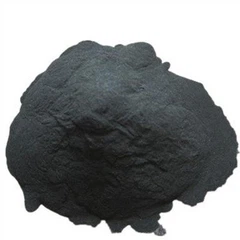
Now, let's dive into the viscoelastic properties of HP Graphite Powder. HP Graphite Powder is known for its unique combination of properties that make it highly useful in various industries.
One of the key viscoelastic aspects of HP Graphite Powder is its ability to deform under stress. When a force is applied to a material made with HP Graphite Powder, it will start to change shape. But unlike a purely viscous material, it doesn't just keep flowing indefinitely. There's an elastic component that tries to bring it back to its original state to some extent.

This property is crucial in applications where the material needs to withstand mechanical stress. For example, in the manufacturing of certain high - performance bearings. The HP Graphite Powder can help the bearing material deform slightly to accommodate the load without losing its structural integrity. Over time, as the stress is removed, it can return to a more normal shape, which extends the lifespan of the bearing.
Another important viscoelastic property is its time - dependent behavior. The response of HP Graphite Powder to stress depends on how long the stress is applied. If the stress is applied quickly, the material may behave more elastically, deforming rapidly but then trying to snap back. However, if the stress is applied slowly over a long period, the viscous component becomes more dominant, and the material will gradually flow and deform.
This time - dependent behavior is useful in applications like seals. When a seal is exposed to a slow - changing pressure, the HP Graphite Powder in the seal material can flow and adapt to the changing shape of the mating surfaces. This ensures a better seal over time, reducing the risk of leaks.
The viscoelastic properties of HP Graphite Powder also play a role in its damping characteristics. Damping is the ability of a material to absorb and dissipate energy. In many mechanical systems, vibrations can cause problems such as noise, wear, and reduced efficiency. HP Graphite Powder can act as a damping agent.
When vibrations occur, the viscoelastic nature of the powder allows it to convert the mechanical energy of the vibrations into heat energy. This heat is then dissipated, reducing the amplitude of the vibrations. For example, in automotive engines, parts made with HP Graphite Powder can help dampen the vibrations caused by the engine's operation, leading to a smoother and quieter ride.
Now, let's compare HP Graphite Powder with some other types of graphite powders. You might be familiar with Artificial Graphite Powder and Carbon Graphite Powder. While all these graphite powders have their own unique properties, HP Graphite Powder stands out in terms of its viscoelasticity.

Artificial Graphite Powder is often used in applications where high purity and specific electrical properties are required. It may not have the same level of viscoelasticity as HP Graphite Powder, which makes HP Graphite Powder more suitable for applications that demand better deformation and energy - dissipation capabilities.

Carbon Graphite Powder, on the other hand, is a more general - purpose material. It has good thermal and electrical conductivity but may not offer the same fine - tuned viscoelastic properties as HP Graphite Powder. The viscoelasticity of HP Graphite Powder gives it an edge in applications where precise control of deformation and energy absorption is needed.
The viscoelastic properties of HP Graphite Powder are also affected by factors such as particle size, purity, and the presence of additives. Smaller particle sizes generally lead to better viscoelastic behavior because there are more contact points between the particles, allowing for more efficient transfer of stress and energy.

Higher purity HP Graphite Powder often exhibits more consistent viscoelastic properties. Impurities can disrupt the internal structure of the powder, affecting how it responds to stress. Additives can be used to modify the viscoelastic properties further. For example, some additives can increase the elastic component, making the material more resistant to permanent deformation.
If you're in an industry that could benefit from the unique viscoelastic properties of HP Graphite Powder, such as the aerospace, automotive, or electronics industries, then you might want to consider using our HP Graphite Powder. We offer high - quality HP Graphite Powder that can be customized to meet your specific requirements.
Whether you need a powder with a particular particle size, purity level, or viscoelastic characteristic, we've got you covered. Our team of experts can work with you to understand your needs and provide the best solution.
So, if you're interested in learning more about our HP Graphite Powder or want to start a purchase negotiation, don't hesitate to reach out. We're here to help you make the most of the amazing viscoelastic properties of HP Graphite Powder in your applications.
References
- "Graphite and its Applications" - A comprehensive guide on graphite materials and their properties.
- "Viscoelasticity in Engineering Materials" - A research paper discussing the principles of viscoelasticity and its applications in various materials.
Send Inquiry