

What are the quality standards for graphite powder?
Jul 17, 2025
Leave a message
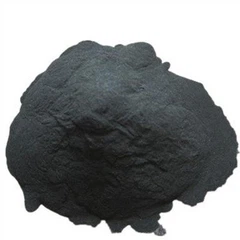
Graphite powder is a versatile material with a wide range of applications across various industries, including metallurgy, electronics, lubricants, and energy storage. As a leading graphite powder supplier, we understand the importance of maintaining high-quality standards to meet the diverse needs of our customers. In this blog post, we will explore the key quality standards for graphite powder and how they impact its performance in different applications.
Purity
One of the most critical quality standards for graphite powder is purity. The purity of graphite powder refers to the percentage of carbon content in the material, with higher purity levels indicating fewer impurities. Impurities such as ash, sulfur, and iron can significantly affect the performance of graphite powder in certain applications.
For example, in the electronics industry, high-purity graphite powder is required for manufacturing semiconductors and lithium-ion batteries. Impurities can interfere with the electrical conductivity and chemical stability of the graphite, leading to reduced performance and reliability of the electronic devices. Therefore, we ensure that our Natural Flake Graphite Powder and HP Graphite Powder meet the strict purity requirements of the electronics industry, with carbon contents typically exceeding 99%.
In the metallurgy industry, graphite powder is used as a lubricant and a carbon additive in steelmaking. High-purity graphite powder helps to reduce friction and wear, improve the fluidity of molten metal, and enhance the quality of the final steel product. Our UHP Graphite Powder is specifically designed for metallurgical applications, with extremely low impurity levels and high carbon purity.
Particle Size and Distribution
The particle size and distribution of graphite powder also play a crucial role in determining its performance. The particle size refers to the average diameter of the graphite particles, while the particle size distribution describes the range of particle sizes present in the powder.
In general, finer particle sizes are preferred for applications that require high surface area and good dispersion, such as lubricants and coatings. Finer particles can provide better lubrication and coverage, resulting in improved performance and durability. On the other hand, coarser particle sizes may be more suitable for applications that require high thermal conductivity and mechanical strength, such as refractory materials and carbon brushes.
We offer a wide range of graphite powder products with different particle sizes and distributions to meet the specific needs of our customers. Our technical team can provide customized solutions based on the application requirements, ensuring that the graphite powder we supply has the optimal particle size and distribution for the intended use.
Crystallinity
Crystallinity is another important quality parameter for graphite powder. Graphite is a crystalline form of carbon, and its crystal structure can significantly affect its physical and chemical properties. Highly crystalline graphite has a well-ordered atomic structure, which results in excellent electrical conductivity, thermal conductivity, and mechanical strength.
In contrast, low-crystallinity graphite may have a more disordered structure, leading to reduced performance in certain applications. For example, in the battery industry, high-crystallinity graphite is preferred for use as an anode material in lithium-ion batteries due to its high capacity and long cycle life.


We carefully control the crystallinity of our graphite powder products through advanced manufacturing processes and quality control measures. Our Natural Flake Graphite Powder has a high degree of crystallinity, making it suitable for a wide range of high-performance applications.
Moisture Content
The moisture content of graphite powder is an important factor that can affect its storage stability and performance. Excessive moisture can cause the graphite powder to agglomerate, leading to poor dispersion and reduced flowability. In addition, moisture can react with impurities in the graphite powder, resulting in the formation of corrosive substances that can damage the equipment and affect the quality of the final product.
We ensure that our graphite powder products have a low moisture content through proper drying and packaging processes. Our products are typically packaged in sealed containers to prevent moisture absorption during storage and transportation.
Ash Content
Ash content is a measure of the inorganic impurities present in graphite powder. High ash content can reduce the purity of the graphite powder and affect its performance in certain applications. For example, in the electronics industry, high ash content can cause electrical shorts and reduce the reliability of electronic devices.
We strictly control the ash content of our graphite powder products to ensure that they meet the high-quality standards required by our customers. Our HP Graphite Powder and UHP Graphite Powder have extremely low ash contents, making them suitable for use in high-tech applications.
Sulfur Content
Sulfur is another impurity that can have a negative impact on the performance of graphite powder. High sulfur content can cause corrosion and embrittlement of metals, especially in high-temperature applications. In addition, sulfur can react with other elements in the graphite powder, resulting in the formation of harmful compounds that can affect the quality of the final product.
We carefully monitor and control the sulfur content of our graphite powder products to ensure that they meet the strict requirements of our customers. Our products have low sulfur contents, making them suitable for use in applications where sulfur sensitivity is a concern.
Conclusion
In conclusion, the quality standards for graphite powder are crucial for ensuring its performance and suitability for various applications. As a leading graphite powder supplier, we are committed to providing our customers with high-quality products that meet the strictest industry standards. Our Natural Flake Graphite Powder, HP Graphite Powder, and UHP Graphite Powder are carefully manufactured and tested to ensure that they have the optimal purity, particle size, crystallinity, moisture content, ash content, and sulfur content for the intended use.
If you are interested in purchasing high-quality graphite powder for your application, please feel free to contact us. Our experienced sales team will be happy to provide you with detailed product information and technical support. We look forward to working with you to meet your graphite powder needs.
References
- American Society for Testing and Materials (ASTM). Standard Test Methods for Carbon and Graphite Mechanical Materials.
- International Organization for Standardization (ISO). Graphite, Coke and Calcined Petcoke - Determination of Sulfur Content.
- Battery Council International (BCI). Recommended Practices for the Design and Manufacture of Lead - Acid Batteries.
Send Inquiry