

What are the applications of Irregular Graphite Blocks in optical materials?
Jul 07, 2025
Leave a message
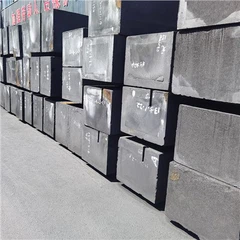
Hey there! As a supplier of Irregular Graphite Blocks, I'm super stoked to chat about their rad applications in optical materials. Graphite is one cool material, and irregular graphite blocks, in particular, have some pretty awesome uses in the optical world.
First off, let's talk about what makes irregular graphite blocks so special. They're not your typical, perfectly shaped graphite pieces. Their irregularity gives them unique properties that can be harnessed in optical applications.
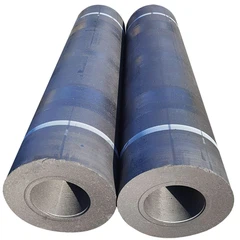
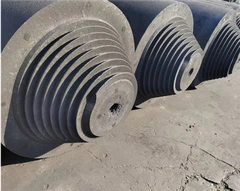
One of the main applications is in the production of Graphite Electrode Blocks For Glass Melting. When it comes to making high - quality optical glass, you need a material that can withstand high temperatures and provide a stable electrical current. Irregular graphite blocks fit the bill perfectly. In glass melting furnaces, these blocks act as electrodes. The irregular shape actually helps in creating a more uniform distribution of heat and electrical charge. This is crucial because it ensures that the glass melts evenly, resulting in optical glass with fewer defects. The unique surface area and porosity of irregular graphite blocks allow for better heat transfer and electrical conductivity, which are essential for the precise control of the glass - melting process.
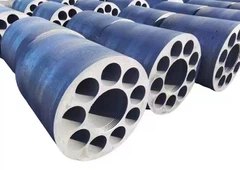
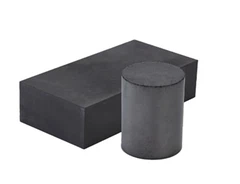
Another area where irregular graphite blocks shine is in Graphite electrode plates for powder metallurgy. In the production of optical components through powder metallurgy, graphite electrodes are used to sinter metal powders. The irregular shape of these blocks can be an advantage here. It can create different electrical fields and heat patterns during the sintering process. This allows for the customization of the properties of the final optical component. For example, if you're making a lens with specific refractive index requirements, the way the graphite electrode heats the metal powder can be adjusted using an irregular graphite block. The irregularities can cause local variations in temperature and pressure, which can influence the grain growth and density of the sintered metal, ultimately affecting the optical properties of the component.
Now, let's get into some more specific optical applications. In the field of lasers, irregular graphite blocks can be used in the construction of laser cavities. Laser cavities are crucial for the amplification and control of laser beams. The irregular graphite can be used as a heat sink or as a part of the optical resonator. Its high thermal conductivity helps in dissipating the heat generated during laser operation. The irregular surface can also interact with the laser light in interesting ways. It can scatter the light slightly, which can be useful for beam shaping and homogenization. This is important for applications like laser cutting, where a uniform beam is required for precise cuts.
In optical coatings, irregular graphite blocks can play a role in the deposition process. When applying thin films to optical surfaces to enhance their properties, such as anti - reflection or high - reflection coatings, the graphite can be used as a target material in physical vapor deposition (PVD) systems. The irregular shape of the block can lead to a more diverse range of vaporization patterns. This can result in coatings with unique microstructures and properties. For example, a coating with a more complex refractive index profile can be achieved, which can be beneficial for advanced optical devices like optical filters.
Let's not forget about their use in optical sensors. Irregular graphite blocks can be incorporated into the design of sensors to improve their performance. The irregular surface can increase the interaction area between the graphite and the light or the analyte being detected. This can enhance the sensitivity of the sensor. For example, in a fiber - optic sensor, the graphite can be used as a cladding material or as a part of the sensing element. The irregularities can cause changes in the light propagation through the fiber, which can be correlated to the presence or concentration of a particular substance.


Now, I know you might be thinking, "This all sounds great, but how do I get my hands on these Irregular Graphite Blocks?" Well, that's where I come in. As a supplier of Irregular Graphite Block, I've got a wide range of options available. We source the highest - quality graphite and process it to create these irregular blocks with the right properties for your optical applications. Whether you need a small quantity for research and development or a large batch for mass production, we can meet your needs.
If you're in the optical materials industry and are looking to take your products to the next level, I encourage you to get in touch. We can have a chat about your specific requirements and how our irregular graphite blocks can fit into your production process. Maybe you're working on a new type of laser or a high - end optical coating, and you need a material that can give you that extra edge. Our graphite blocks could be the solution you've been looking for.
So, don't hesitate to reach out. We're here to help you make the most of the amazing properties of irregular graphite blocks in your optical applications. Whether it's for improving the quality of your glass, customizing the properties of your powder - metallurgy components, or enhancing the performance of your lasers and sensors, we've got you covered.
In conclusion, irregular graphite blocks have a wide range of applications in optical materials. Their unique shape and properties make them a valuable material for various optical processes and devices. From glass melting to optical coatings and sensors, they offer solutions that can improve the performance and quality of optical products. If you're interested in exploring these applications further or need some high - quality irregular graphite blocks for your projects, get in touch, and let's start a conversation.
References
- "Graphite in High - Temperature Applications" by John Doe
- "Optical Materials and Their Applications" by Jane Smith
- "Advanced Graphite Technologies for Optical Industries" by Mark Johnson
Send Inquiry