

How to modify the surface properties of high purity graphite powder?
Jun 23, 2025
Leave a message
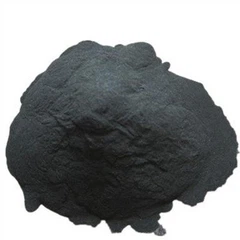
Modifying the surface properties of high purity graphite powder is a crucial aspect in various industrial applications, as it can significantly enhance the performance and functionality of the powder. As a leading supplier of high purity graphite powder, we understand the importance of these modifications and have extensive experience in this field. In this blog, we will explore several effective methods to modify the surface properties of high purity graphite powder.
Chemical Oxidation
Chemical oxidation is one of the most common methods for modifying the surface of graphite powder. By treating graphite powder with strong oxidizing agents such as concentrated sulfuric acid, nitric acid, or a mixture of both, oxygen - containing functional groups like hydroxyl (-OH), carboxyl (-COOH), and carbonyl (C = O) can be introduced onto the graphite surface.
For instance, in a typical oxidation process, high purity graphite powder is first mixed with concentrated sulfuric acid in a reaction vessel under stirring. Then, a small amount of potassium permanganate is slowly added to the mixture. The reaction is exothermic, so proper cooling measures are required to control the temperature. After the reaction, the mixture is diluted with water and washed several times to remove the residual acids and salts. Finally, the oxidized graphite powder is dried at a low temperature.
The introduction of oxygen - containing functional groups increases the surface energy of the graphite powder, making it more hydrophilic. This improved hydrophilicity is beneficial for applications such as composite materials, where better dispersion of graphite powder in a polar matrix is desired. Our Graphite Oxide Powder is a product obtained through a similar chemical oxidation process, which has excellent dispersibility in water and other polar solvents.
Surface Coating
Surface coating is another effective way to modify the surface properties of high purity graphite powder. Different coating materials can be used depending on the specific requirements of the application.
Polymer Coating
Polymers can be coated onto the surface of graphite powder to improve its compatibility with polymer matrices in composite materials. For example, polyvinyl alcohol (PVA) can be dissolved in water and mixed with graphite powder. Through a process of stirring and heating, the PVA molecules adsorb onto the graphite surface, forming a thin polymer layer. This polymer - coated graphite powder can then be easily incorporated into a PVA - based composite, enhancing the mechanical and electrical properties of the composite.
Metal Coating
Metal coating can endow graphite powder with new properties such as improved conductivity and catalytic activity. Physical vapor deposition (PVD) and electroless plating are two common methods for metal coating. In PVD, metal atoms are evaporated in a vacuum chamber and deposited onto the graphite powder surface. For example, a thin layer of silver can be deposited on graphite powder to improve its electrical conductivity. In electroless plating, the graphite powder is first sensitized and activated, and then immersed in a plating solution containing metal ions. A reducing agent in the solution reduces the metal ions, causing them to deposit on the graphite surface.
Plasma Treatment
Plasma treatment is a relatively new and efficient method for surface modification of high purity graphite powder. In a plasma treatment system, a gas such as oxygen, nitrogen, or argon is ionized to form a plasma. The high - energy particles in the plasma, such as ions and free radicals, interact with the graphite surface, breaking the carbon - carbon bonds and creating active sites.
When using oxygen plasma, oxygen - containing functional groups are introduced onto the graphite surface, similar to the chemical oxidation process. Nitrogen plasma can introduce nitrogen - containing functional groups, which can improve the basicity of the graphite surface. Argon plasma can be used to clean the graphite surface and increase its surface roughness, thereby enhancing its adhesion properties.


Plasma treatment has several advantages. It is a dry process, which means there is no need for solvents, and it can be carried out at relatively low temperatures. This makes it suitable for modifying the surface of graphite powder without causing significant damage to its crystal structure.
Mechanical Activation
Mechanical activation involves subjecting the graphite powder to high - energy mechanical forces, such as ball milling. During ball milling, the graphite particles collide with each other and with the milling balls, leading to the breakage of graphite layers and the exposure of new surfaces.
The mechanical activation process can increase the specific surface area of the graphite powder and introduce defects and active sites on the surface. These defects and active sites can react with other substances more easily, facilitating further chemical modifications. For example, after mechanical activation, the graphite powder can be more readily oxidized or coated with other materials.
Applications of Modified High Purity Graphite Powder
The modified high purity graphite powder has a wide range of applications in different industries.
Battery Industry
In lithium - ion batteries, graphite is commonly used as the anode material. By modifying the surface properties of graphite powder, its electrochemical performance can be improved. For example, a surface - coated graphite anode can have better cycling stability and higher capacity. The modified graphite can also enhance the electrolyte - electrode interface, reducing the resistance and improving the charge - discharge efficiency of the battery.
Composite Materials
In composite materials, the modified graphite powder can be used to improve the mechanical, electrical, and thermal properties of the matrix. For instance, in a polymer - graphite composite, the modified graphite powder with better dispersion can act as a reinforcing filler, increasing the strength and stiffness of the composite. In a metal - graphite composite, the surface - modified graphite can improve the wettability between the metal and graphite, enhancing the overall performance of the composite.
Catalysis
The modified graphite powder can be used as a catalyst support. The surface functional groups and active sites on the modified graphite can adsorb and activate reactant molecules, improving the catalytic activity and selectivity of the catalyst. For example, a metal - coated graphite powder can be used as a catalyst for hydrogenation reactions.
Conclusion
Modifying the surface properties of high purity graphite powder is a complex but rewarding process. Through chemical oxidation, surface coating, plasma treatment, and mechanical activation, the surface properties of graphite powder can be tailored to meet the specific requirements of different applications.
As a supplier of high purity graphite powder, we offer a variety of products, including Natural Flake Graphite Powder and Synthetic Graphite Powder, which can be further modified according to your needs. If you are interested in our products or have any questions about surface modification of graphite powder, please feel free to contact us for procurement and negotiation. We are committed to providing you with high - quality products and professional technical support.
References
- Li, H., & Wang, G. (2015). Surface modification of graphite materials for electrochemical applications. Journal of Electroanalytical Chemistry, 752, 1 - 10.
- Zhang, X., & Chen, Y. (2018). Advances in surface coating technologies for graphite powders. Progress in Materials Science, 96, 203 - 235.
- Liu, Y., & Yang, Z. (2020). Plasma - assisted surface modification of graphite materials: A review. Plasma Processes and Polymers, 17(3), 1900047.
Send Inquiry